
Fenerbahce 3-2 Liverpool: Two Equalisers and Muriqi’s Winner
Follow Fenerbahce’s 3-2 win over Liverpool, the five-goal sequence, two equalisers and Muriqi’s winner, with points and score-state explanations.
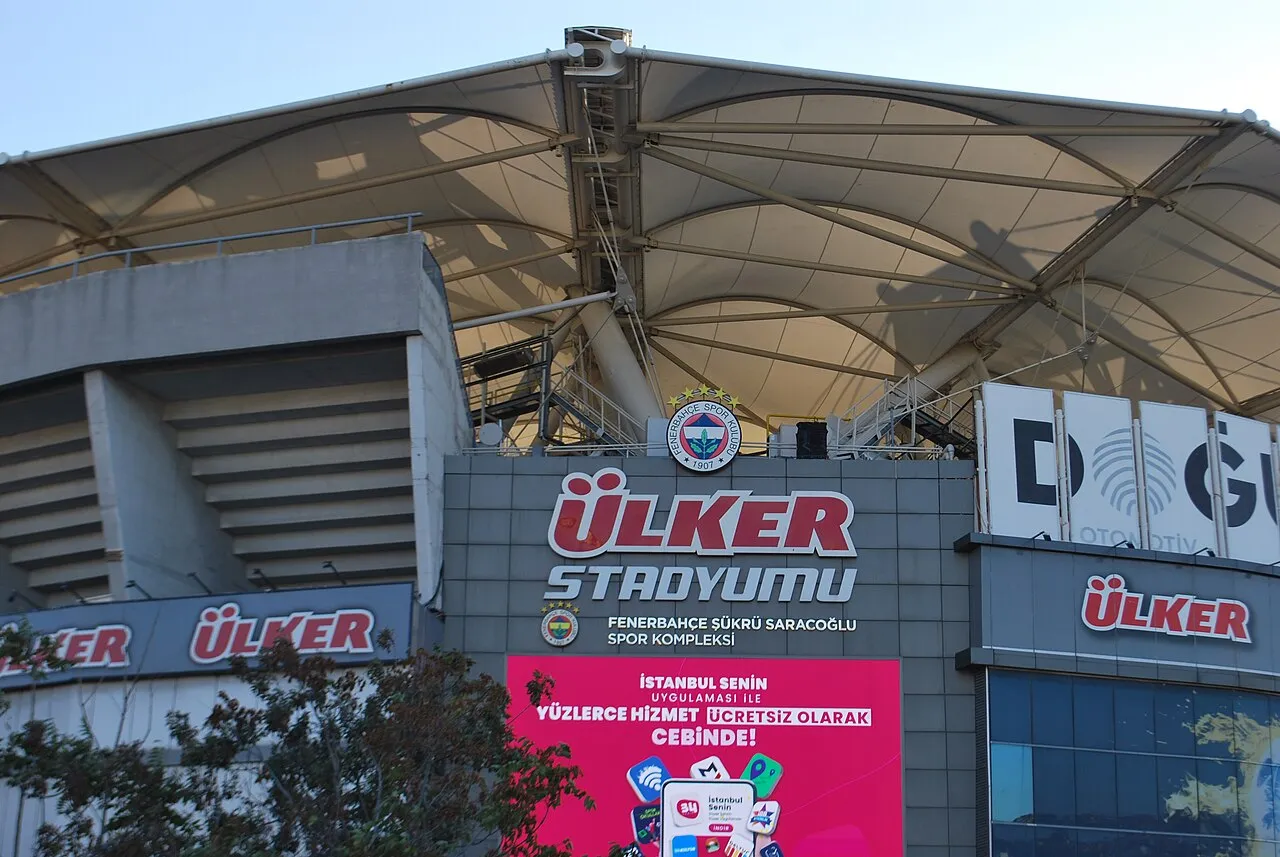
Fenerbahce beat Liverpool 3-2 in Istanbul on 4 November 2026, twice recovering after the visitors had taken the lead. Trey Nyoni and Alexander Isak scored for Liverpool; Mason Greenwood, Archie Brown and Vedat Muriqi supplied the home side's responses. The result belongs to the Champions League league phase, not a knockout tie or a Premier League fixture.
The most revealing feature is the order of those five goals. Liverpool led at 0-1 and 1-2, but Fenerbahce finished in front. This guide reconstructs the scoring sequence, explains what the result contributes to a league table and provides a practical way to assess a comeback without inventing possession figures, player quotations or tactical instructions.
What was the Fenerbahce versus Liverpool result?
Fenerbahce won 3-2. Liverpool's official match report records Nyoni opening the scoring in the 25th minute, Greenwood equalising in the 29th, Isak restoring Liverpool's lead in the 69th, Brown levelling in the 73rd and Muriqi putting Fenerbahce ahead in the 79th. The half-time score was 1-1.
Read the score in the same team order throughout. Fenerbahce are listed first, so 1-2 means that Liverpool are ahead, while 3-2 means the home side lead. Reversing that order halfway through an explanation can make an accurate list of goals tell an entirely incorrect story.
This article was checked on 5 November. It is a report and learning guide to the completed match. It is not a running live-score feed, and it does not claim that the table position visible during one stage of matchday four will remain unchanged after every other fixture finishes.
The five-goal sequence
| Recorded minute | Scorer | Score after the goal |
|---|---|---|
| 25 | Trey Nyoni | Fenerbahce 0-1 Liverpool |
| 29 | Mason Greenwood | Fenerbahce 1-1 Liverpool |
| 69 | Alexander Isak | Fenerbahce 1-2 Liverpool |
| 73 | Archie Brown | Fenerbahce 2-2 Liverpool |
| 79 | Vedat Muriqi | Fenerbahce 3-2 Liverpool |
The table separates an event from its consequence. A scorer's name tells you who finished a scoring action. The updated score tells you how that action changed the contest. Reading both columns is more useful than remembering five names without knowing which goals were equalisers or which one became the winner.
Nyoni's opener created the first Liverpool advantage. Greenwood's goal removed it before the interval. Isak's second-half goal created another advantage, but Brown cancelled that one as well. Muriqi's finish was different: it gave Fenerbahce their first lead in this scoring sequence, and that lead survived until full time.
Why the two equalisers matter
An equaliser restores a level score; it does not put the scoring side ahead. Greenwood made the match 1-1, and Brown made it 2-2. Their goals therefore changed the immediate question for Liverpool from protecting an advantage to finding another route into the lead.
There were four recorded minutes between Liverpool's opener and the first equaliser, and four between their second goal and the second equaliser. These are differences between the published minute labels. They should not be presented as stopwatch measurements precise to the second, because event times are normally recorded by minute rather than as complete timestamps.
For a viewer, those passages are worth replaying with attention to how the next attack developed. Where was possession regained? Which player carried or passed the ball forward? Who tracked the eventual scorer? The goal times identify useful sections to inspect, but they do not supply those tactical answers by themselves.
What makes this a comeback win?
Fenerbahce were behind twice and won. That is enough to describe a comeback without exaggeration. It is more precise than saying they dominated from the beginning or that Liverpool never threatened. Both descriptions would sit awkwardly with a match in which the visitors scored first and regained the lead after half-time.
The final fifteen or so minutes contain the decisive change: Brown equalised in the 73rd and Muriqi scored in the 79th. After the second equaliser, the teams were level. The next goal changed the result from a possible draw to a home advantage that Liverpool did not erase.
A comeback describes the score's development, not the private emotions of the players. You can admire the response without claiming to know what someone thought in the dressing room. If a report includes a direct interview, keep those comments separate from an explanation derived only from goals and minutes.
The half-time score and the full-time score answer different questions
At the interval, the teams were level at 1-1. That tells us that the second half began without either side holding a scoring advantage. It does not erase the first-half events or make Nyoni's opener irrelevant; it establishes the starting score for the next period.
The second half then produced three goals: one for Liverpool and two for Fenerbahce. Add those to the first-half totals and the final score becomes 3-2. This simple calculation is useful when checking a summary that lists all the scorers but accidentally gives the wrong interval or final result.
Suppose someone describes the match as a home side defending a lead for the entire second half. The scoring record contradicts that claim. Liverpool were the first team to go ahead after the break. Good analysis starts by checking whether its description is compatible with the events before adding more complicated explanations.
How the result contributes to the league phase
A league-phase win adds three points to the winner's campaign total. A defeat adds none. Fenerbahce therefore take the points from this fixture, even though Liverpool led twice. The competition awards points for the completed result, not for how many times a team temporarily held the lead.
For this match alone, Fenerbahce scored three and conceded two, a goal-difference contribution of plus one. Liverpool's contribution is the reverse: two scored, three conceded and minus one. These are match contributions. They are not the clubs' complete season totals, which require all their league-phase results.
Use the official competition standings for an overall position. Check matches played as well as points, and note whether the matchday is complete. A table snapshot taken while other clubs are still playing can be accurate at its timestamp while no longer representing the order later that evening.
Anfield in May 2024, shown as Liverpool club context rather than the venue of this away fixture.
Avoid mixing European and domestic tables
Liverpool's Premier League position and Fenerbahce's domestic-league position belong to different competitions. This Champions League result does not directly add points to either domestic table. A search for standings should therefore be answered with the competition clearly named rather than a table selected only because it contains the same club.
The same distinction applies to form sequences. A club can display a strong run across all competitions while having a different European record. Before comparing wins and defeats, ask which fixtures are included. Otherwise two apparently conflicting records may simply refer to different sets of matches.
For broader club context, our Manchester United club-history guide demonstrates why a team's identity, home ground and competition should be established before interpreting a headline. Apply that same discipline here: name the clubs, identify the tournament and use the correct dated fixture.
What can a goal timeline prove about defending?
The timeline proves that Liverpool conceded after each of their goals and later conceded the winner. It does not establish whether the cause was a failed press, an individual marking error, a transition problem or an exceptional finish. Those are different explanations that require more evidence than the scoring order.
When watching a replay, start a few moments before the final pass. Look at the position of the ball, the available passing options and the defenders' responsibilities. A player nearest the scorer in a freeze-frame is not automatically the only person involved in the defensive breakdown.
Also examine what the attacking side did well. Good movement or a well-timed pass can create a difficult decision even when a defender follows a reasonable plan. Analysis becomes more useful when it considers the interaction between both teams rather than treating every goal as a single person's mistake.
Read substitutions without inventing their purpose
Liverpool's report identifies Isak as a substitute who scored. That is a concrete contribution: a player introduced during the match added a goal. It should not automatically become a claim that the substitution was guaranteed to work, that every later change was wrong or that one player alone decided the entire contest.
To study a change properly, check when the player entered, the score at that time and what role they took. Then look at the following passages. Did the team create different options? Did its defensive responsibilities change? A published substitution record helps organise the investigation; it does not replace watching the action.
Be careful with counterfactual claims. Nobody can replay the same match with a different substitution while keeping everything else identical. You can explain why an alternative might have been considered, but you cannot honestly report an imagined alternative score as something that would certainly have happened.
A short exercise in score-state reading
Pause the timeline after Isak's goal. Liverpool have scored twice, Fenerbahce once, so Liverpool lead by one. Now add Brown's goal. The difference becomes zero. Add Muriqi's goal and Fenerbahce lead by one. This is a simple example of tracking a changing state rather than treating the final total as a disconnected fact.
Try describing each transition in one sentence without naming the winner too early. For example, "Liverpool restored their lead" is accurate at 69 minutes. "Liverpool secured victory" is not. The second sentence claims an outcome that had not been settled and was later contradicted by events.
This distinction is useful outside football too. In a programming exercise, a variable's value can change after another instruction. In a match, a lead can change after another goal. A correct explanation identifies the point in the sequence at which a statement is true.
Finding highlights and avoiding the wrong fixture
Search using both clubs, the tournament and the date. The same pair of teams can appear in older senior games, youth fixtures, simulations or unofficial video titles. A result shown in a thumbnail is not enough to identify the 4 November 2026 senior Champions League match.
Use the clubs' official channels or authorised competition and broadcaster services for available highlights. Availability can vary by country and rights arrangement. This page does not promise a free live stream, ask you to install a player from an unknown site or recommend bypassing a provider's access restrictions.
When comparing a clip with the timeline, check that its goals and score changes agree. A short montage may omit an equaliser or place reactions out of order. Return to the complete event record before deciding that the sequence in an edited video represents everything that happened.
Questions readers are asking
Who scored the winner?
Vedat Muriqi scored Fenerbahce's third goal in the 79th minute. Because Liverpool did not equalise afterwards and the match finished 3-2, that goal is the winner. Brown's earlier goal was the second equaliser, which is an important but different role in the scoring sequence.
Did Liverpool lead twice?
Yes. They led after Nyoni's 25th-minute opener and again after Isak's goal in the 69th. Fenerbahce equalised after each before moving ahead through Muriqi. Saying only that Liverpool surrendered a lead once would leave out a significant part of the match's development.
Was the match decided by penalties?
The reported 3-2 is the completed match score. It is not a penalty-shootout result or an aggregate score over two legs. Keep any generic labels on a results website separate from the status and events attached to this actual league-phase fixture.
Does this result establish the final qualification order?
No. It contributes points and goals to the ongoing league phase. Qualification and final positions depend on the full competition record and applicable rules. Use a dated official table rather than converting one dramatic result into a claim that every later outcome is already determined.
Sources
- Liverpool official match report and event record
- Independent dated match report
- Official Champions League standings
Image credits: cover: Kayra, source, CC BY 4.0. Resized and converted to WebP. inline: FYI2023, source, CC0. Resized and converted to WebP.
Found an error or an outdated detail? Report a correction with the article URL and original source.