
Solar Power Explained: Panels, Inverters, Batteries and Household Questions
Understand solar panels, inverter and battery roles, kilowatts versus kilowatt-hours, backup limits and the questions to ask before comparing quotations.
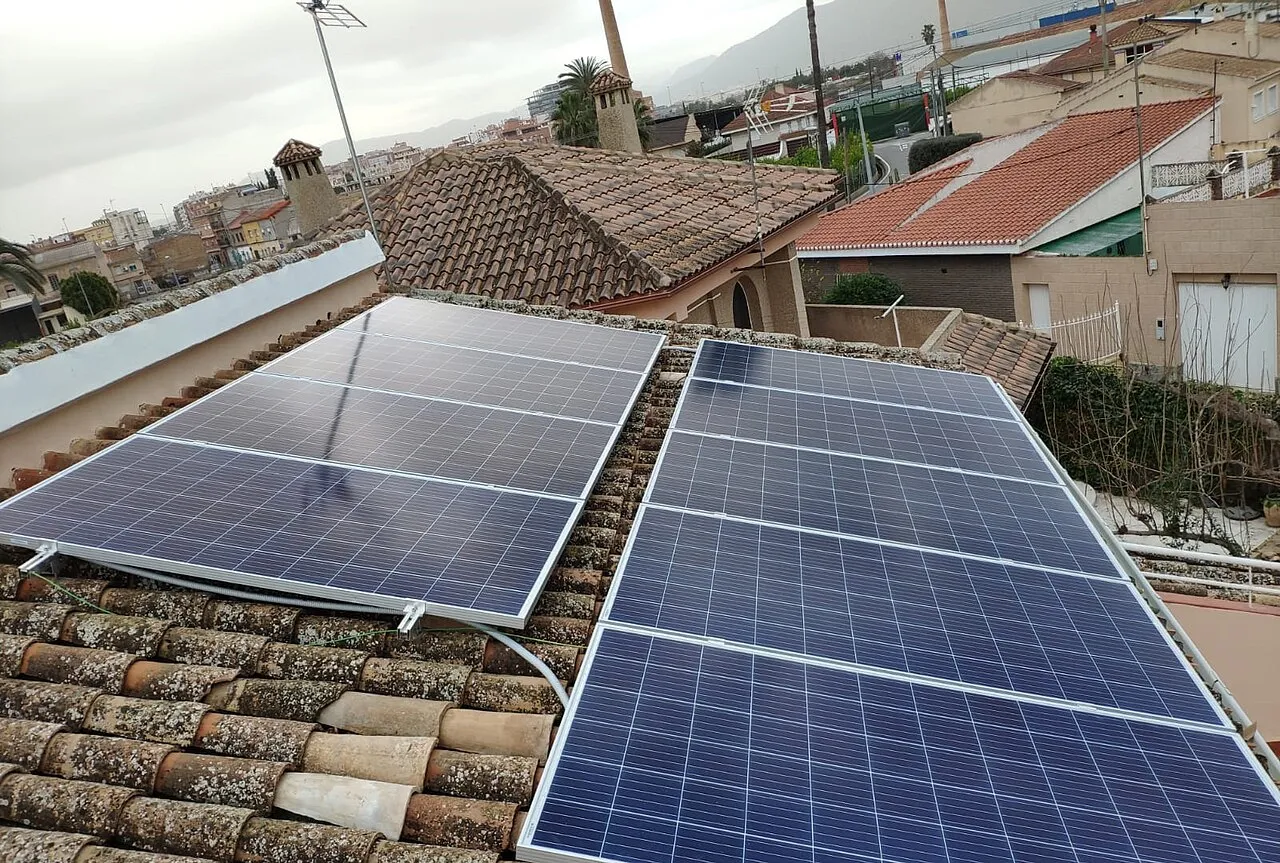
Solar power uses energy from sunlight. In a rooftop photovoltaic system, panels produce electricity, an inverter converts it into a usable form, and any battery stores some energy for later. Understanding those separate jobs is the best starting point before comparing a system's advertised size, backup claims or estimated electricity savings.
This guide explains solar electricity for students and households in Pakistan. It uses clearly labelled arithmetic examples rather than invented installation prices or guaranteed returns. Information was checked on 5 November 2026. For an actual purchase or grid connection, obtain a site assessment and the current written terms from the relevant installer and electricity provider.
How do solar panels produce electricity?
Photovoltaic cells convert light energy into electrical energy. Cells are assembled into modules, usually called panels, and multiple panels form an array. This is different from solar water heating, where sunlight is used to provide heat. A rooftop electricity system should not be confused with every technology that happens to use the sun.
The panel produces direct current, or DC. Many building appliances and the electricity grid use alternating current, or AC. An inverter connects those parts of the system by converting the electrical output appropriately. The panel and inverter therefore have different functions even when they are sold together in one package.
Cloud does not necessarily reduce output to zero. Panels can respond to diffuse light as well as direct sunlight, but available sunlight affects production. Avoid both extremes: claiming panels work at their full rated output throughout cloudy weather, or claiming they cannot produce anything unless the sky is completely clear.
What does a system size in kilowatts mean?
A kilowatt is a measure of power. One kilowatt equals one thousand watts. A panel's rated capacity describes its output under specified test conditions, which allows products to be compared. It does not promise that the panel will produce that exact power continuously after installation.
For example, ten fictional panels rated at 400 watts each add up to 4,000 watts, or four kilowatts, of panel capacity. That calculation tells you the sum of the ratings. It does not establish the inverter rating, daily generation, battery capacity or how many appliances can run during a power cut.
Ask which component a seller's headline refers to. Panel capacity and inverter capacity are not automatically identical. A clear proposal names both, explains the intended design and describes any operating limits. Comparing two packages by one large number can hide important differences in what is actually included.
Kilowatts and kilowatt-hours answer different questions
Power describes a rate, while energy describes an amount accumulated over time. A kilowatt-hour is the energy used or generated by one kilowatt operating steadily for one hour. Electricity-bill units are commonly expressed as kilowatt-hours, so the distinction matters when estimating consumption or discussing generation.
In a simplified exercise, an appliance using 100 watts for five hours consumes 500 watt-hours, or half a kilowatt-hour. The calculation is power multiplied by time. A real appliance may change its power draw during operation, so a nameplate rating is not always an exact measurement of its whole-day consumption.
Similarly, a four-kilowatt panel array does not automatically produce four kilowatt-hours every hour of the day. Sunlight changes, and losses occur. Night-time generation from sunlight is unavailable. Use an assessed production estimate for the location rather than multiplying the nameplate capacity by twenty-four hours.
Start with a household load list
Write down the appliances you want to supply, their approximate power requirements and when they are used. Separate essential loads from optional loads. Lights, fans and a router present a different design problem from trying to run every high-power appliance during an outage.
Record duration as well as quantity. Two appliances with the same power requirement can consume different daily energy amounts if one runs briefly and the other runs for many hours. A simple list makes those differences visible before a quotation turns into a confusing argument about system size.
Use measured information where practical and safe. Existing electricity bills can help establish total consumption, while an appropriate meter or professional assessment can clarify particular loads. Do not open wiring, bypass a meter or improvise a high-voltage measurement to complete a household worksheet.
What does the inverter do?
An inverter converts the panels' DC electricity into AC and may provide other control functions depending on its design. Different products support different arrangements, so the word inverter alone does not establish battery compatibility, backup capability or permission to export electricity to a grid.
A proposal should identify the model and describe what happens when the grid is unavailable. Some solar systems disconnect during an outage for safety. Backup operation requires an appropriately designed system; the presence of panels on the roof is not sufficient proof that the building will remain powered.
Ask which circuits are backed up, the power limit and whether any appliances require more power when starting. A system that supports ordinary running loads may still need careful design for starting demands. Obtain an explanation tied to the intended appliances rather than accepting a vague promise that everything will work.
A battery stores energy; it does not create it
A battery can keep some generated or supplied electricity for later use. It does not replace the need for adequate generation or charging. Its energy capacity and the rate at which the system can deliver power are separate specifications that should both be understood.
Consider a purely mathematical example: a fictional usable store of two kilowatt-hours supplying a steady half-kilowatt load would cover four hours before accounting for additional real-world limitations. The example explains division of energy by power. It is not a runtime guarantee for any battery or appliance package.
Actual backup depends on usable capacity, conversion losses, condition, temperature, settings and the connected loads. Ask for those assumptions in writing. A quoted battery size that does not explain usable energy and operating conditions is not enough to establish how long a particular household will be supplied.
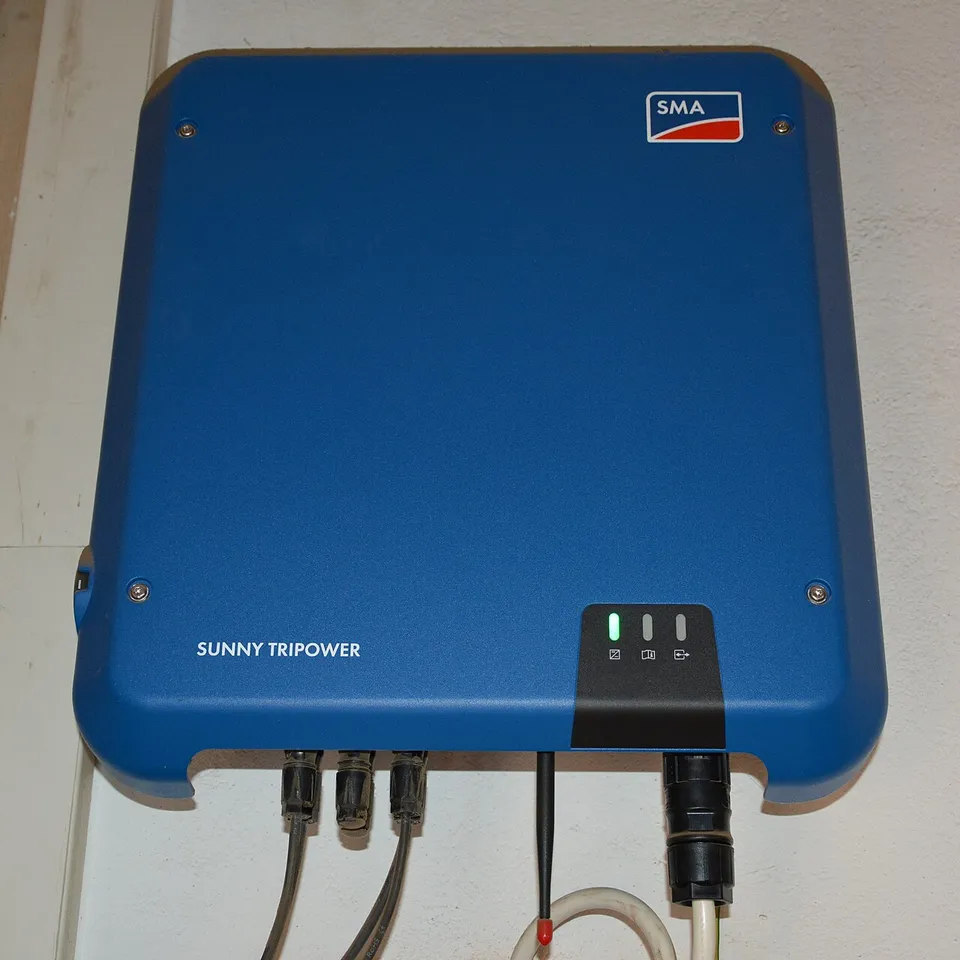
An SMA solar inverter, illustrating DC-to-AC conversion rather than a product recommendation or a guarantee of backup capability.
Roof conditions affect the design
The available area, shading, orientation and physical condition of a roof can affect an installation. A panel count selected without considering the site may be unsuitable even when the electrical ratings look attractive. A competent assessment should explain placement and the relevant constraints.
Shadows can change across the day and year. A roof that looks clear at noon may be shaded earlier or later by nearby structures. Ask how the production estimate accounts for those conditions rather than assuming a photograph taken at one convenient moment represents every operating hour.
Structural suitability and safe access matter too. Do not climb onto an unsafe roof or improvise mountings to check an advertisement's claim. Installation and inspection should be handled by suitably qualified people using appropriate electrical and working-at-height precautions.
Generation and savings are related but different
Electricity generated while a household can use it may have a different financial effect from electricity exported under a provider's agreement. Batteries add another set of costs and operating assumptions. A generation estimate therefore does not, by itself, determine the reduction in a bill.
Ask a seller to separate expected generation, expected on-site consumption, assumed export and the prices applied to each. If the proposal gives only one annual saving, you cannot easily see which assumption causes the result. Clear components make two quotations easier to compare.
Avoid guaranteed payback claims based on an unspecified tariff or a perfect weather year. A realistic assessment should state its assumptions and account for relevant costs. This article does not recommend a particular financial product or promise that one system size is best for every household.
Check Pakistan's current connection terms
NEPRA's legal register lists the Prosumer Regulations, 2026, alongside earlier distributed-generation regulations. That is a reason to check current documents rather than assume an old net-metering explainer still describes a new application. The date and category of an agreement can matter.
Before relying on an export or billing assumption, obtain the current terms applicable to your own electricity provider and connection. Ask which agreement would govern the proposed system and what approvals are required. A seller's screenshot from another customer's older arrangement is not a substitute.
This guide does not quote an export rate, approval fee or contractual entitlement because those details require the relevant current documents. Keeping the physical explanation separate from the financial and regulatory conditions helps prevent a correct description of solar technology from being used to support an incorrect bill promise.
Read a quotation as a list of deliverables
Look for the panel model and count, inverter model, battery details if included, mounting arrangement, protection equipment, installation work and documentation. Check whether the price includes the work needed at your particular site. A missing item can make the cheapest headline misleading.
Compare warranty coverage carefully. A product warranty, performance warranty and workmanship commitment may cover different things and come from different organisations. Ask who receives a fault report, who performs the inspection and which costs are excluded. The word warranty alone does not answer those questions.
Keep the final agreed specification and any later changes. If an installer substitutes a model, ask for the revised details before accepting the change. A clear record is useful for maintenance, warranty enquiries and understanding what was actually supplied rather than what appeared in the first advertisement.
Monitoring helps you ask better questions
If the system includes monitoring, learn which figures represent current power, today's energy and accumulated totals. Those figures can appear together while using different units. A momentary low output is not directly comparable to a complete day's energy total.
Keep a short record of unusual readings with the date, weather context and any error message. Report specific observations to the responsible installer. Do not repeatedly alter protection settings or reset equipment in ways not covered by its instructions simply because a dashboard looks different from yesterday.
Our SSGC bill and service guide uses the same record-keeping principle for another household service: identify the account or equipment, preserve the relevant evidence and ask about a precise discrepancy. A clear question usually produces a more useful response than an unsupported conclusion about the entire system.
A student exercise using an imaginary day
Suppose fictional monitoring records two kilowatt-hours in the morning and three in the afternoon. The daily energy total is five kilowatt-hours. If a chart shows a noon peak of three kilowatts, that is a power reading, not an additional three kilowatt-hours to add to the daily total.
Now list two possible reasons another day might produce less energy, such as different available sunlight or shading. Your list identifies possibilities, not a diagnosis. To decide what happened, compare records and obtain an appropriate inspection if needed. Good reasoning separates a plausible explanation from one supported by evidence.
Finally, identify the information still missing from a savings calculation: how much generation was used on site, how much was exported, the applicable billing terms and the relevant costs. This shows why a single attractive generation number cannot honestly answer every question about a household's bill.
Questions readers often ask
Will ordinary panels keep my house powered in every outage?
Not automatically. Backup depends on the inverter, storage and system design, including which circuits and loads are supported. Obtain the written operating description for the actual equipment rather than assuming that rooftop panels alone guarantee uninterrupted supply.
Is a larger kilowatt rating always better?
No. The appropriate design depends on the site, loads, usage pattern, equipment limits and connection conditions. A larger number is one specification, not a complete assessment of suitability. Compare the proposed system with the task you actually need it to perform.
Can I calculate battery runtime from its name alone?
No. You need usable energy, connected power demand and the relevant operating assumptions. A basic energy-divided-by-power exercise helps explain runtime, but actual equipment has limits and losses. Ask for an estimate tied to the intended loads.
Are older net-metering articles enough for a new application?
No. Check the current regulations and provider agreement applicable to your connection. An older article can explain terminology while being unsuitable evidence for a new tariff, export rate or approval requirement. Keep the date and scope of each document visible.
Sources
- Solar energy technology overview
- Panel ratings, sunlight and production factors
- Inverters and grid services
- Solar and resilience
- NEPRA legal register and current regulations
Image credits: cover: Marta Victoria, source, CC BY-SA 4.0. Resized and converted to WebP. inline: Pedalito, source, CC0. Resized and converted to WebP.
Found an error or an outdated detail? Report a correction with the article URL and original source.