
2026 Planning: Build a Study Calendar That Works
Build a practical 2026 study calendar with verified exam dates, realistic revision blocks and weekly reviews, without relying on invented schedules.
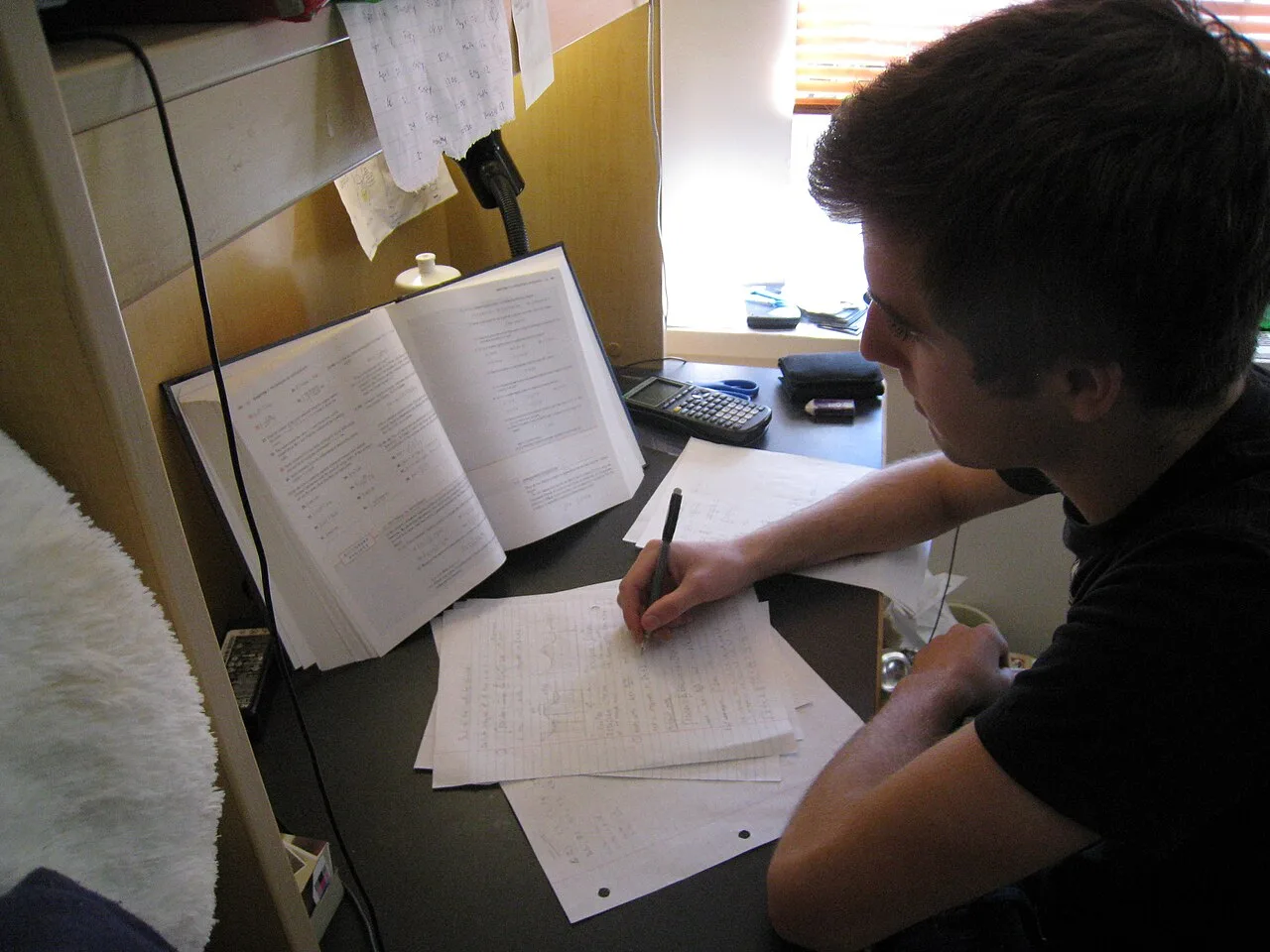
A useful 2026 study calendar combines verified deadlines with a realistic plan for learning, practice and review. Put official commitments in one layer and your own revision timetable in another. This prevents a personal target from being mistaken for a board examination date and makes the plan easier to repair when circumstances change.
The year alone does not tell you when to study a chapter or sit an examination. Your class, board, institution and remaining workload determine the sequence. This guide provides a practical method for the rest of an academic year or any exam preparation period, with hypothetical schedules rather than invented official dates.
Which dates belong in a student calendar?
Include dates that affect a real decision: examinations, internal assessments, application deadlines and required preparation tasks. Label each as confirmed, provisional or personal. A confirmed deadline needs an authoritative notice, while a provisional date remains a planning assumption until the responsible institution confirms it.
For a board examination, verify the date sheet for your board, qualification and examination session. FBISE and BISE Lahore administer different arrangements, so a notice from one should not be applied automatically to the other. Check whether an amended notice replaces an earlier version.
A practical examination may have separate arrangements from written papers. An admission deadline, fee submission date and roll number slip also concern different tasks. Record each independently rather than treating a single screenshot as the complete academic calendar.
Save the notice's title and source date in your own notes. If there is a change, you can identify which version you used. A copied image with a new year added is not equivalent to an official notice, even when the layout looks convincing.
Keep the calendar and task list separate
A calendar records when something happens or when you intend to work. A task list records what must be completed. Mixing them without distinction often produces a crowded page in which every unfinished task appears to be another fixed deadline.
How do you turn a syllabus into realistic study blocks?
Break each syllabus section into observable tasks and estimate how long those tasks take at your actual working pace. A study block should have a clear output, such as solving a defined question set or explaining a concept without notes. “Study physics” is too broad to guide a busy afternoon.
Begin with a chapter inventory. Mark each chapter as unfamiliar, partly understood or ready for practice. Then identify the learning objective beneath the title. A student who recognises a formula may still need to learn when it applies and how to show the working.
Use one short diagnostic task before making a large time estimate. For mathematics, try several representative problems. For English, produce a paragraph or interpret a passage. For programming, trace a small example and explain the output. The result reveals what needs learning rather than merely rereading.
A hypothetical ninety-minute allocation might contain a brief recall attempt, a focused explanation, practice and correction. The exact length is adjustable. The important point is that the block includes a chance to discover and fix errors, not only time spent looking at material.
If a task repeatedly takes longer than planned, revise the estimate. Do not preserve an unrealistic schedule as a test of willpower. A calendar is useful when it reflects how work happens and helps you choose the next action.
How much study time should you schedule each week?
Schedule the time you can protect after classes, travel, meals, responsibilities and rest. Start with a conservative capacity estimate and leave buffer time. A plan based on every available minute is fragile because ordinary interruptions become failures that spill into every later day.
List fixed commitments first. A commute, homework requirement or family commitment may reduce evening capacity even when the calendar looks empty. Distinguish a quiet hour at a desk from a fragmented hour in which you are responsible for other tasks.
Suppose a hypothetical week offers ten dependable hours outside class. You might reserve seven for planned tasks, two for catch-up and one for the weekly review or unexpected work. That allocation is an example, not a universal study prescription.
Avoid comparing your timetable directly with someone else's advertised hours. Different students have different starting knowledge, subject combinations and responsibilities. Measure whether your chosen blocks produce understanding and completed work, not whether the total looks impressive.
If the week is unusually demanding, reduce the scope deliberately. Completing one important practice question set well can be more useful than rushing through several chapters without checking comprehension. Priority is a choice about the next useful action.
| Planning layer | What it contains | Example status |
|---|---|---|
| Fixed commitments | Classes and verified assessments | Confirmed |
| Learning tasks | Specific concepts or questions | Personal target |
| Review tasks | Recalling earlier work | Planned |
| Buffer time | Recovery from delays | Unallocated until needed |
| Weekly check | Decisions about next week | Recurring appointment |
How should retrieval practice and spaced practice appear in the plan?
Schedule opportunities to recall material after learning it and revisit it on later days. Retrieval practice asks you to produce an answer from memory, while spaced practice distributes encounters over time. Research guidance supports these approaches, but the best interval depends on the material, prior knowledge and learning goal.
A closed-book explanation can reveal a gap that feels invisible during rereading. Write what you remember, check it against an accurate source, and correct the missing or mistaken parts. The value lies in the attempt and feedback, not in pretending the first answer must be perfect.
For vocabulary, flashcards can provide short recall prompts. For mathematics, use problems that require choosing a method rather than repeating a copied solution. For physics, explain a relationship before substituting numbers. Match the practice to what the examination will require you to do.
Place an initial review after a gap, then adjust later reviews based on performance. If the concept is still confusing, return to explanation and worked examples. If recall is reliable, move some time toward application rather than endlessly reviewing the same easy material.
Active recall is not a guarantee of instant mastery. Self-testing must use accurate answers and meaningful tasks. A student who repeatedly recalls a misconception without correction can strengthen an error, which is why feedback belongs in the block.
When should you use past papers and mock exams?
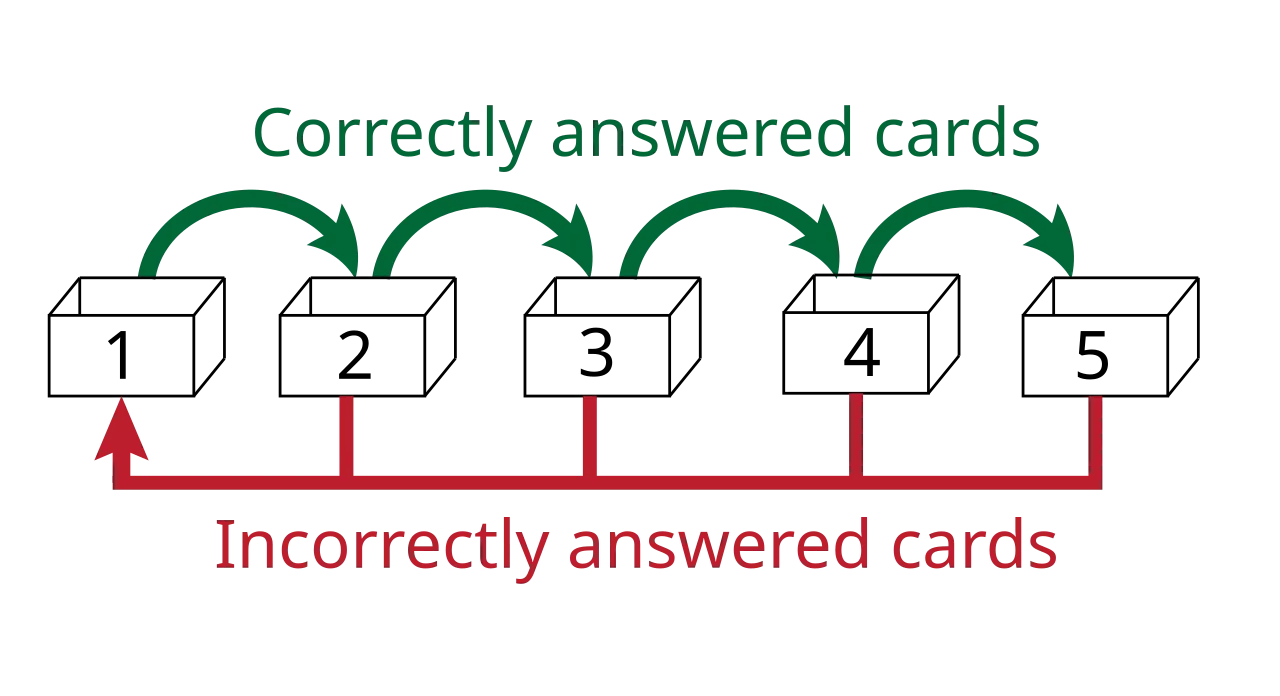
The Leitner diagram illustrates organising recall practice by review frequency, rather than filling a calendar with rereading alone.
Use past paper questions after learning enough content to attempt them meaningfully, and use longer timed papers to practise selection, pacing and presentation. These are different jobs. An early question can diagnose a concept gap; a mock exam can reveal whether you can coordinate several skills under time pressure.
Begin with a small section and inspect the mark scheme after making a genuine attempt. Identify whether lost marks came from knowledge, method, interpretation or presentation. Copying the official answer without locating the error gives you less information for the next study decision.
Keep an error log with the question, mistake, correction and follow-up task. For example, “forgot units” should lead to a check within the next quantitative exercise. “Could not choose the equation” requires more conceptual practice than simply writing units more carefully.
When using a mock exam, reproduce the important conditions without making the exercise unnecessarily elaborate. Use the correct paper duration and permitted materials for that assessment. Record unanswered questions and the points at which time pressure changed your approach.
Afterwards, budget time for correction. A completed practice paper without review measures a problem but may not repair it. Put the correction session in the calendar before starting another full paper, especially if the same error has appeared repeatedly.
Keep older papers in context
An older paper may follow a different syllabus or assessment pattern. Select relevant questions and note any mismatch. Age alone does not make a question useless, but it should not be treated as proof of the current paper structure.
What should a weekly review actually change?
A weekly review should compare planned tasks with evidence of completed learning, then change the next week's priorities or estimates. It is a decision meeting with yourself, not a ceremony for colouring a planner. Identify what worked, what remained difficult and which unfinished tasks still deserve time.
Start with outputs. Did you solve the questions, produce the explanation or correct the paper? Time spent matters for capacity planning, but an hour of distracted rereading is not the same output as an hour of checked problem solving.
Review the error log next. If several mistakes point to the same concept, create one focused repair task. This is usually better than adding “revise everything” to the weekend. Specific correction reduces the chance that the same gap will survive until exam day.
Move unfinished work selectively. Some tasks are still important, some can be shortened, and some no longer serve the immediate goal. Copying every task forward creates an expanding debt that obscures the real priorities.
Adjust time estimates using actual completion. If three algebra exercises required twice the expected time, plan the next set accordingly. If a topic became secure faster than expected, redirect the saved time rather than filling it with unnecessary repetition.
End by choosing a small number of priority tasks for the next week. Leave room for new homework and institutional changes. A useful review simplifies the next decision instead of producing another list too long to follow.
Should you use a paper planner or a digital calendar?
Use the tool you can maintain consistently and consult quickly. A paper planner offers a simple visible overview, while a digital calendar can support reminders and changes. Neither tool makes the underlying plan effective unless the tasks, dates and estimates are clear.
For paper, use a weekly spread with a separate margin for unallocated tasks. Cross out changes cleanly rather than rewriting the whole page. If the planner becomes untidy, keep working from it until the next review instead of spending the evening redesigning the layout.
For a digital calendar, reserve notifications for decisions that benefit from a reminder. Constant alerts can become distractions. Use one main calendar for fixed commitments and a manageable task system for revision work, rather than duplicating the same item across several apps.
Choose meaningful labels. “Solve five simultaneous-equation questions and check errors” tells you what to do. “Productivity session” does not. Include the material needed so the first ten minutes are not spent searching for a notebook or file.
If internet access is unreliable, keep essential dates and the next day's tasks available offline. A working plan should remain usable when a device loses charge or a connection fails. Simplicity is an advantage when study time is limited.
How do you recover when the calendar stops working?
Recover by checking the nearest real deadline, reducing tasks to their essential outputs and rebuilding from current capacity. Do not try to repay every missed hour. The goal is to restore a workable sequence that addresses the most important learning gaps and leaves space for ordinary life.
Begin with a brief reset inventory. Identify the next assessment, the topics it covers and the tasks already completed. Then list the remaining gaps in order of relevance. This turns a vague feeling of being behind into a set of decisions.
Use a minimum workable day when capacity is low. One recall attempt, one targeted correction and preparation for the next session can preserve continuity. This is a practical fallback, not a claim that every topic can be mastered through a tiny daily effort.
Ask for help when the same misunderstanding survives several attempts. Bring the actual problem and your working to a teacher or study partner. A precise question is more productive than saying that the entire subject makes no sense.
Prepare for the final days
As a verified assessment approaches, confirm the venue, reporting requirements, allowed equipment and relevant documents through the responsible institution. Separate this administrative check from revision. Forgetting a required item is a different problem from not understanding the syllabus.
Keep the last review focused on likely errors and essential methods. Avoid introducing a large new planning system immediately before the examination. The calendar has done its job if it has organised useful practice and helped you arrive prepared, rather than merely producing an attractive record of intentions.
After the assessment, write a short reflection while the experience is fresh. Note which preparations helped, where time estimates failed and what you will change for the next subject. This makes the 2026 study calendar a learning tool that improves through use, rather than a document abandoned after one difficult week.
For a final practical check, show the next week's plan to someone who understands your ordinary responsibilities. Ask whether the proposed blocks fit around family commitments and whether each task has a visible finish. Keep revision notes short enough to support practice rather than replace it. At the next review, assess progress through what you can explain or solve, not through the number of highlighted pages. A plan that survives contact with a normal week is more useful than an ambitious timetable that depends on uninterrupted concentration every evening.
If responsibilities at home affect your available study time, the home learning routine guide can help frame a workable discussion. The girls’ education support guide addresses practical participation barriers, while the Pakistan learning-resources guide helps identify material for the tasks you schedule. Choose resources to serve a defined learning objective, rather than collecting more material than the calendar can accommodate.
Sources
Source 1, Source 2, Source 3, Source 4
Image credits: Cover: Gnarlycraig, source, Public domain. Resized and converted to WebP. Article image: Zirguezi, source, CC0. Resized and converted to WebP.
Result dates, fees and eligibility must be checked against the issuing authority's current notice. Report a correction with the article URL and original source.