
Cash Explained: Notes, Records and Everyday Safety
Understand cash, banknotes and everyday payment records in Pakistan, with official currency-security resources and a simple budgeting exercise.
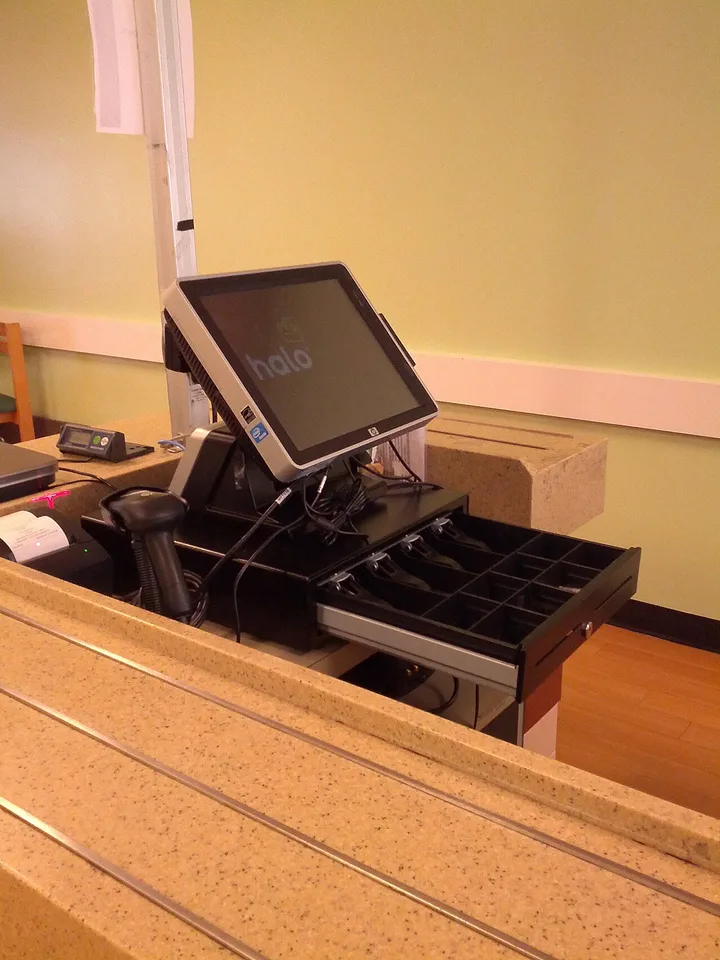
Cash usually means physical notes and coins in everyday payments. In a household record, it is the money physically available at a particular moment; in accounting, related terms can have more specific definitions. For practical use in Pakistan, the most useful habits are understanding banknote features, recording transactions and keeping cash separate from income, profit and account balances.
This financial-literacy guide uses simple hypothetical examples to explain those habits. It draws on the State Bank of Pakistan's public currency-awareness material for note identification rather than forwarded images or rumours. It does not announce a new banknote series, withdrawal deadline or guaranteed reimbursement process. Those claims require the exact current official notice.
How is cash different from income, savings and profit?
Cash is a balance at a point in time, while income describes money earned over a period. Savings concerns resources set aside, and profit is an accounting result rather than simply the money in a drawer. Keeping these categories separate prevents a receipt of cash from being mistaken for new earnings or a healthy cash balance from proving profitability.
Suppose a student withdraws Rs 2,000 from an existing bank account. The wallet balance rises, but the withdrawal is not new income. Money has moved between two places. If the same student receives Rs 500 for completed work, that receipt has a different meaning. Recording both merely as “money in” hides the distinction.
A small business can also receive a customer payment for an earlier sale. The cash arrives now, while the accounting treatment of the sale may belong to another period. Similarly, borrowing produces cash but creates an obligation. A budget that treats borrowed money as ordinary earnings can conceal the later repayment requirement.
For an everyday record, use plain labels such as earnings, transfer, loan received and repayment. You do not need a complicated accounting system to avoid double counting. The Pakistan economy indicators guide explains why household measures also differ from national indicators. A wallet balance should not be used as a miniature substitute for the whole economy.
How can you identify Pakistani banknotes more confidently?
Use the issuer's denomination-specific security-feature information and compare several relevant features rather than relying on one sign. The State Bank's Rupay ko Pehchano material includes public explanations and demonstrations. A worn note or poor photograph can be difficult to assess, so a social-media image is not a reliable universal authentication test.
Begin by identifying the denomination and design. Features can differ between notes, and a characteristic described for one denomination should not automatically be expected on every other note. Use the matching official reference. Keep the distinction between a general awareness exercise and a conclusive examination of a disputed physical note.
For example, the issuer's information for a Rs 100 note describes features including a latent denomination image visible from different angles and specific printed elements. Those details belong to that documented design. The practical lesson is to compare the correct note with its correct reference rather than inventing a single colour or touch test for all currency.
Learn with a note you already recognise
In a supervised classroom exercise, inspect an ordinary genuine note against the matching public feature guide without marking or damaging it. Notice what requires light, an angle or close observation. The goal is familiarity, not producing copies or declaring oneself an expert examiner. If authenticity becomes a real dispute, use the bank's appropriate process.
What should you do if a note looks suspicious or damaged?
Keep the concern specific and seek the relevant bank's official procedure. A damaged note and a suspected counterfeit note are different cases, and appearance alone may not settle either. Preserve useful transaction evidence and avoid knowingly passing a suspicious note to another person simply to move the problem out of your own wallet.
If the concern follows an ATM withdrawal, record the bank, location, date, time and transaction reference privately. Keep the withdrawal receipt if available. Ask the bank how to submit the concern and retain its complaint reference. Do not assume that a photograph proves the origin of a particular note or guarantees a particular outcome.
If a shop raises a concern during payment, pause and compare the note with the correct issuer material or seek bank guidance. Avoid a public accusation based on uncertainty. A note can be soiled, folded or faded without that alone establishing counterfeiting. Equally, a familiar portrait is not sufficient proof of authenticity.
Do not invent an exchange entitlement or compensation promise. Eligibility and handling may depend on the condition, type of case and applicable instructions. Official currency-management material distinguishes different categories of notes within banking operations. An everyday reader should use the institution's current process rather than transplanting a bank's internal deadline into advice for every member of the public.
How can a simple cashbook make everyday spending clearer?
A cashbook records opening cash, receipts, payments and closing cash in a consistent period. The arithmetic is opening balance plus cash received minus cash spent. Separate transfers from earnings and attach a short purpose to each entry. This makes a missing amount easier to investigate without turning the record into an unnecessarily complex spreadsheet.
Consider a hypothetical day beginning with Rs 1,000. You receive Rs 500 for work, spend Rs 200 on transport and Rs 150 on food. The expected closing cash is Rs 1,150. Count the actual notes and coins and compare them with that figure. If the result differs, look for a missing entry rather than adjusting the record to hide the difference.
Use one row per transaction, with date, description, amount in, amount out and balance. If you withdraw from a bank account, label it as a transfer into physical cash. If you later deposit cash, record the corresponding transfer out. Your total resources have not increased simply because the same amount moved twice.
The student planning guide can help establish a short weekly review. A few minutes at a predictable time is often more practical than attempting a perfect reconstruction at the end of the month. The record becomes useful when it is maintained consistently, including small purchases that are easy to forget.
| Hypothetical entry | Cash in | Cash out | Meaning |
|---|---|---|---|
| Opening wallet balance | Rs 1,000 | None | Starting balance, not new earnings |
| Payment for completed work | Rs 500 | None | Receipt associated with earnings |
| Transport payment | None | Rs 200 | Recorded spending |
| Food payment | None | Rs 150 | Recorded spending |
| Closing expected balance | Rs 1,150 | None | Amount to reconcile with physical count |
How should cash and digital payment records be reconciled?
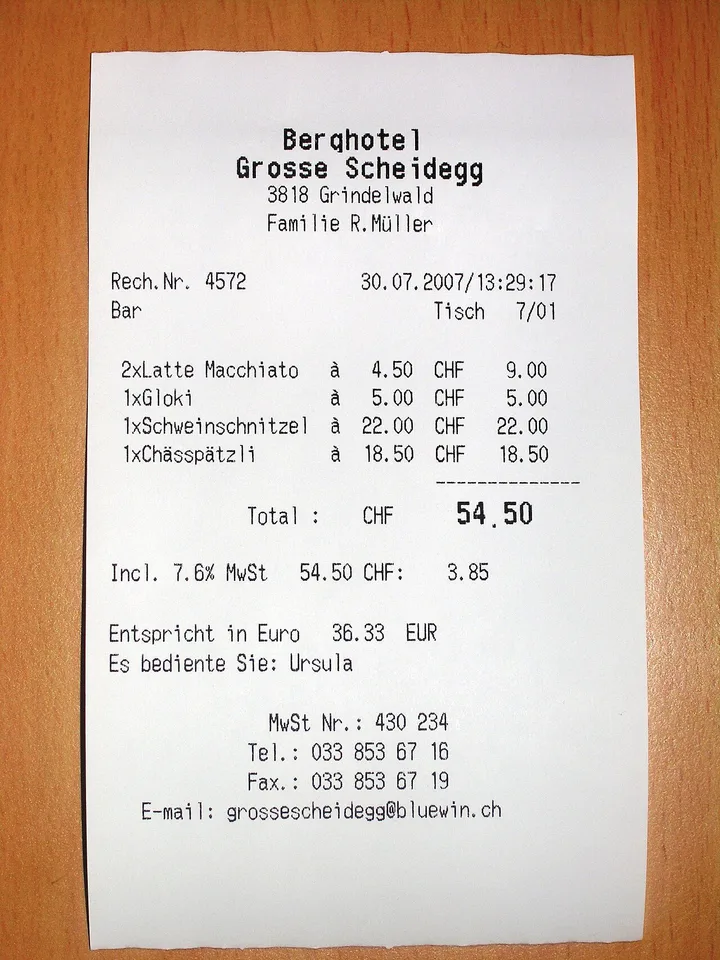
This foreign receipt illustrates itemised payment evidence. It is not a Pakistani receipt or a current exchange-rate quotation.
Check each payment in the account or system that actually received or sent it, then record transfers without double counting. A screenshot supplied by another person is not the same as confirmation in your own account. Pending, failed and completed transaction statuses describe different outcomes and should be investigated through the payment provider's legitimate process.
Suppose you move Rs 1,000 from a bank account into a mobile wallet. That movement is not a purchase and not income. If you then pay a merchant from the wallet, record the actual spending separately. Otherwise, one transfer and one purchase can mistakenly look like Rs 2,000 of consumption.
Keep transaction references privately where they help resolve a discrepancy. Compare date, amount, recipient and status. Do not share a one-time password, login code or account credential to prove that you made a payment. Verification should occur through your normal authenticated application or the provider's established support route.
For a disputed transfer, avoid sending a second payment merely because the other person shows a different screen. First establish what your own record says and seek clarification through the appropriate channel. The right next step depends on the status and provider. A clear record reduces confusion without promising that every disputed transaction can be reversed.
How can a household plan cash without losing sight of obligations?
Begin with expected receipts, essential payments and their timing. A monthly total can look sufficient while leaving a shortage before the next receipt arrives. Plan the dates as well as the amounts, and distinguish money available now from money expected later. A budget is a decision aid, not proof that every future receipt will occur on schedule.
List unavoidable costs such as transport, food and an upcoming course payment before optional spending. Keep a separate line for a modest contingency if the budget permits. Do not count money already committed to an obligation as freely available simply because it remains physically in the wallet for another day.
For variable spending, review actual receipts over several ordinary weeks. One unusual week may distort the estimate. If fuel is part of the budget, the petrol notification reading guide explains how the unit rate and litres purchased affect the bill. Use actual quantities rather than a general impression that spending has increased.
Inflation affects purchasing power, but a single household's changing purchases are not a complete inflation measure. The inflation and purchasing-power guide explains that distinction. In your own cash plan, track which item changed, whether its price changed and whether you bought a different quantity. That evidence points to a more useful adjustment than a vague total.
What practical habits improve everyday cash safety?
Carry an amount suited to the task, keep payment records where appropriate and count money discreetly before leaving a legitimate transaction point. Avoid displaying unnecessary cash or sharing financial identifiers publicly. Safety also includes knowing how to contact the relevant institution through a verified route when a payment or banknote concern arises.
Prepare suitable denominations when possible so a routine purchase does not require revealing an entire wallet. Check change calmly against the amount paid. If a discrepancy occurs, address it promptly and describe the arithmetic. A clear request about a specific transaction is more useful than a broad accusation about a shop or employee.
Store receipts and records securely enough that they remain available for a complaint without exposing personal information. A public photograph may reveal account details, location habits or another person's information. Crop or redact a public copy if sharing is necessary, while preserving the original privately for a legitimate review process.
Be cautious about unsolicited offers to exchange notes or fix a payment problem in return for an advance fee or secret code. Verify the claimed institution independently through its known channels. Do not let urgency replace checking. This is a general payment-safety habit, not a claim that every unfamiliar offer is fraudulent or that one method removes all risk.
How can students test their understanding with a one-week exercise?
Keep a seven-day record of opening cash, receipts, spending and closing cash, then reconcile it with the physical amount. Add digital transactions on a separate page and identify transfers between the two. The exercise should explain where money moved and what it paid for without treating every receipt as income or every withdrawal as spending.
Choose a simple fictional or personal budget depending on privacy needs. If using real records in class, remove identifying details and avoid sharing account credentials or full transaction references. The arithmetic can be learned from anonymised amounts. No student needs to expose a family's financial circumstances to demonstrate understanding.
Review a mismatch methodically
If the expected balance differs from the count, check missing purchases, incorrect change, duplicate entries and transfers first. Mark the amount unresolved if you cannot explain it. Do not invent a receipt to force the numbers to agree. An honest discrepancy can teach more about recordkeeping than a perfect-looking table that hides uncertainty.
At the end of the week, write three findings: one category that was easy to underestimate, one transfer that could have been double counted and one change that would improve the next record. Then compare the plan with the actual sequence of payments. The result is a practical cash-management habit grounded in evidence rather than rumours about notes or vague impressions of spending.
Keep banknote learning separate from budgeting accuracy. A cashbook that balances does not authenticate every note, and familiarity with security features does not guarantee a complete financial record. Both skills matter, but each answers a different question. Combining them carefully makes everyday payments clearer while avoiding an exaggerated claim that a single checklist solves every financial problem.
Separate counting accuracy from spending choices
A balanced cashbook tells you whether recorded movements agree with the counted cash. It does not by itself tell you whether a purchase was necessary or affordable. Review those questions separately. First reconcile the arithmetic, then compare spending with the obligations and priorities identified in the plan. This avoids blaming a calculation error for a budget choice, or disguising a missing transaction as a deliberate saving.
If several people share household purchases, agree on a simple way to submit receipts or short notes. Record who paid only where it helps avoid duplicate entries, and keep personal details private. At the weekly review, resolve one discrepancy at a time. A modest system that everyone can maintain is usually more useful for learning than a detailed record that nobody updates after the first day.
Sources
Source 1 · Source 2 · Source 3
Image credits: Cover: Sprinno, source, CC0. Resized and converted to WebP. Article image: Audrius Meskauskas (Audriusa), source, CC BY-SA 3.0. Resized and converted to WebP.
Found an error or an outdated detail? Report a correction with the article URL and original source.