
Badgers: Species, Habitat and Respectful Observation
Learn how to identify the badger species being discussed, understand habitat and behaviour, and observe wildlife without disturbing animals or dens.
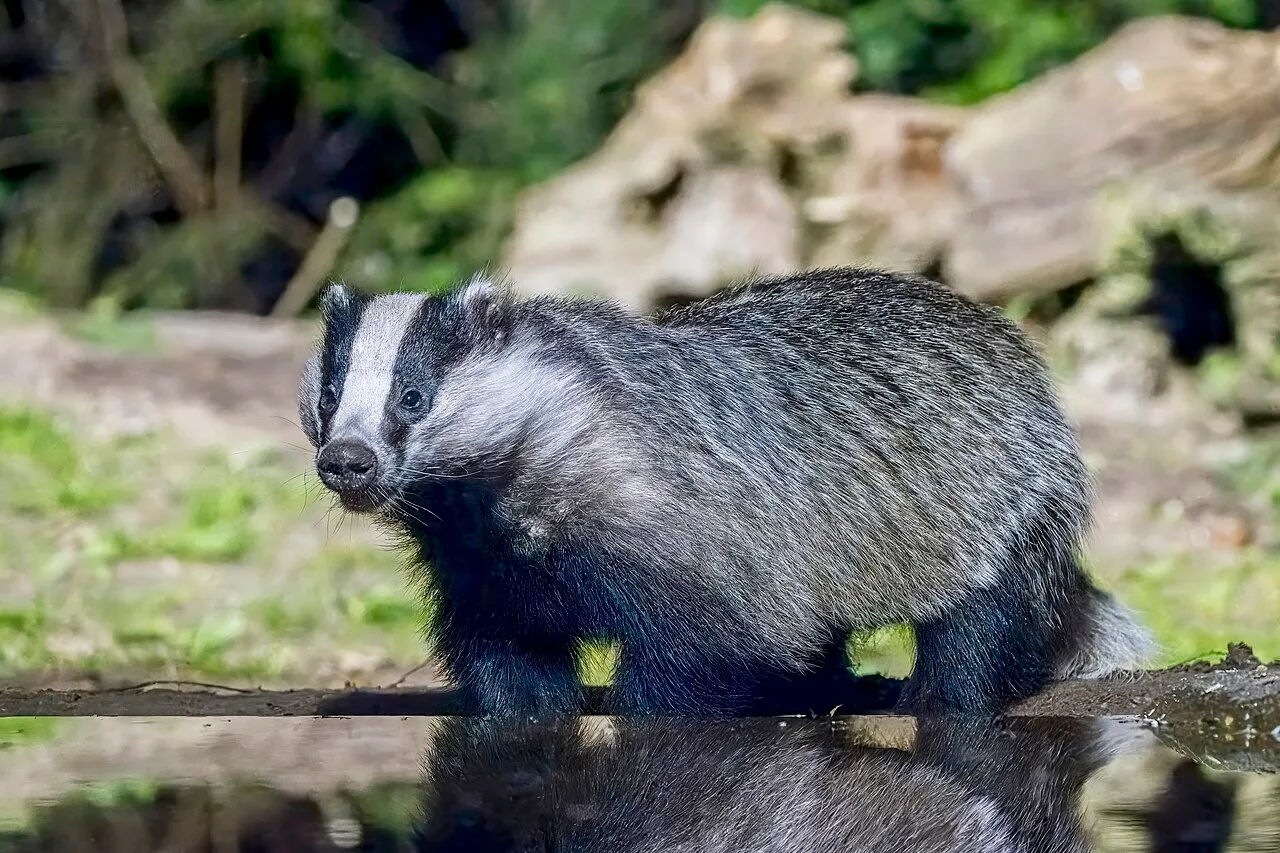
Badger is a common name used for several different mammals, so a reliable explanation begins with species and location. The European badger, American badger and honey badger are not interchangeable animals. A claim about diet, habitat or behaviour should identify which animal and which region the evidence concerns.
For a nature study, that distinction is more useful than the dramatic reputation attached to a short wildlife clip. A clip may show an unusual interaction while leaving out the species, setting and what happened before recording began. Identification and context come before conclusions.
This guide explains how to compare familiar badger names and make respectful observations. It is designed for learners building a species card or evaluating a photograph. It does not establish that a particular badger species lives in a given Pakistani locality; that requires verified regional records and suitable identification evidence.
Which animal does the common name badger identify?
Identify the scientific name alongside the common name and geographic context. Meles meles refers to the European badger, Taxidea taxus to the American badger and Mellivora capensis to the honey badger. These names allow you to match a statement with the intended species rather than transferring facts between animals sharing an English label.
A scientific name normally has a genus and species component. It is a naming tool, not a complete description of appearance or behaviour. Record it carefully and compare the species account with the image or observation you are studying.
The term mustelid places these animals within a broader mammal family, but family membership does not make every member ecologically identical. A family-level similarity should not be used to erase differences between particular species.
Begin identification with a clear photograph, reliable location and an appropriate species reference. A striped face alone is insufficient if the image is cropped, poorly lit or missing a scale. Body shape, coat pattern and regional occurrence can help, but uncertainty should remain visible.
A useful school card includes common name, scientific name, source region and two distinguishing features. Leave size or range details out if they cannot be verified. A small accurate card is better than a confident collection of mixed-species facts.
Common names can also vary between places and languages. Keep the published name from the source and explain which scientific identity it represents. This makes the project understandable to another reader even when their familiar everyday label differs.
How do the three familiar badger examples differ?
Compare them using the same categories: identity, broad setting, feeding ecology and the limits of the evidence. European badger accounts often discuss woodland and nearby feeding areas, while American badger accounts emphasise open habitats and digging for prey. Honey badger accounts describe a distinct species with its own range and adaptations.
| Example | Scientific identity | Useful comparison focus |
|---|---|---|
| European badger | Meles meles | Setts, woodland edges and foraging |
| American badger | Taxidea taxus | Open habitats, digging and prey |
| Honey badger | Mellivora capensis | Distinct body pattern and species ecology |
The table is an orientation device rather than an exhaustive range map. A species can use several habitats, and local conditions matter. Avoid reading one broad habitat label as a rule that every individual must be found there.
The US National Park Service and Forest Service provide information about the American badger. Their species focus makes them stronger references for that animal than an unrelated European garden observation. Match the claim to the relevant account.
NatureScot's badger material concerns its own regional setting. It is useful for understanding local observation and conservation issues, but should not be silently applied to every badger-like animal elsewhere.
Honey badger popularity online can encourage exaggerated claims of invulnerability or constant aggression. A species' defensive adaptations do not make it immune to injury or turn every encounter into a fight. Use documented behaviour rather than dramatic narration.
For a learning exercise, choose one claim from each account and explain why it belongs to that species. This turns a list of names into an evidence-matching activity and makes accidental generalisation easier to spot.
How do habitat, soil and food fit together?
Habitat supplies shelter, food and conditions for movement and reproduction. For digging mammals, soil and suitable ground can be especially relevant. A useful habitat explanation links these resources rather than treating woodland or grassland as a decorative backdrop to an animal photograph.
A burrow provides underground space, while sett is the term commonly used in European badger discussion. The surrounding feeding area matters as well as the entrance. An animal needs access to resources beyond the shelter itself.
Diet should be described by species and context. European accounts identify earthworms among important foods, while American accounts discuss small mammals and other prey. Availability can vary with location and season, so a single meal does not establish the whole diet.
Invertebrates, plant material or other food types may appear in a species account, but their relative importance requires evidence. Do not turn a long possible-food list into a claim that every item is eaten equally often.
The relationships can be drawn as a simple chain: soil conditions affect digging opportunities; vegetation and land use influence available food; shelter and food together influence use of an area. Each arrow is a research question rather than automatic proof about a specific site.
Environmental measurements can help describe a setting, but one measure rarely explains an animal's entire distribution. Air quality, temperature or rainfall observations need to be connected with a defined ecological question. A photograph showing an animal near a road does not independently establish which environmental factor caused its presence.
Why are badgers often difficult to observe directly?
Many badger observations are limited by activity patterns, concealment and sensitivity to disturbance. European badgers are commonly described as largely nocturnal, meaning active mainly at night. That makes brief daytime searching an unreliable way to determine whether a site is used or how many animals are present.
Nocturnal does not mean that every individual follows an identical timetable every day. Season, local conditions and individual behaviour can influence activity. A daytime sighting alone cannot establish disease or abnormality.
An absence of sightings is also different from evidence of absence. You may have watched at an unsuitable time or from a location with poor visibility. A careful observation record includes effort: when, where and for how long the observer looked.
Camera trap footage can document activity without a person standing nearby, but it still samples a limited place and field of view. A camera that records one entrance cannot independently describe all movements through an area or identify every member of a social group.
Short clips create another limitation. An animal briefly looking towards the camera may be noticing a sound, scent or movement outside the frame. Avoid assigning curiosity, anger or affection as established facts when the behaviour has several possible explanations.
For a school project, source-based study can be as useful as a direct sighting. Comparing verified records, maps and described behaviours teaches observation skills without pressuring a learner to approach a sensitive location or stay out at unsuitable times.
What can tracks, entrances and other signs establish?
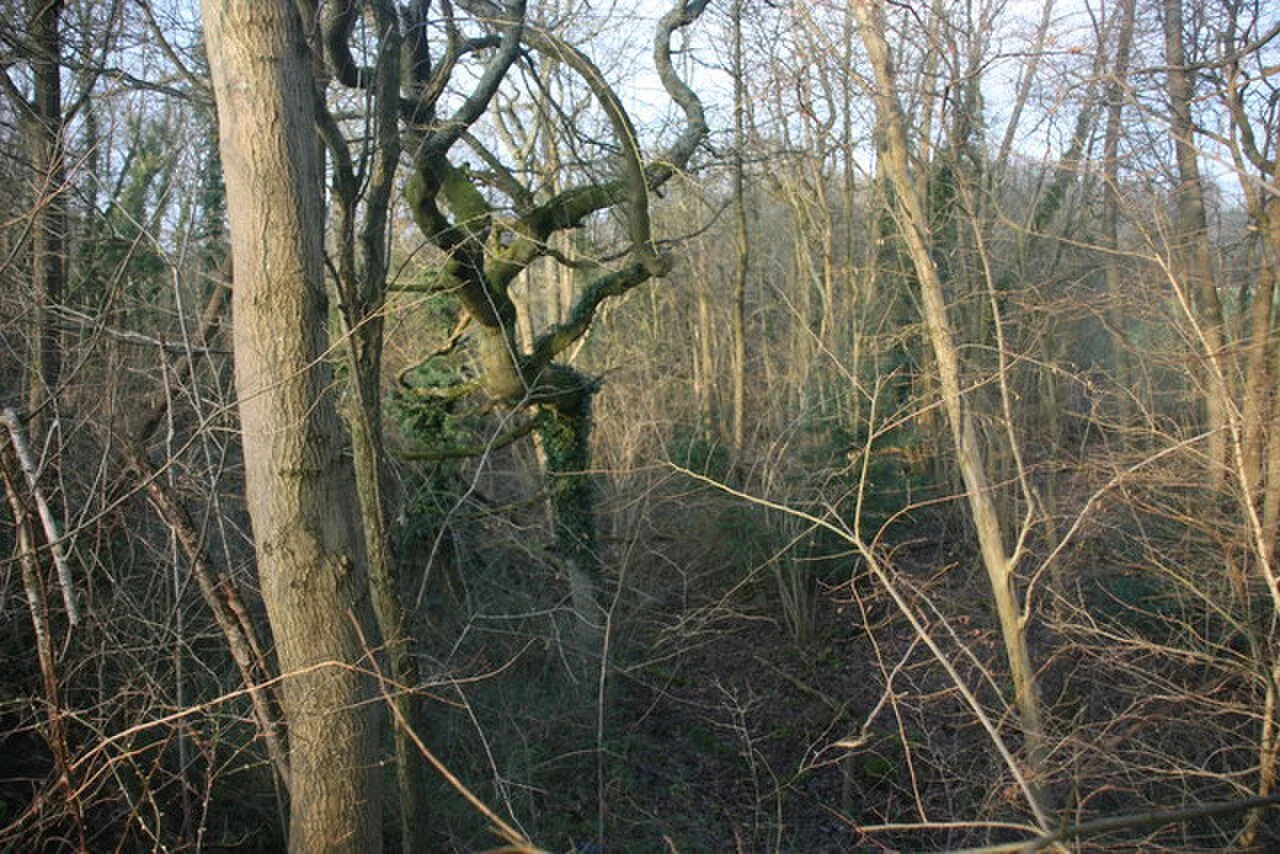
Woodland along the Forest Way illustrates habitat and movement corridors; the photograph does not establish an occupied badger sett.
Signs can suggest that an animal used an area, but identification needs a combination of evidence. Footprints, disturbed soil, bedding or a possible latrine should be recorded as observations before being assigned a cause. One hole or track shape does not prove every nearby mark was made by a badger.
Photograph tracks with a scale when it can be done without disturbing the site. Record the surface, because mud, sand and leaf litter preserve shape differently. An incomplete impression may omit toes or exaggerate width.
Claws can leave marks, but the clarity depends on the ground and movement. Avoid naming a species from one blurred print simply because a diagram looks similar. Use a suitable regional guide and qualified help where identification matters.
An entrance can also be reused or visited by more than one species. Seeing a hole establishes a hole; seeing an animal enter it establishes a particular observed use. Occupancy, history and breeding status require additional evidence and sometimes formal survey methods.
Do not probe, block or excavate an entrance to improve identification. The act of checking can become the disturbance you are supposed to avoid. Observe from an appropriate distance and follow local guidance.
Write two separate sentences in field notes: “I observed...” and “This may indicate...” That small distinction preserves the evidence even if your first interpretation later changes. A teacher or experienced recorder can then reassess the observation without needing to undo an overconfident conclusion.
What should a useful observation record contain?
Record date, approximate location, habitat, observation conditions and the visible action. Include your confidence in identification and the evidence used. A useful record lets another person understand what was actually seen while avoiding publication of a sensitive den location or unnecessary personal information.
For example, an invented note might describe a medium-sized mammal crossing an open path at dusk, with a striped face visible briefly. The correct next entry may be “identification uncertain,” followed by a description of the features and viewing distance.
A photograph needs an honest caption. Identify species only when supported, name the broad setting and state if the animal is captive. A zoo photograph can teach identification, but should not be captioned as a wild local sighting.
Avoid publishing exact coordinates for a vulnerable shelter. A research record can retain precise information privately where appropriate, while the public project uses a wider area. Consult a responsible recording organisation about sensitive submissions.
A simple notebook layout works well:
| Field | What to write |
|---|---|
| Effort | Time watched and visibility |
| Setting | Broad habitat and weather |
| Observation | Visible movement or sign |
| Identification | Features and confidence |
| Evidence | Image reference or source |
| Interpretation | Limited explanation, clearly labelled |
Record negative findings too, such as no animal seen during a defined period. These are useful when paired with effort, but should not become a claim that the species never uses the area.
Good records preserve uncertainty productively. They allow a later observer to compare conditions and improve the identification instead of inheriting an unsupported certainty.
How can wildlife watching avoid disturbing animals?
Keep a respectful distance, avoid blocking movement and use authorised viewing arrangements where available. Do not approach a burrow, offer food to create a photograph or attempt to handle a wild animal. The observation should fit around the animal's activity rather than forcing the animal to respond to the observer.
A good view is not worth changing behaviour. If an animal repeatedly watches you, retreats or cannot use its route, move away appropriately. A quiet observer can still create disturbance through position, scent or prolonged presence.
Keep pets under suitable control and follow the rules of the site. A dog approaching a shelter can create a problem even when its owner intends only to watch. The observer is responsible for the wider situation, not merely the camera.
Legal protection varies by jurisdiction. Before any activity near a sett or protected habitat, consult the relevant authority's current guidance. A rule from Scotland, an American park or another country should not be presented as a universal legal standard.
If an animal appears trapped or injured, use local wildlife professionals rather than attempting an improvised rescue. A remote article cannot identify the species, risk or lawful response from a short description. Record the location safely and keep people away while seeking appropriate help.
For a school visit, plan the route, supervision and return time in advance. Explain that seeing no animal can still be a successful study session if the learners record habitat and observation conditions accurately. This reduces pressure to pursue a closer encounter.
How should conservation claims and dramatic clips be evaluated?
Ask which species, location, time period and evidence support the claim. Conservation status, local abundance and an individual animal's behaviour are different questions. A widely shared encounter cannot establish a population trend, and a general species account cannot diagnose the circumstances of one animal.
Habitat fragmentation and roads can affect wildlife, but a claim about a particular population needs local evidence. Identify the proposed mechanism, such as interrupted movement or road mortality, and look for a suitable survey or authority assessment.
Do not treat a predator label as a reason to remove an animal. Predator and prey relationships are parts of ecosystems, and management decisions require ecological and legal context. A common name or intimidating clip is not a management plan.
For a viral video, check the original caption, recording location and whether the sequence was edited. A captive feeding scene can be presented misleadingly as a wild hunt. If provenance is missing, discuss only the visible action and withhold the larger story.
A strong final species card contains a verified name, appropriate habitat description, two supported characteristics and a respectful observation note. Add a question for further study rather than filling gaps with reputation.
Badgers make a useful case study because a shared name hides real biological differences. The lasting lesson is precise observation: identify the animal, match facts to its species and setting, record what the evidence shows and leave enough space for correction when the evidence is incomplete.
Sources
Source 1 Source 2 Source 3 Source 4 Source 5
Image credits: Cover: Charles J. Sharp, source, CC BY-SA 4.0. Resized and converted to WebP. Article image: Nigel Chadwick, source, CC BY-SA 2.0. Resized and converted to WebP.
Found an error or an outdated detail? Report a correction with the article URL and original source.