
ED138 Dwarf Planet Reports: What Confirmation Means
Understand ED138 dwarf planet reports, the difference between a candidate and a confirmed classification, and the evidence astronomers need.
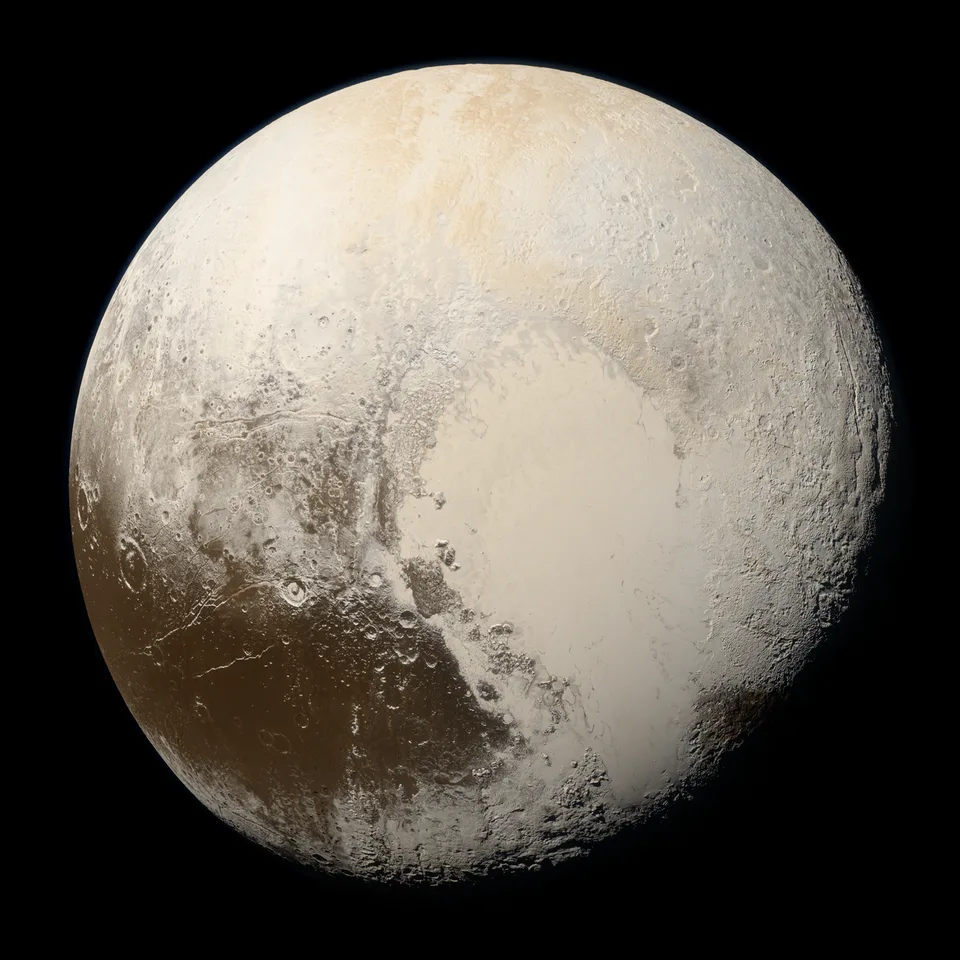
2026 ED138 is a real dwarf planet candidate announced by Rubin Observatory on 27 October 2026. The observatory identifies it as a trans-Neptunian object found in early survey data and says further measurements are needed to constrain its size and confirm its nature. That is a substantial discovery announcement, but it is not the same as a settled dwarf-planet classification.
The earlier draft lacked the discovery source. The primary announcement and a research preprint now provide a clearer foundation: the object has an identifiable designation, linked observations and a scientific case for follow-up. This guide explains what those forms of evidence establish, why diameter remains uncertain and how to read future reports without turning a candidate into a confirmed category prematurely.
What exactly has been announced about 2026 ED138?
Rubin Observatory reports the identification of 2026 ED138 in data gathered before the main survey programme. Its announcement calls the object a dwarf planet candidate, while the associated preprint describes linked observations and independent validation. The key distinction is between confirming the object's detection and determining every physical property needed for classification.
The full provisional designation matters. ED138 without its year is an abbreviated reference, not the most precise catalogue identifier. Use 2026 ED138 when comparing a paper, an observatory release and a data record. That reduces the risk of merging different objects or misreading a shortened headline as an official name.
A discovery can also involve archival detections. Images taken earlier may contain the same object even though nobody recognised the connection at the time. Linking those positions can extend the observation history. The date of an image and the date of identifying what it contains answer different questions.
The research document reviewed here is a preprint. It provides direct access to the authors' methods and claims, but its presence in a repository is not itself proof of completed peer review. Read the version and publication information before describing its editorial status.
For a useful reading note, write down four items: the full designation, announcement date, type of source and exact claim. This method also applies when examining a new technology announcement, where a product name, a demonstration and independently tested performance can represent different levels of evidence.
What separates a dwarf planet from a planet or moon?
Under the IAU Solar System definition, a dwarf planet orbits the Sun, is sufficiently governed by self-gravity to become nearly round, has not cleared its orbital neighbourhood and is not a satellite. The definition combines physical shape with orbital context. It is not simply a synonym for a small planet.
Hydrostatic equilibrium describes the balance relevant to a body being shaped by its own gravity. In practice, a distant unresolved object can be difficult to assess directly. A size estimate may support a candidate designation without providing a detailed image of its shape or a complete account of its internal structure.
The satellite condition is equally important. A round body orbiting a planet belongs to a different relationship from an independent solar-orbiting object. Roundness alone therefore cannot answer the classification question. You need to know what the body orbits as well as what its physical properties suggest.
Pluto, Ceres, Eris, Haumea and Makemake provide familiar comparison points, but they should not be treated as a ruler that automatically classifies every distant detection. Different objects have different observational histories. A resemblance in brightness does not make their size, surface composition or dynamical history identical.
Nor does orbital clearing mean that an orbit must contain absolutely no other material. The formal concept concerns dynamical dominance in the surrounding region. Avoid translating it into a literal empty-road image. That shortcut can create confusion when people encounter other small bodies near the paths of recognised planets.
Why can brightness imply a range of possible sizes?
Visible brightness depends on more than diameter. An object can appear bright because it is large, because it reflects light efficiently or because its observing geometry is favourable. Albedo describes reflectivity. Without a well-constrained albedo, a brightness measurement can support several plausible sizes rather than one uniquely measured diameter.
The ED138 research preprint illustrates this directly: its diameter range depends on assumed reflectivity. The object has not been measured with a ruler or resolved into a detailed surface map. A report that strips away those assumptions and presents one endpoint as an exact size changes the scientific meaning.
Consider a classroom comparison using a small white disc and a larger dark disc under the same lamp. Depending on material and distance, they can produce similar detected light. The demonstration is only an analogy, but it explains why brightness alone cannot distinguish every combination of size and reflectivity.
Photometry measures light; astrometry measures position. Absolute magnitude attempts to describe brightness using a standardised reference geometry. It is not a temperature, a direct diameter or the number of visible surface features. Read the definition attached to each reported quantity before comparing numbers across objects.
A careful sentence would say that the available brightness supports a range of sizes under stated assumptions. A misleading sentence would say that the object is exactly one of those sizes. Keeping the uncertainty attached to the estimate makes the result more informative, because readers can see which new measurement would narrow it.
How do repeated positions establish an orbit?
Repeated measurements of an object's apparent position allow astronomers to fit an orbit and test whether detections belong together. The longer and better-distributed the observation history, the more constraints it can provide. A telescope discovery image identifies a point of light; an orbital solution connects motion across time through a physical model.
Astrometry needs a timestamp and a reference frame, not merely a circle drawn around a dot. Researchers compare positions with model predictions and examine discrepancies. A convincing orbit is therefore supported by a chain of observations and their uncertainties rather than the visual drama of one image.
Orbital elements describe different aspects of the path. Semimajor axis concerns its overall scale; eccentricity describes how stretched it is; inclination describes its tilt relative to a reference plane. None of those numbers is simply the object's current distance from Earth.
An astronomical unit gives a convenient distance scale based on the Earth-Sun separation. When reading a report, check whether a distance is measured from the Sun, from Earth or represents an average orbital scale. A present distance and a semimajor axis can both be correct while having different values.
The Minor Planet Center data service is useful for locating object records and related observations. It does not replace understanding the quantity you copy. Record the units, epoch and reference system with any number used in a classroom table, so a later revision can be compared on the same basis.
Which follow-up observations would answer different questions?
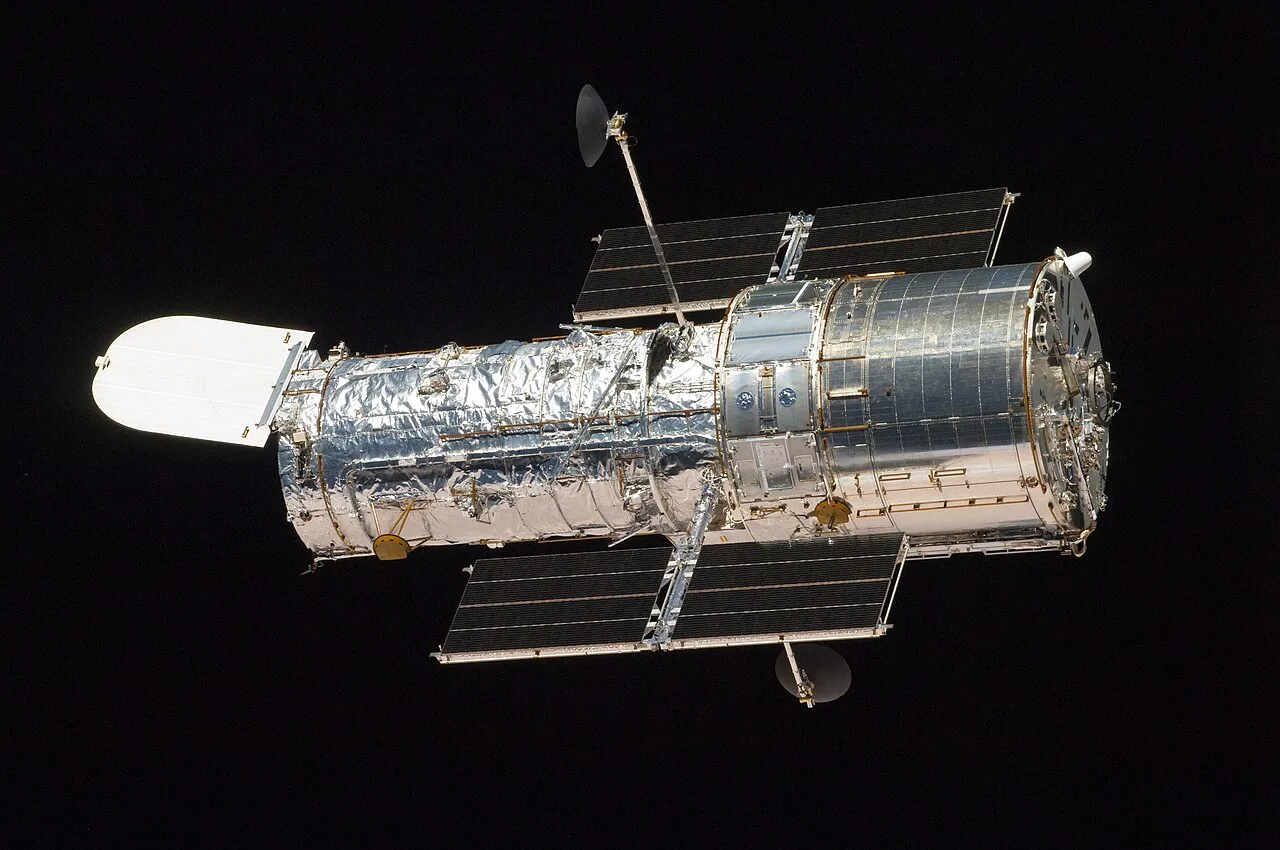
A historical view of Hubble illustrates the instruments used for follow-up astronomy; it does not show an ED138 observation.
Different follow-up methods constrain different properties. Infrared observations can help separate size and reflectivity through thermal modelling, spectroscopy can investigate surface-related signatures and a light curve can reveal brightness changes associated with rotation or shape. No single technique automatically settles every question about a distant body.
Thermal measurements require a model of how the object absorbs and emits energy. That can reduce the ambiguity left by reflected visible light, but the result still has assumptions and measurement uncertainty. Treat an improved estimate as an advance in evidence rather than expecting a perfectly exact number.
A stellar occultation occurs when an object passes in front of a background star as seen from a particular observing location. The timing of the star's disappearance and return can constrain the intervening body's projected size. Successful interpretation depends on the geometry and quality of the observations.
Match a question to a method
| Question | Relevant evidence | Important limitation |
|---|---|---|
| Where is it going? | Repeated positions and orbital fitting | Observation coverage matters |
| How large might it be? | Thermal data and reflected light | Model assumptions remain |
| Does its brightness vary? | Repeated photometry | Several causes can contribute |
| What surface signatures appear? | Spectroscopy | Signals may be faint or ambiguous |
The table describes possible methods, not a claim that every observation has already been performed for ED138. A proposal to use an instrument is different from completed data, and completed data is different from a published interpretation of those data.
Does being beyond Neptune explain how the object formed?
A trans-Neptunian location identifies broad orbital context, but it does not uniquely establish an object's origin or history. Researchers use orbital relationships, colours, composition and dynamical modelling to test scenarios. A headline saying beyond Pluto describes distance informally; it should not become a complete formation explanation.
The Kuiper Belt and wider outer Solar System contain objects with varied paths. Some may occupy orbital resonance relationships with Neptune, where periods follow particular ratios. A possible resonance is a dynamical question to examine through the orbital solution and modelling, not a visible line painted in space.
Do not assume that neighbouring objects are fragments of the same parent. A family claim needs supporting evidence, such as compatible orbital and physical characteristics. Similar location or size alone may be insufficient. The research discussion should explain which observations favour or weaken the proposed relationship.
Likewise, a redder or darker appearance is not a complete geological map. Surface composition requires careful interpretation of relevant data. An artist's impression may show ice, craters or a moon for explanatory purposes, but those visual details do not become measured properties merely because they accompany a scientific release.
This is a useful example of why labels need scope. The country and state geography guide addresses a different subject, but the reading habit is similar: establish what a category means before drawing conclusions from the label. Good definitions clarify evidence rather than substitute for it.
How can you compare two discovery reports fairly?
Compare the reports claim by claim, using publication dates, source type and uncertainty. One may summarise a preliminary announcement while another reflects a later analysis. A difference is not automatically an error; it may result from new observations, revised modelling or a different quantity being described.
Create a three-column sheet headed claim, evidence and status. Put the existence of an identified moving object in one row, estimated diameter in another and proposed classification in a third. This prevents confidence about detection from being transferred automatically to every physical interpretation.
For numerical claims, copy the range and assumptions rather than only the most impressive endpoint. Note whether a distance is current or orbital, and whether a size is an estimate or a direct constraint. If the reports use different bases, rewrite them into comparable terms before judging agreement.
For publication status, distinguish an observatory announcement, a preprint, a peer-reviewed paper and a catalogue entry. These sources serve different purposes. A catalogue may establish identity and orbital data, while a paper explains how a physical estimate was derived. Neither should be expected to do the other's entire job.
Ask what evidence would change your conclusion. A better albedo constraint might narrow the size range; an extended position history might refine the orbit. That question turns source criticism into scientific reasoning. It is more productive than treating every uncertainty as proof that the discovery is weak or every confident headline as proof that all questions are settled.
What can students do with the ED138 discovery now?
Use the discovery to practise separating observation, model and classification. You do not need advanced equipment to analyse how a claim is supported. A short, well-labelled evidence table and a clear explanation of one uncertainty can produce a substantial learning outcome without pretending to conduct the original research.
Start by writing a fifty-word summary that includes the full designation, the candidate status and the need for further physical measurements. Then remove any adjective that adds excitement without information. Check whether the remaining sentences tell a reader what is established and what remains open.
Next, design a hypothetical observation plan. Choose one question, such as size or rotational variation, and identify the kind of data that would help. Explain why a beautiful visible image alone might not answer it. Keep proposed observations clearly separate from reports of work already completed.
A final exercise is to assess an illustration. List which elements are measured, schematic or imagined. That distinction builds media literacy as well as astronomy understanding. The same care helps in studying screen portrayals and historical evidence, where a compelling visual representation also needs to be separated from its evidential status.
ED138 is worth following because it demonstrates science developing through linked evidence. The appropriate next step is to watch for a dated follow-up that materially improves the orbit, size estimate or classification case. A more complete answer will come from better constraints, not from repeating the original headline with stronger adjectives.
Keep a revision log beside your summary. Give each new entry a date, the measurement that changed and the conclusion it affects. If only the wording of a headline changed, record that separately from new data. This makes the development of knowledge visible and prevents an old size estimate from being compared casually with a later result based on a different method.
Sources
Source 1 · Source 2 · Source 3 · Source 4 · Source 5 · Source 6
Image credits: Cover: NASA/Johns Hopkins University Applied Physics Laboratory/Southwest Research Institute/Alex Parker, source, Public domain. Resized and converted to WebP. Article image: NASA, source, Public domain. Resized and converted to WebP.
Found an error or an outdated detail? Report a correction with the article URL and original source.