
Nitish Kumar Reddy: Understanding an All-Rounder
Analyse Nitish Kumar Reddy’s all-round role through batting position, bowling workload and match context, with separate records for each format.
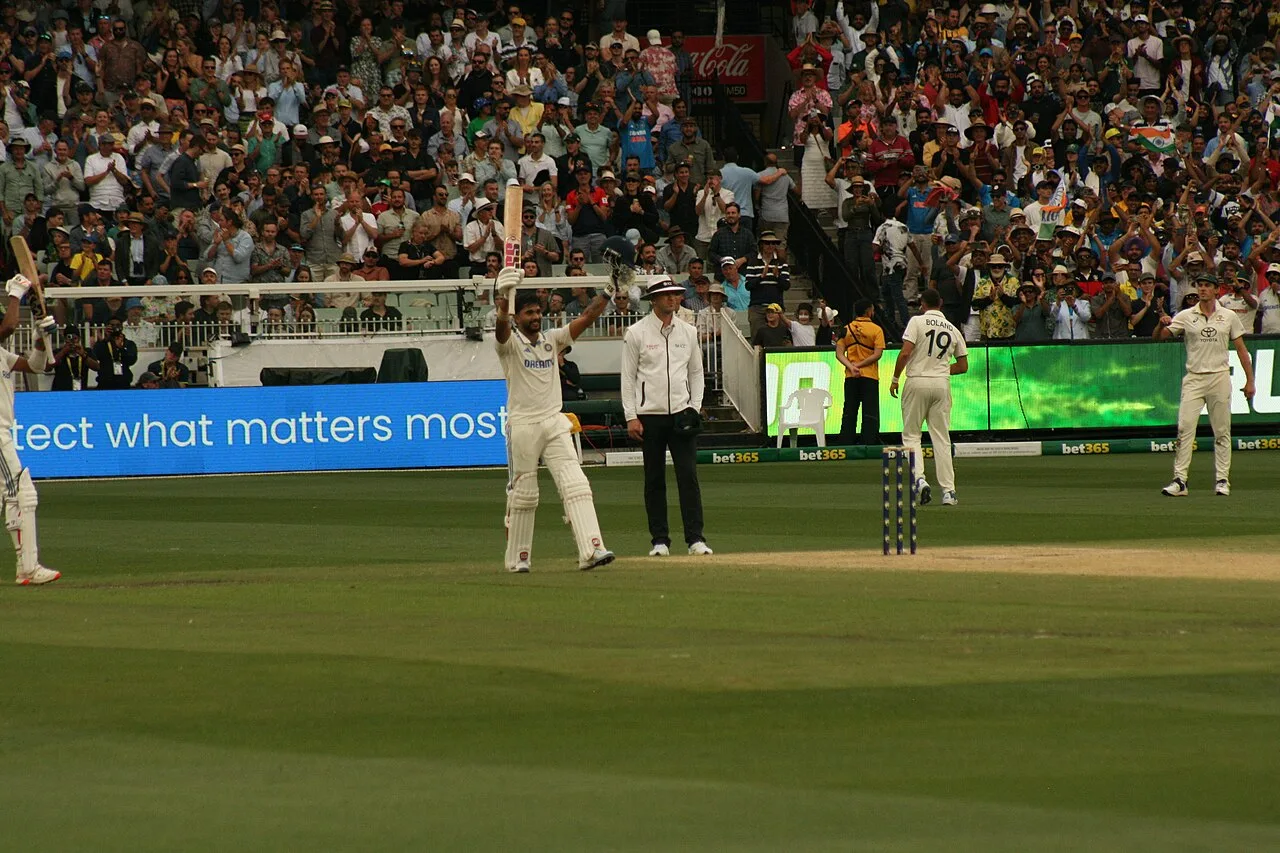
Nitish Kumar Reddy's all-round role is easier to understand when batting, bowling and team balance are examined separately before being connected. An all-rounder can provide two skills without carrying equal responsibility in every match. The key questions are where he bats, when he bowls and which options his presence gives the captain.
Official player material identifies Reddy as an all-rounder with right-arm medium-fast bowling. This article focuses on interpreting that role, not predicting selection or publishing a changing career total. Match examples and calculations are hypothetical. For an actual appearance, use the completed scorecard and the team information for that date and format.
What does calling Nitish Kumar Reddy an all-rounder actually mean?
The label means he offers batting and bowling skills, but it does not specify the balance required in a particular team. One appearance may demand substantial batting and a short spell; another may require more bowling. Assess responsibility through opportunity and use, rather than assuming a fixed workload from the label.
A side with several specialist bowlers may use an all-rounder as a sixth option. Another combination may depend on that player to complete a regular allocation. Those are materially different jobs, even if both scorecards list the same role.
Similarly, batting in the middle order differs from joining the lower order. The first task may involve building a long partnership, while the second may require protecting remaining wickets or scoring quickly with limited time. Check the actual batting position before making a comparison.
Do not assume that one quiet discipline means the player is no longer an all-rounder. A captain can complete an innings without using every available bowler, and a chase can finish before every batter appears. An unused opportunity is different from an unsuccessful performance.
Start the analysis with a role sentence: “In this match, the team needed batting at this position and a bowling option in this phase.” If the sentence cannot be completed from available evidence, identify the missing information before judging the player.
How does batting position change the assessment?
Batting position changes the likely entry situation, partners and time available. Read the entry score and overs remaining before interpreting runs or strike rate. A contribution that looks modest in isolation may solve a difficult team problem, while a larger score can still leave an unfavourable equation.
Imagine a hypothetical arrival at 45 for four with many overs remaining. Building a partnership may take priority over immediate boundary attempts. Compare that with entering at 160 for three in the final phase of a short innings, where the team may need acceleration from the first few balls.
A new ball can also return in some long-format situations, altering the technical challenge even for a batter entering late. Do not equate a lower number in the order with automatically easier bowling. Conditions and the match's stage matter.
Track the first passage after arrival. Does the batter find rotation, handle a particular bowler or depend entirely on the partner? Those observations help explain the final score and prevent the discussion from becoming a simple celebration of milestones.
Batting average and strike rate answer different questions. A not out changes the dismissal denominator used in an average, while balls faced determine the scoring-rate calculation. Keep both attached to a stated period and format rather than mixing figures from separate records.
How should you study attacking batting and strike rotation together?
Study how a batter obtains runs between boundaries and how those choices alter the field. Attacking play includes exploiting gaps, running well and disrupting a bowler's preferred sequence. Boundary hitting is one component, not a complete measure of intent or effectiveness.
Suppose a hypothetical over produces a four, three singles and two dots. It yields seven runs without requiring six attempts at a boundary. If a captain moves a fielder back after the four, the next single may be part of the same tactical exchange.
Count consecutive dot balls as well as the total. A long sequence can raise pressure even when the innings ends with an acceptable strike rate. Examine whether the sequence reflects accurate bowling, missed opportunities or a deliberate decision to avoid a particular risk.
When assessing a lofted shot, map the field and delivery first. A stroke toward a protected boundary can still be justified by the required rate, but the explanation should identify that demand. Avoid praising intent when the ball clears the rope and criticising the same decision only because it is caught.
The partner matters too. A batter may rotate to keep a well-set scorer facing more deliveries. That decision should be supported by the actual sequence, not assumed from the final individual totals.
What does an all-rounder's bowling allocation tell you?
Bowling allocation shows how the captain used an available skill in that match. It does not by itself explain fitness, long-term status or private team plans. Record the phase, length and alternatives before deciding whether a short spell indicates a limited role or a tactical choice.
Seam bowling can provide a different angle or pace from spin, giving a captain another way to manage a partnership. The value depends on execution and the opposition's needs. Merely having another option is helpful only if it can be used effectively.
Distinguish the powerplay, middle overs and death overs according to the relevant playing conditions. A supporting over in the middle of an innings differs from defending a demanding final over. Compare like tasks before interpreting economy rate.
For a hypothetical spell of 2.4 overs, there are sixteen legal deliveries in six-ball overs. If 20 runs are conceded, the economy is 7.5 per over. Treating 2.4 as a decimal would produce the wrong rate. Partial allocations make this error especially easy.
Runs conceded and wickets should be read together, but neither reveals all delivery quality. A dropped catch can leave an accurate spell without a wicket, while a poor ball may produce a mishit. Describe those incidents separately rather than rewriting the official figures.
A blank bowling row needs context
Check whether the player actually appeared, whether the innings ended early and which other bowlers were used. “Did not bowl” establishes no delivered overs in that innings. It does not, without more evidence, establish injury or a permanent move to batting only.
How can you compare two team combinations?
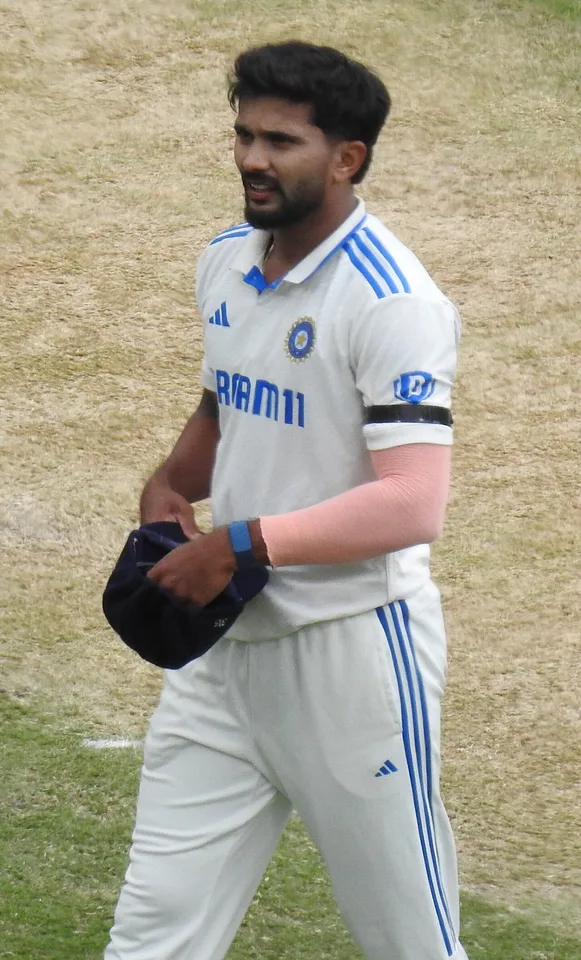
Reddy fielding during the fourth Australia–India Test on 27 December 2024, illustrating a separate component of an all-rounder’s match workload.
Compare the tasks each combination can cover, not just the individual names. An all-rounder may add a bowling option, extend batting depth or allow a specialist to be selected elsewhere. Evaluate the trade-off using the expected conditions and competition rules, then compare what actually happened.
Create a hypothetical combination with five specialist bowling options and another with four specialists plus an all-rounder. The second may gain an additional batter, but its bowling risk depends on whether the all-rounder's overs can be used in the required phases. The first may offer more certainty with the ball but less batting depth.
Avoid claiming that one structure is always superior. A surface favouring one style, a shorter chase or an unusual opposition order can change the balance. A useful explanation identifies the conditions under which each combination makes sense.
Batting depth is also more than the number of players described as batters. Ask what task the lower order is likely to face. A long recovery innings and a short final-over chase require different skills, so the same player can add different value in each.
| Team question | Evidence to collect | Conclusion to avoid |
|---|---|---|
| Is there enough bowling? | Allocation by phase and alternatives | Every option is interchangeable |
| Is batting depth useful? | Likely entry and partner quality | More named batters guarantees runs |
| Was a role unused? | Innings duration and captain's choices | No opportunity equals failure |
| Did balance help? | A specific task completed | One win proves a universal formula |
What changes between Test cricket and white-ball cricket?
Test, ODI and T20I cricket place different demands on the same player. Longer matches can require sustained batting, repeated spells and management across sessions. Shorter formats compress decisions and resources. Keep the records separate, then compare the skills used to solve comparable problems.
In a Test, an innings may be shaped by a lead, deficit, declaration or follow-on situation. Time and remaining partners can matter alongside scoring speed. A supporting bowling spell may help distribute workload across a long day even when it yields no immediate wicket.
In an ODI, preserving wickets and accelerating later must be balanced across a fixed allocation. The middle order may need to adapt after an unexpected collapse. Bowling can involve a targeted spell against a partnership rather than a continuous full allocation.
A T20 innings offers less time to recover from several quiet deliveries. An all-rounder might be asked to attack a particular matchup or supply a single over at an important moment. That narrower opportunity should not be compared directly with a long Test contribution.
Domestic and franchise records also need their own labels. A T20 league figure is not automatically a T20I figure, even if many participants are internationals. State the competition and period so the reader knows what the numbers describe.
How should fielding and workload enter the discussion?
Include visible fielding contributions and the actual sequence of batting and bowling work, while avoiding unsupported claims about physical condition. Fielding can affect a result through catches, returns and saved boundaries, but many actions have no simple official numerical value.
A catch total establishes completed catches, not the difficulty of every chance or the number offered. A run-out may involve both a sharp gather and an accurate throw. Describe the contribution you can see without inventing a personal run-value estimate.
Workload begins with what happened: balls faced, overs delivered and periods in the field. The same combined total can be distributed differently across days or innings. Sequence can therefore matter when evaluating the task, even before making any medical claim.
Do not diagnose fatigue from a late error. A misfield or mistimed stroke can have several explanations. If an official report identifies a fitness limitation, attribute it accurately and keep its date visible. Otherwise, discuss observable workload and leave its physiological effect unresolved.
Selection is another separate question. A squad announcement establishes membership for its stated scope, while a playing eleven confirms a particular match's participants. Neither automatically explains every tactical choice made after play starts.
Use an opportunity record
Add columns for whether the player batted, bowled and received a fielding chance. This prevents a comparison from treating “no opportunity” as identical to “poor execution.” It also makes a limited sample easier for another reader to inspect.
How can a student produce a balanced Reddy analysis?
Define one format and period, collect complete match records, and write separate batting and bowling findings before combining them. Include the assigned task, opportunity and outcome for each discipline. A balanced analysis can recognise an uneven contribution without forcing both skills to look equally successful.
Begin with three or more selected fixtures if your assignment permits, but define the selection before seeing the results. Record every eligible appearance in that window. Explain any exclusion, such as an abandoned match with no meaningful opportunity.
For batting, note entry score, partners, runs, balls and dismissal. For bowling, record phase, legal deliveries, conceded runs and wickets. Add a short fielding note only where the evidence supports it. This creates a manageable dataset instead of an unstructured collection of memorable clips.
Next, write one sentence describing what changed between games. Perhaps the batting entry became later, or the bowling allocation moved from supporting overs to a longer spell. These are more concrete observations than saying confidence rose or fell without evidence.
Sample size limits the conclusion. A few matches can reveal the role in those games and identify questions for further observation. They rarely settle a career comparison or prove that one player should permanently replace another.
Test the conclusion against an alternative
If you conclude that a short spell showed limited trust, ask whether an early finish or another bowler's success also explains it. If you praise a small innings as a rescue, check whether the entry situation actually required recovery. Considering an alternative makes the final judgement more robust.
End by connecting the disciplines to team needs. Explain which batting task was completed, which bowling option was used and where uncertainty remains. This is the distinctive value of studying an all-rounder: the contribution lies partly in how several skills fit together, not simply in producing the largest individual total.
For a final classroom discussion, ask two groups to select a team for the same hypothetical conditions. One group must explain its batting depth; the other must explain its bowling allocation. Compare the unanswered tasks in each proposal. The exercise shows why an all-round role is an argument about balance and opportunity as well as individual ability.
When applying the worksheet to India, keep the actual fixture at the centre of the discussion. A run chase may end before Reddy has a substantial batting opportunity, while another game may create a much heavier bowling workload. These differences should appear in the record before any comparison is made. Returning to opportunity is a simple way to keep an all-rounder assessment fair when the team's needs change from one match to the next.
The middle-order batting guide develops the entry-situation analysis, while the bowling-statistics guide explains how to compare spells without mixing roles. For the recordkeeping stage, use the Roston Chase statistics worksheet as a separate lesson in denominators and categories. These links support different parts of the all-rounder question rather than offering a single universal ranking.
Sources
Source 1, Source 2, Source 3, Source 4
Image credits: Cover: Neb, source, CC BY-SA 4.0. Resized and converted to WebP. Article image: WikiWanderer261, source, CC0. Resized and converted to WebP.
Found an error or an outdated detail? Report a correction with the article URL and original source.