
Ryan Rickelton: Batting Starts and Keeping Duties
Study Ryan Rickelton’s batting and wicketkeeping through entry conditions, role and match evidence, with official South African cricket sources.

Ryan Rickelton is identified by Cricket South Africa as a left-handed batter and wicketkeeper. For match analysis, that profile is the starting point rather than a complete description of his duties. Confirm where he batted and who kept wicket in the particular game before evaluating either performance.
A batting start asks how a player manages an unfamiliar ball, surface and bowling plan. Wicketkeeping asks how the player handles deliveries and chances behind the stumps. The two jobs can interact through workload, but they need separate evidence. A useful review does not allow a strong batting total to conceal an unexamined keeping claim.
The ICC discussed Rickelton taking on wicketkeeping duties in an October 2026 report. That dated discussion reinforces why role checks matter. This article develops a method for studying starts and keeping contributions without treating any one announcement as a permanent description of every later match.
What should you record before assessing a batting start?
Record the format, batting position, entry score, ball condition, opposition attack and available overs. Then identify what the team needed at that moment. A batting start is not always an opening innings, and an early boundary does not independently prove that the bowler or surface offered an easy opportunity.
If Rickelton opens, the new ball may influence the initial task. If he arrives in the middle order, the ball and field may already have changed. Use the team sheet and scorecard to establish the role rather than importing it from a previous competition.
Distinguish Test, ODI and T20 contexts. A defensive sequence can have different value when many overs remain than when a short chase is nearly finished. The same shot choice should therefore be evaluated against a different time horizon.
Write the partner's situation too. A new batter joining a settled partner may manage strike differently from two recent arrivals. A partnership total can hide which player faced the difficult part of a spell, so inspect the sequence where possible.
Do not infer conditions entirely from venue reputation. A ground can host different surfaces and weather. Record what the match evidence shows: movement, pace off the pitch or unusual bounce. A general description can orient you, but it should not replace observation.
This first note should be short enough to use repeatedly. Its purpose is to fix the context before the outcome is known, making the later judgement less vulnerable to calling every successful start inevitable and every dismissal a technical failure.
How do you read new-ball decisions for a left-handed batter?
Watch the relationship between line, length and the batter's movement. A left-handed stance changes which areas are off side and leg side, so orient the field correctly. Then ask whether the leave, defence or attacking stroke fitted the delivery and the player's balance at contact.
Swing is movement through the air; seam movement concerns deviation associated with contact with the pitch. Television evidence does not always allow a precise distinction. If you cannot identify the cause, describe visible movement without inventing a technical explanation.
A leave can be a positive decision when the delivery is safely outside the relevant threat area. It can also be misjudged. The fact that no run is scored does not tell you whether the choice was sensible, and one successful leave does not prove the entire channel is harmless.
For a drive, inspect length and balance. A full ball can invite forward contact, but width, movement and fielders affect the risk. Calling every attractive drive technically correct ignores where the edge or mistimed contact might travel.
A cut or pull responds to a different length and height. Name the observed shot carefully instead of labelling every square boundary as identical. Use the replay to confirm contact if the live angle hides it.
For a small viewing exercise, record five early decisions with the delivery description and outcome in separate columns. Review the descriptions before looking at the runs. This trains attention on the choices that made the start sustainable rather than merely on its scoring speed.
How should an innings develop when bowling or field restrictions change?
Look for adjustments in scoring areas, movement and risk when a bowling change or field change alters the available options. A successful start does not mean repeating the same stroke indefinitely. The next phase may require strike rotation, a different response to spin or more selective boundary attempts.
In a limited-overs powerplay, field restrictions influence where space is available. Later fields can protect boundary areas differently. Use the applicable competition conditions before making an exact claim about the number of permitted fielders.
Spin and pace create different timing and trajectory problems. A batter may use forward or backward movement to alter contact, but a single replay cannot establish a permanent preference. Describe the response to that delivery and look for repetition before generalising.
Singles can be especially informative between boundaries. A batter who keeps finding low-risk scoring options may avoid a build-up of dot balls. Highlights often omit these runs, making an innings look like a series of isolated attacks rather than a managed sequence.
Suppose an invented passage contains three singles and a boundary in one over. The seven runs came from a mixture of placement and a larger scoring event. If the next over produces six dots, the review should investigate what changed rather than simply calling the batter less aggressive.
Compare this with long-format batting, where preserving an innings and waiting for a favourable ball can involve a different balance. The principle is consistent: evaluate development against the role, format and changing bowling plan, not a single universal scoring tempo.
How can statistics describe a start without hiding its context?
Use runs, balls faced and the team's position together. Strike rate describes scoring speed, while batting average describes runs relative to dismissals in a defined sample. Neither independently explains whether a player met the immediate task or which part of an innings created the decisive advantage.
For an invented example, 24 from 18 balls gives a strike rate of approximately 133.3. That calculation says how quickly runs were scored. It does not tell you whether the player faced a difficult spell, used favourable fields or left the side with an appropriate platform.
A start also needs an endpoint definition. You might examine the first fifteen balls faced or the period before the first bowling change. State the rule before collecting innings so that the sample does not consist only of clips you already remember.
Avoid comparing a Test opening spell with a T20 powerplay as though the same benchmark applies. Even within one format, target and wickets in hand can alter the intended risk. A numerical difference should start a question, not finish the explanation.
Not-out innings and short cameos can affect aggregates. Keep the exact calculation and denominator clear, especially where a small number of dismissals creates a large average. A temporary figure is not a complete account of the player's ability.
A fair comparison against another keeper-batter uses the same competition level, period and role where possible. If those cannot be matched, explain the difference. You can learn from contrasting responsibilities without pretending the raw figures form an even contest.
How do you evaluate wicketkeeping beyond catches?
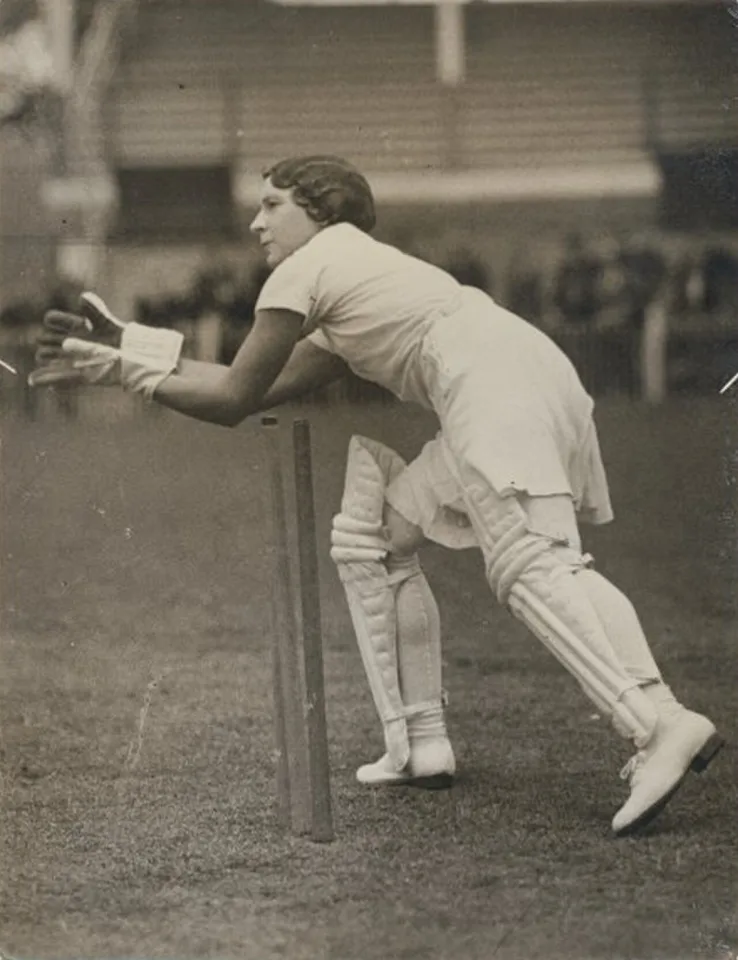
Betty Snowball keeping wicket during the 1934–35 tour of Australia and New Zealand; a historical collection example, not Rickelton.
Confirm that Rickelton actually held the gloves, then observe collection, positioning and the handling of different deliveries. Recorded dismissals are important, but they depend partly on chances created by the bowling and batting. A keeper can contribute on many balls that produce no catch or stumping.
Standing back and standing up create different observation questions. Watch starting position, movement towards the ball and whether collection appears controlled. A viewer should describe what is visible rather than prescribe a stance from a distant broadcast angle.
A keeper receiving pace may need to respond to late movement or variable bounce. Against spin, deflections and close collection can create different challenges. These situations should not be treated as identical simply because both end with the ball in the gloves.
Byes need context. A ball passing the keeper may have been exceptionally difficult, or it may reveal an avoidable collection problem. A scoreboard entry alone cannot determine responsibility. Examine the trajectory, any deflection and what the camera actually shows.
Similarly, a chance requires a defensible description. Do not call every ball passing near the gloves a dropped catch. Replays and official commentary may help establish contact and difficulty, but uncertain evidence should remain uncertain.
For a wicketkeeping comparison, review several ordinary collections as well as dismissals. This prevents a highlight package from defining the entire performance. The quieter observations often explain consistency and control more clearly than a single spectacular moment.
How should stumpings, run-outs and appeals be discussed?
Describe the sequence and use the official decision rather than reconstructing a dismissal from one cropped frame. A stumping, run-out and catch have different conditions. The position of the batter, the ball's status and how the wicket was put down can all matter to the correct classification.
Begin with what the scorecard records. Then use video to explain the visible action, such as a collection followed by a movement towards the stumps. If a replay does not show the decisive instant clearly, do not invent precision.
MCC's Laws and the applicable playing conditions are the proper references for technical rules. A familiar commentator's shorthand can help explain an incident, but it should not be substituted for the relevant rule when a disputed detail matters.
An appeal also differs from a confirmed dismissal. The keeper's confidence is part of the on-field event, not conclusive evidence of the decision. Keep the action, review process and final recorded outcome separate.
For a classroom exercise, compare two neutral descriptions: “the keeper appealed after breaking the wicket” and “the batter was given out stumped.” The second includes an official outcome that the first does not establish. This distinction is valuable in any evidence-based reporting.
Avoid using an uncertain incident to question a player's honesty or competence. A technical review can explain timing, position and the decision process without guessing motives. The goal is to understand the cricket sequence, not attach a permanent label to a person from an ambiguous replay.
What can you reasonably say about combined batting and keeping workload?
You can record the duties performed and the sequence of activity, then discuss the demands those duties plausibly create. You cannot diagnose fatigue, injury or a private selection reason from visible workload alone. Combined responsibility is a useful analytical question, but its effects require stronger evidence than an impression.
A keeper may spend many deliveries actively involved before batting later. Another match may reverse the sequence. Note the actual order, innings length and conditions when comparing performances. These details describe exposure without assigning a medical explanation.
If a report quotes coaching staff about a role change, attribute the assessment and retain its date. It establishes what the staff said about that situation. It does not prove how every future innings will be affected.
Use a table to keep responsibilities separate:
| Responsibility | Direct evidence | Interpretation requiring caution |
|---|---|---|
| Batting position | Scorecard order | Private reason for the position |
| Keeping duties | Team sheet and match footage | Automatic claim of fatigue |
| Scoring development | Runs and ball sequence | Permanent technical weakness |
| Recorded dismissals | Official scorecard | Complete measure of keeping quality |
| Role change | Dated announcement | Unchanged responsibility indefinitely |
This structure also helps when discussing selection. An omitted name does not automatically indicate injury, poor discipline or a tactical disagreement. Use a direct announcement for the reason or leave it unassigned.
A combined review should give each skill its own paragraph before considering interaction. That prevents a successful innings from becoming supposed proof of excellent keeping, or a missed chance from cancelling unrelated batting evidence.
How can you write a balanced Rickelton performance review?
State the match-specific role, explain one batting sequence and one keeping sequence, then identify the limits of the sample. Connect each conclusion to a scorecard entry or visible action. A useful review can recognise effective play while avoiding live statistical claims that have not been checked.
For batting, describe the entry conditions and the response to one meaningful change. For keeping, choose a collection pattern or documented chance and explain what the replay shows. These are more precise than broad praise about temperament or natural talent.
Compare opportunities as well as outcomes. A keeper receiving few edges cannot manufacture catches, and a batter entering late cannot face as many deliveries as an opener. Fair analysis begins by recognising what the role made possible.
Captaincy analysis provides a useful related distinction: the same person can contribute through several responsibilities, but evidence for one is not automatically evidence for the others. Keep roles visible throughout the paragraph rather than merging them into a single approval score.
Finish with a question that further viewing could answer. You might investigate responses to a particular line over several matches or compare collection against pace and spin. A specific question invites evidence; a permanent judgement discourages it.
Rickelton's combination of left-handed batting and wicketkeeping makes role-based study particularly useful. The transferable skill is to separate profile, assignment and performance: identify what the player can do, establish what he was asked to do on the day and evaluate what the available evidence actually shows.
Sources
Source 1 Source 2 Source 3 Source 4
Image credits: Cover: Dave Morton, source, Public domain. Resized and converted to WebP. Article image: Unknown authorUnknown author, source, Public domain. Resized and converted to WebP.
Found an error or an outdated detail? Report a correction with the article URL and original source.