
Sanjay Dutt: Character Roles and Film Analysis
Study Sanjay Dutt’s screen roles through character objectives, performance and production credits, with a practical guide to responsible film discussion.
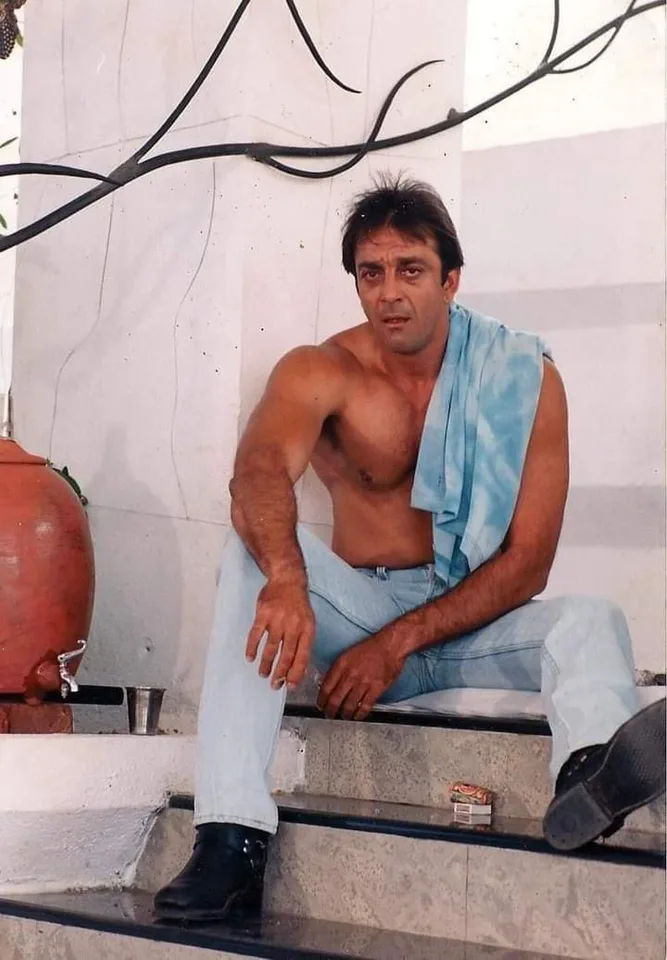
Sanjay Dutt's screen roles are best studied through what a character wants, how the performer communicates that objective and how the surrounding film shapes the audience's response. Begin with a verified production and a specific scene. A reputation, a fan montage or an isolated line is too broad a foundation for a useful performance analysis.
The producer's materials for Munna Bhai MBBS provide a concrete starting point: they identify the film and its central premise. The discussion below offers a method for analysing authorised viewing material rather than a new casting report or a biography. It helps students write about character roles, comic timing and screen presence while keeping observation separate from interpretation.
How do you verify a Sanjay Dutt film role?
Verify the film title, version and credit before describing the performance. On-screen credits and official production materials are stronger evidence for participation than a fan poster. Similar titles, remakes, dubbed versions and promotional compilations can confuse a search, so identify the exact work you intend to discuss before selecting a scene.
For a viewing notebook, record the production title, the character name if confirmed, the version viewed and the scene's approximate location. A streaming interface may display a shortened title. Credits can clarify which production you actually watched. This matters when an essay compares characters across films instead of comparing different edits or language presentations of the same work.
Treat an upcoming film announcement as a different type of evidence. An official casting statement establishes what a production has announced, while a completed film establishes what appears on screen. A concept trailer cannot settle either question. If a claim only appears in fan discussions, keep it out of a factual filmography until an appropriate record supports it.
Choose sources for the question being asked. A production synopsis is useful for identifying the premise, but its promotional praise is not an independent review. A finished scene provides the evidence for your own interpretation. This distinction lets you use official materials accurately without borrowing their judgement about whether a performance is memorable, powerful or successful.
What does the character want in a scene?
A scene objective is the immediate result a character tries to achieve: persuade someone, conceal information, gain acceptance, avoid humiliation or change another person's behaviour. Defining that objective makes acting choices easier to discuss. Support the interpretation with visible actions and responses rather than assuming that every expression reveals one certain private thought.
In a hypothetical scene, a character enters a room hoping to look confident while hiding a mistake. The objective is acceptance; the obstacle is the risk of exposure. A performance might show an exaggerated greeting followed by a pause when a difficult question appears. That contrast gives the analyst something specific to explain without inventing a real scene from memory.
Separate the immediate objective from the larger character arc. A protagonist may want approval in one encounter while gradually learning to accept responsibility across the story. Those aims can conflict. A comic moment may become meaningful because the audience understands a longer emotional need beneath the character's immediate tactic, such as boasting or changing the subject.
Write objectives as actions instead of personality labels. “He tries to reassure the listener” is more testable than “he is nice.” Ask what changes in the listener's behaviour and whether the tactic succeeds. If the scene ends without a clear answer, preserve that ambiguity. An analysis becomes stronger when it explains uncertainty rather than concealing it behind confident adjectives.
How do voice, pauses and comic timing create meaning?
Vocal delivery can change the function of a line through pace, volume, emphasis and silence. Comic timing often depends on when information arrives and how another character responds. Listen to the full exchange before crediting the effect to one isolated phrase, because dialogue rhythm includes interruptions, reactions and editorial choices.
Try describing a delivery without quoting it. Note whether the speaker accelerates, lowers the voice or leaves space before the final word. Then explain the possible effect in context. A pause might suggest hesitation, invite anticipation or allow a reaction to register. The scene's surrounding actions help determine which explanation is most convincing.
Compare spoken rhythm with the dialogue's literal meaning. A confident sentence delivered uncertainly can create tension between words and performance. A plainly stated sentence after exaggerated speech can feel unexpectedly sincere. Neither effect requires a long quotation. A precise description of the change often communicates more than copying the entire exchange into a review.
Subtitles and dubbing deserve attention. A translated line may alter word order, and subtitles cannot reproduce every feature of vocal emphasis. If analysing the voice, identify the version you heard and avoid judging the original delivery from translated text alone. Keep any dialogue quotation brief and necessary, using description for the rest of your argument.
What can body language and blocking reveal?
Body language includes posture, gesture, facial expression and movement, while blocking concerns where performers are positioned and how they move through the scene. These visible choices can suggest confidence, distance or changing relationships. Describe the action first, then explain its possible meaning using the other evidence present in the sequence.
For example, two characters beginning on opposite sides of a room and ending beside each other create a visible spatial change. That movement might accompany reconciliation, negotiation or pressure, depending on dialogue and context. Physical closeness alone does not prove affection. A careful analyst asks what prompted the movement and how each person responds afterward.
Watch small changes rather than only dramatic gestures. A hand becoming still, a glance toward the doorway or a shift away from another character can redirect attention. In ensemble acting, the person listening may carry important information. Sanjay Dutt scene analysis should therefore include reaction shots and relationships rather than treating every frame as an isolated star portrait.
Keep performance claims tied to visible behaviour. Avoid diagnosing a character or performer from a facial expression. “The character looks away before answering” is an observation; “the actor must have felt ashamed during filming” invents private experience. That boundary is essential when writing about a public performer whose real life is separate from the fictional scene.
How do camera, sound and editing shape screen presence?
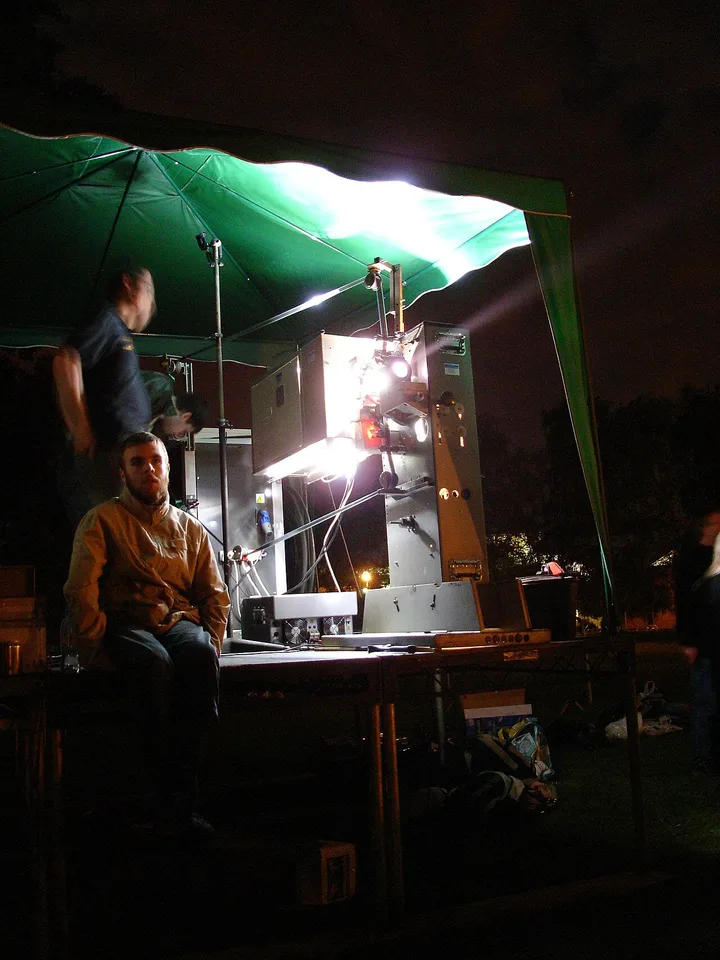
Projection equipment at a 2007 outdoor screening illustrates the technical presentation surrounding a screen performance.
Screen presence emerges from a collaboration between performance and filmmaking. Camera angle, shot size, lighting, costume, background score and editing influence what the audience notices and how long it notices it. Analyse these elements together instead of attributing every emotional effect or impression of authority solely to the actor's delivery.
A close-up can make a small expression easy to see, while a wide shot can emphasise physical relationships. A low angle may contribute to an impression of power, but context can complicate that impression. Compare the shot with what happens before and afterward. One frame cannot explain the entire sequence or prove a director's intention.
Sound design can create expectation before a character appears. Music may support, exaggerate or challenge the image. Silence can also matter. For a practical exercise, watch a short authorised excerpt once with sound and once without it, then list which details remain understandable. Describe the difference without redistributing the clip or reproducing copyrighted soundtrack material.
Editing controls the order and duration of information. A reaction shot can turn a statement into comedy or discomfort, depending on its placement. Continuity editing can make separate recorded moments feel like one exchange. A good review recognises the resulting performance on screen while leaving room for the contributions of direction, cinematography, sound and editorial construction.
How can Munna Bhai MBBS support a character study?
Munna Bhai MBBS offers a verified production context for studying a character whose identity and social setting generate conflict. Use the producer's synopsis to establish the premise, then choose an actual scene from an authorised copy. Build your interpretation from that scene rather than retelling the whole plot or relying on remembered quotations.
One useful question is how a character manages the difference between an outward persona and the expectations of an institution. Look for changes in vocabulary, posture or confidence when the setting changes. This is an analytical prompt, not a claim that every scene follows the same pattern. Identify the moment that supports your answer and explain why it matters.
Another approach examines empathy and authority. Ask who is permitted to speak, whose concerns are heard and whether the scene changes those relationships. A sympathetic presentation does not make every fictional action admirable. Students can recognise a film's emotional appeal while discussing contradictions in the character's behaviour, provided they distinguish interpretation from a claim about real medical practice.
Avoid turning the story into health advice or proof about real institutions. A comedy-drama organises events for narrative purposes. Its medical setting can support discussion of character and social expectations without establishing clinical facts. A focused film paragraph should explain what the sequence communicates and how it communicates it, leaving unrelated factual conclusions to appropriate evidence.
How can two Sanjay Dutt roles be compared fairly?
Compare scenes that answer a shared analytical question, such as how a character gains authority or expresses vulnerability. Identify each work and its narrative situation before contrasting performance choices. A leading role and an antagonist may have different functions, so a fair comparison explains those demands instead of ranking them through broad labels alone.
Build a comparison around one variable at a time. First examine voice, then movement, then interaction with another performer. A long list of differences can feel impressive while never explaining why they matter. The strongest paragraph connects a concrete choice with the scene objective and the response it creates within the story.
Use a matched observation period where possible. Comparing an uninterrupted dialogue scene with a rapid trailer montage gives editing different amounts of control over the impression. If those are your only materials, state the difference and narrow the claim. You can compare promotional presentation, but that is a different question from comparing complete performances.
Do not invent an award history, box-office total or audience consensus to strengthen an interpretation. A thoughtful reading can stand on the sequence itself. If popularity is genuinely relevant, research the specific measure and time period separately. A film can be commercially prominent while supporting several reasonable critical interpretations, none established merely by the size of its audience.
How do you write an evidence-based film paragraph?
Start with a precise claim, identify a brief moment, describe the performance and filmmaking choices, then explain their effect. Finish by connecting the moment to the wider character or scene objective. This structure produces an argument a reader can assess without requiring a plot summary, long dialogue quotation or unsupported statement about the actor's intentions.
For a hypothetical example, write that a character's confidence weakens when another person challenges the story being told. Describe a pause, a change in posture and a cut to the listener. Explain that the combination makes the performance of confidence visible. Label the example as invented so no reader mistakes it for a report of a particular scene.
During revision, replace empty praise with evidence. “Excellent acting” becomes useful only when you explain which choice works and why. “Powerful presence” might refer to framing, vocal control or another character's reaction; name the actual element. Different viewers may disagree with your interpretation while still recognising that you have described the evidence carefully.
End with a proportionate conclusion. One scene can demonstrate a particular technique without proving the quality of an entire career. A comparison can reveal range without requiring a permanent ranking. Respect age classification and classroom suitability when choosing material, and keep the performer's fictional conduct separate from claims about personal beliefs or private behaviour.
A compact observation sheet
| Element | Record | Explain |
|---|---|---|
| Objective | Immediate aim | What is at stake? |
| Vocal delivery | Pace and emphasis | How does meaning change? |
| Blocking | Position and movement | How do relationships shift? |
| Camera | Shot size and angle | What receives attention? |
| Editing | Reaction and duration | How is the moment shaped? |
After filling the sheet, select only the two strongest observations for a paragraph. Additional notes can remain in your notebook. This prevents a scene study from becoming a catalogue of terminology. The final writing should help a reader understand a particular dramatic effect, with every technical term serving that explanation rather than acting as decoration.
Try a comparison of entrances
Choose two authorised scenes in which a character enters a room. Record what the audience knows before the entrance, how the camera introduces the person and whose reaction appears first. Then describe the first change in the room's activity. This small task makes screen presence observable without requiring an unsupported claim that an actor dominates every film.
The stage and screen guide helps compare performance scale, while the screen-performance guide offers another route into detailed observation. Use those connections to refine your question, not to assume that different performers should make identical choices.
Finally, consult the director and producer study guide when assigning creative responsibility. If an entrance feels intimidating, identify how movement, framing and music contribute together. A conclusion naming that collaboration is more informative than treating the emotional effect as a mysterious personal quality that cannot be examined or explained.
Sources
Image credits: Cover: Gavy Nehal, source, CC0. Resized and converted to WebP. Article image: TheAttila, source, CC BY-SA 3.0. Resized and converted to WebP.
Found an error or an outdated detail? Report a correction with the article URL and original source.