
Shivaji Satam and CID: Fiction, Evidence and Acting
Explore Shivaji Satam’s CID connection, distinguish television investigation from real evidence, and practise a short scene-analysis exercise.

Shivaji Satam is listed among the cast of CID on the programme's official streaming page, which describes a crime thriller led by ACP Pradyuman and his investigative team. The useful educational angle is to study how an actor and a television production make fictional authority convincing. A screen investigation is a constructed story, not a complete account of real investigative work.
This guide focuses on performance, editing and evidence within a drama. It makes no claim about a new casting development, a departure or the actor's private life. Students can use the exercises with an authorised episode they can access, keeping episode details and timestamps so their observations can be checked by another viewer.
How should you separate Shivaji Satam from the character he plays?
Separate the performer, the fictional character and the production. Shivaji Satam is an actor; the officer belongs to the story; the programme is created through writing, direction, performance and editing. A character's dialogue or behaviour cannot automatically establish the actor's personal beliefs, professional expertise or involvement in a real incident.
In a viewing notebook, create three columns. Put observable performance choices in the first, story events in the second and production techniques in the third. A pause before a line belongs to performance. A character questioning a suspect belongs to the narrative. A cut to an anxious face belongs to editing. Sometimes the effects overlap, but the categories help explain them.
Use the character's name when describing an action in an episode and the actor's name when discussing its delivery. This small distinction improves clarity. “The officer raises a doubt” describes the fictional investigation; “the actor slows the final words” describes an interpretive choice. Mixing them can turn a review into an unsupported statement about the performer outside the role.
The same discipline applies to trending searches. A popular clip, rerun or discussion does not establish a new biographical event. Before making a current claim, look for a dated production statement or another appropriate primary source. For a performance essay, the safer and more useful evidence is the scene itself, described precisely within its fictional setting.
What makes a screen authority figure feel convincing?
Screen authority emerges from several coordinated choices: voice, posture, timing, relationships and the responses of other characters. The actor contributes to that effect, but dialogue, framing and editing also shape it. Analyse how the scene establishes influence rather than treating authority as an unexplained quality the performer simply possesses.
Start with vocal delivery. Notice volume, pace, articulation and where the actor places emphasis. A quiet question followed by a pause can create pressure differently from a shouted accusation. Describe the actual sound and its position in the exchange. Avoid calling a performance powerful without showing what changed in the listener's attention or response.
Next, examine posture and movement. A still figure can control a busy frame if other characters wait for that person's reaction. A turn of the head or a step toward another actor may become significant because the scene has established restraint. The interpretation needs the sequence around the gesture; a frozen screenshot cannot capture timing.
Finally, observe how the production supports the character's status. Other characters may stop speaking, the camera may hold on a reaction or the music may create anticipation. Explain the combined effect without assigning every decision to the actor. The stage and screen storytelling guide offers a useful comparison of performance across different presentation conditions.
How does a crime drama turn a clue into suspense?
A crime drama controls when viewers encounter information and how strongly that information appears to point toward an explanation. Suspense often develops through delayed answers, competing interpretations and selective revelation. A clue's dramatic importance therefore depends partly on presentation, not merely on the object or statement shown.
Imagine an invented scene in which an investigator finds a key beside a broken window. A close-up tells the audience to notice it, while tense music suggests significance. At this stage, the viewer has seen a key in a particular location. The scene has not yet established who owned it, when it arrived or why the window was broken.
Now imagine the episode cuts to a character looking away. The edit encourages suspicion, but the reaction could have several meanings within the story. Write two columns: what the sequence shows and what it invites you to infer. This exercise makes the gap between observation and interpretation visible without requiring any claim about real forensic procedure.
Later scenes may confirm one interpretation, introduce an alternative or reveal that the apparent clue was misleading. That is narrative construction. A strong review explains how the audience's understanding changes at each stage. Avoid describing the eventual answer as obvious from the beginning if the earlier episode had not supplied enough information to support it.
What is the difference between an observation, an inference and an accusation?
An observation describes what is shown or heard. An inference proposes an explanation for that observation. An accusation asserts responsibility. Keeping these categories distinct allows students to analyse a fictional investigation without treating every dramatic suspicion as a demonstrated conclusion. The scene may deliberately move between these levels to sustain tension.
For the invented key example, “a key is beside the window” is an observation. “Someone may have dropped it while entering” is an inference. “This character broke in” is an accusation requiring additional story evidence. The words used in a review should preserve those differences rather than move directly from the visible object to a definite culprit.
Ask whether the episode offers corroboration inside its fictional world. Does another scene establish ownership, timing or a contradiction? Does the viewer see independent support, or only hear a character state a conclusion? This is a media-literacy question about what the story has presented. It is not advice on conducting an investigation or deciding an actual legal complaint.
A confession in a drama can function as a narrative resolution, but its dramatic placement should still be analysed. Did the script prepare it through earlier information, or does it mainly close the plot quickly? Students can discuss whether the resolution feels earned by the storytelling without claiming that a television sequence accurately represents every real evidentiary requirement.
| Viewing note | What it records | Example from an invented scene |
|---|---|---|
| Observation | Visible or audible information | A key lies beside a window |
| Inference | Possible explanation | Someone may have dropped it |
| Accusation | Asserted responsibility | A character is blamed |
| Corroboration | Additional story support | Another scene establishes ownership |
| Production choice | How information is presented | Close-up followed by reaction shot |
| Audience effect | Your supported interpretation | Suspicion increases before confirmation |
Why do editing and sound change what the audience believes?
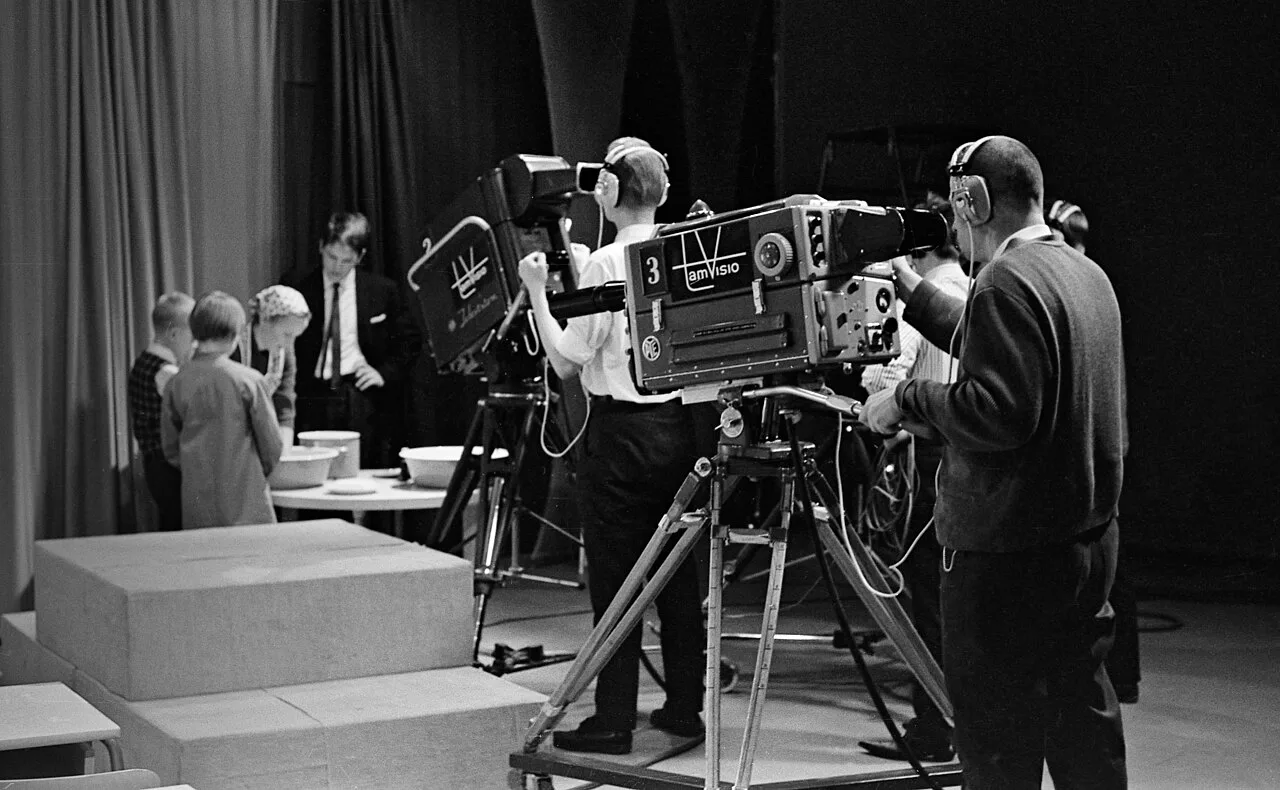
Television production in Tampere in 1965; a historical illustration of camera work, not a CID production photograph.
Editing determines sequence, duration and juxtaposition, while sound influences emphasis, atmosphere and continuity. Together they guide attention and can make a detail appear threatening, ordinary or ambiguous. To understand their effect, compare the information in a scene with the way that information is arranged for the viewer.
A reaction shot is especially useful to study. When an investigator makes a statement and the episode immediately cuts to a worried face, viewers may connect the two. The cut creates a relationship in the viewing experience. A careful essay says that the edit encourages suspicion rather than claiming the expression independently proves the character's guilt.
Sound can work in a similar way. Background music may intensify a pause, while silence may make a small movement more noticeable. Listen once without taking notes, then replay a short sequence and identify when the sound changes. If you cannot access a replay, record only what you can confidently remember and avoid inventing a detailed audio pattern.
For a simple comparison, describe how the invented key scene might feel with neutral sound and a wide shot, then with tense music and an extreme close-up. Keep this clearly labelled as a hypothetical filmmaking exercise. The screen-performance study guide provides another route into separating acting choices from the surrounding presentation.
How can you write about a scene without inventing production intentions?
Describe observable choices and their plausible effects before attributing intentions. Unless a creator has explained the decision in a reliable interview or production source, you cannot know exactly why it was made. An interpretation can still be persuasive when it shows the scene evidence and recognises reasonable alternatives.
Instead of writing “the director wanted us to distrust everyone,” write that a sequence withholds information from several characters and repeatedly interrupts their explanations. Then explain how that pattern affected your reading. The revised sentence connects interpretation to evidence while avoiding an unsupported claim about a person's private creative intention.
Timestamp the moment and describe the surrounding action. A line can sound reassuring in isolation yet become threatening when followed by a contradictory shot. Context protects the analysis from becoming a catchphrase collection. It also lets another student disagree productively by checking the same exchange rather than arguing from a different clip.
Distinguish description from evaluation. First state that the episode repeats a close-up three times within the selected passage, if that is what you actually counted. Then explain whether the repetition clarified the clue or slowed the scene for you. The count is an observation; the judgment is an argued response. Both are stronger when their status is clear.
What should a student check before using clips or episode information?
Use an authorised source, identify the episode and follow the access and reuse conditions relevant to the assignment. Check the programme's displayed age guidance and regional availability. A short excerpt circulating online may omit context, carry a misleading caption or combine footage from more than one episode.
The official programme page confirms basic production context and lists cast members. It does not establish every claim made in a fan post about an actor, character or future storyline. Treat episode announcements and personal biographical claims as separate verification tasks. If they are unnecessary to the analysis, keep the essay focused on the scene evidence instead.
When working in a classroom, choose a short passage that students can discuss without needing a lengthy plot recap. State any content considerations appropriate to the group and avoid pressuring students to use material they cannot access. A written scene description can support discussion when the assignment's learning objective is analytical writing rather than collecting video files.
Do not attach a real person's image or identity to the invented suspect in an exercise. Use fictional labels such as Character A and Character B. This keeps the activity centred on narrative reasoning and avoids turning an illustrative accusation into a claim about someone outside the programme. The same care makes classroom examples easier to share responsibly.
What does a strong paragraph about Shivaji Satam's performance look like?
A strong paragraph makes one interpretive claim, supplies a precise observed moment and explains how performance interacts with the scene. It should do more than praise a familiar role or repeat memorable dialogue. The reader needs to understand what the actor does and why that choice matters in the selected passage.
Use a three-part structure: claim, evidence and effect. For an invented example, the claim might be that restrained delivery establishes control. The evidence could be a deliberate pause while other characters continue moving. The effect might be that attention shifts toward the waiting figure. Replace every invented detail with the actual observed scene before writing a factual review.
A second paragraph can examine an alternative explanation. Perhaps the authority comes mainly from the other actors' reactions or from the framing rather than the delivery alone. Considering that possibility makes the analysis more precise. It also prevents the common habit of crediting one performer with effects created collaboratively across the production.
The film-role analysis guide offers another exercise in distinguishing actor, character and narrative function. Compare methods rather than personalities. Different genres and scenes create different demands, and a useful comparison identifies the shared analytical question instead of ranking performers without clear criteria or comparable evidence.
A complete twenty-minute viewing exercise
Spend the first few minutes watching one short authorised sequence without writing. Next, record five observations using neutral language: a pause, a camera position, an interruption, a sound change and a response. Mark which belong to performance and which belong to production. Then propose two interpretations and identify the evidence supporting each one.
Use the remaining time to write a paragraph that acknowledges the strongest alternative interpretation. For example, explain that the pause seems to establish authority but gains force from the reaction shot that follows. This produces a richer argument than naming one technique and assuming its effect is automatic. The exercise can be repeated with a different scene to test whether the pattern holds.
Peer review should focus on traceability. Ask another student to underline every sentence that describes something visible or audible, then circle statements about motives or meanings. Each circled statement should connect to at least one underlined observation. If it does not, revise the interpretation or find better evidence. This practical distinction between what is shown and what is inferred is useful far beyond television criticism.
Finally, keep enjoyment and analysis compatible. Recognising a familiar character's appeal does not require accepting every fictional conclusion as a lesson about real institutions. Close viewing can deepen appreciation by revealing how timing, ensemble reactions and editing cooperate. The result is a review that respects the performer while giving the reader concrete reasons to understand the performance.
Sources
Image credits: Cover: Bollywood Hungama, source, CC BY 3.0. Resized and converted to WebP. Article image: Unknown photographer / Yleisradio archives, source, Public domain. Resized and converted to WebP.
Found an error or an outdated detail? Report a correction with the article URL and original source.