
Sikandar Raza: Assessing a Multi-Skilled Cricketer
Understand Sikandar Raza’s cricket through batting, bowling and match responsibility, with a practical method for comparing performances fairly.
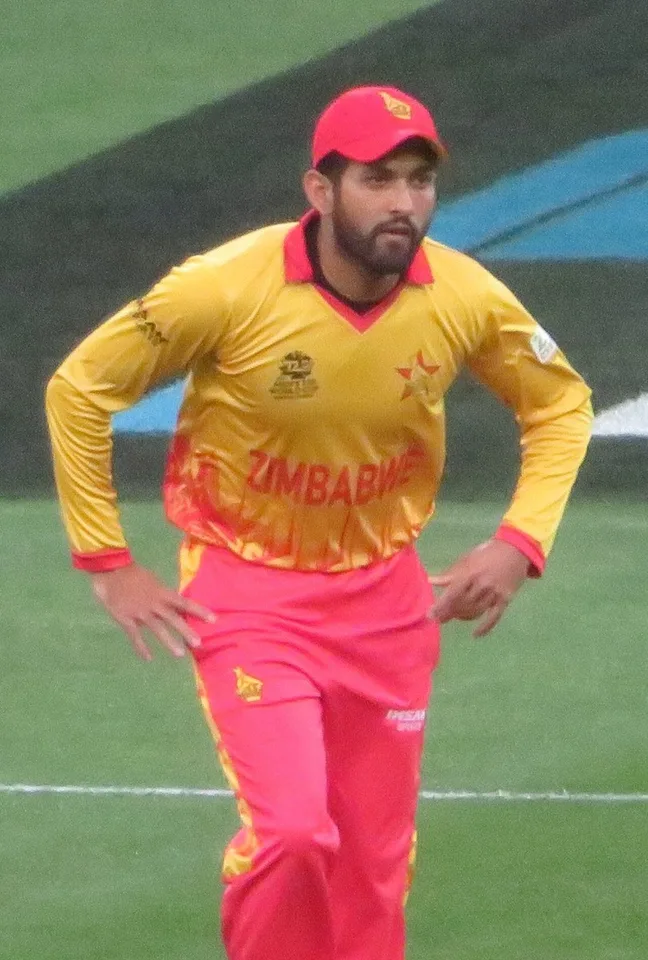
Sikandar Raza is best assessed as a multi-skilled cricketer whose batting, bowling and fielding solve different match problems. The ICC profile lists him as a Zimbabwe all-rounder, with right-handed batting and off-break bowling. A useful analysis begins with his assigned task in a particular fixture, then asks how his actions changed the team's position.
This guide teaches that role-based method without freezing a current ranking or claiming a new record. Historical announcements can establish dated achievements, but they do not automatically describe today's standings or responsibilities. The numerical examples below are invented exercises, designed to explain strike rate, economy and match context rather than supply unverified Sikandar Raza statistics.
What should you establish before analysing an all-rounder?
Establish the match format, competition, playing role and available opportunities. An ODI, a T20I and a domestic T20 match create different demands and belong to different statistical categories. An all-round assessment should therefore keep the sample defined before adding batting and bowling observations into a single overall judgment.
Write the date, opponent and format beside the scorecard. Then record batting position, innings entry score and bowling allocation. These details show whether the player was asked to rebuild, accelerate, contain or attack. Without them, the same run total or wicket count can be given an interpretation that has little connection to the actual match task.
Do not assume that the all-rounder label means equal use in both skills in every game. Team balance, matchups and conditions can lead to different allocations. If Raza bowls fewer overs in a fixture, that fact alone does not establish an injury or a diminished role. A causal claim needs a relevant announcement or stronger supporting evidence.
The Afghanistan and Zimbabwe series guide helps place individual matches within a programme. Use it to define a comparable sample, then narrow the analysis to the fixtures actually included. A career-wide statement needs more than the two games you happened to watch or the clips that appeared in a search result.
How can you judge whether a batting innings met its task?
Read runs and balls faced alongside the entry situation, remaining resources and target. A rebuilding innings after early wickets has a different task from a short finishing appearance. Judge whether the scoring choices addressed the team's requirement, rather than declaring the largest number or highest strike rate automatically most valuable.
Suppose an invented batter enters at 35 for three and makes forty from thirty balls. Another enters at 145 for three late in a T20 innings and makes twenty from ten. Their strike rates are about 133 and 200 respectively, but the different tasks prevent a complete comparison from those rates alone. Partners and scoring requirements still matter.
Track strike rotation as well as boundaries. Singles and twos can reduce pressure, move a set batter onto strike and change a bowler's rhythm. Conversely, a boundary can hide several earlier dot balls in a highlight reel. Use the full innings sequence when possible, and explain what the scoring pattern did to the team's position.
For a more focused exercise, the middle-order batting guide separates rebuilding from acceleration. When applying the method to Raza, identify the actual innings evidence first. The purpose is to understand his contribution in context, not to assume another player's role or style describes every innings he plays.
Why can batting average and strike rate point in different directions?
Batting average and strike rate measure different aspects of scoring. Average relates runs to dismissals, while strike rate relates runs to balls faced. A player can improve one without improving the other. Both measures need a defined format, sample and role before they become useful evidence for an assessment.
In a hypothetical three-innings sample, scores of twenty, thirty not out and ten produce sixty runs with two dismissals, giving an average of thirty. The runs per innings would be twenty, which is a different calculation. This simple example shows why not-out status matters and why the word average should not be used loosely.
Strike rate can be extreme in a tiny sample. Ten from four balls produces 250, but it does not establish a sustainable scoring level across a season. Include balls faced and the number of innings when discussing a rate. A short appearance may be useful while remaining a weak basis for a broad career claim.
Also inspect how the innings ended. An unbeaten appearance can reflect successful finishing, limited opportunity or other match circumstances. The scorecard tells you the recorded outcome; the match situation helps interpret it. Neither an automatic reward for every not-out nor a dismissal-based criticism captures the full batting task.
What makes a bowling spell effective beyond wickets?
An effective spell can take wickets, restrict scoring, create pressure or enable another bowler to attack. Assess overs, runs conceded and wickets with the phase, opponent intent and field setting. Economy rate and wicket figures are complementary, while dot balls and scoring options help explain how the spell influenced the contest.
Consider two invented four-over spells: none for twenty and two for thirty-two. The second takes more wickets, while the first concedes fewer runs. Their value depends on the match task and timing. If the wickets remove established batters during a chase, they may change the requirement sharply; if runs are already scarce, control may serve a different strategic purpose.
Watch line, length and changes of pace before attributing every outcome to turn. Off-break bowling involves a technical category, but a broadcast angle does not always reveal the exact movement or release variation. Describe what you can observe reliably, such as repeated lengths or a batter being denied a preferred scoring area.
The spin-bowling reading guide offers a more detailed observation method. Apply it with the relevant scorecard and footage rather than inventing the mechanics of a delivery from its result. A wicket can follow a poor shot, a good plan, a difficult ball or a combination of factors.
| Contribution | Useful measures | Context that changes the meaning |
|---|---|---|
| Batting pace | Runs and balls faced | Entry score and required rate |
| Batting reliability | Runs and dismissals | Sample size and not-out frequency |
| Bowling control | Overs and runs conceded | Phase and batting intent |
| Bowling threat | Wickets and chances | Batter quality and match task |
| Fielding | Observed catches and stops | Difficulty and available footage |
| Overall effect | Team position before and after | Other players' contributions |
How should fielding be included without inventing hidden value?
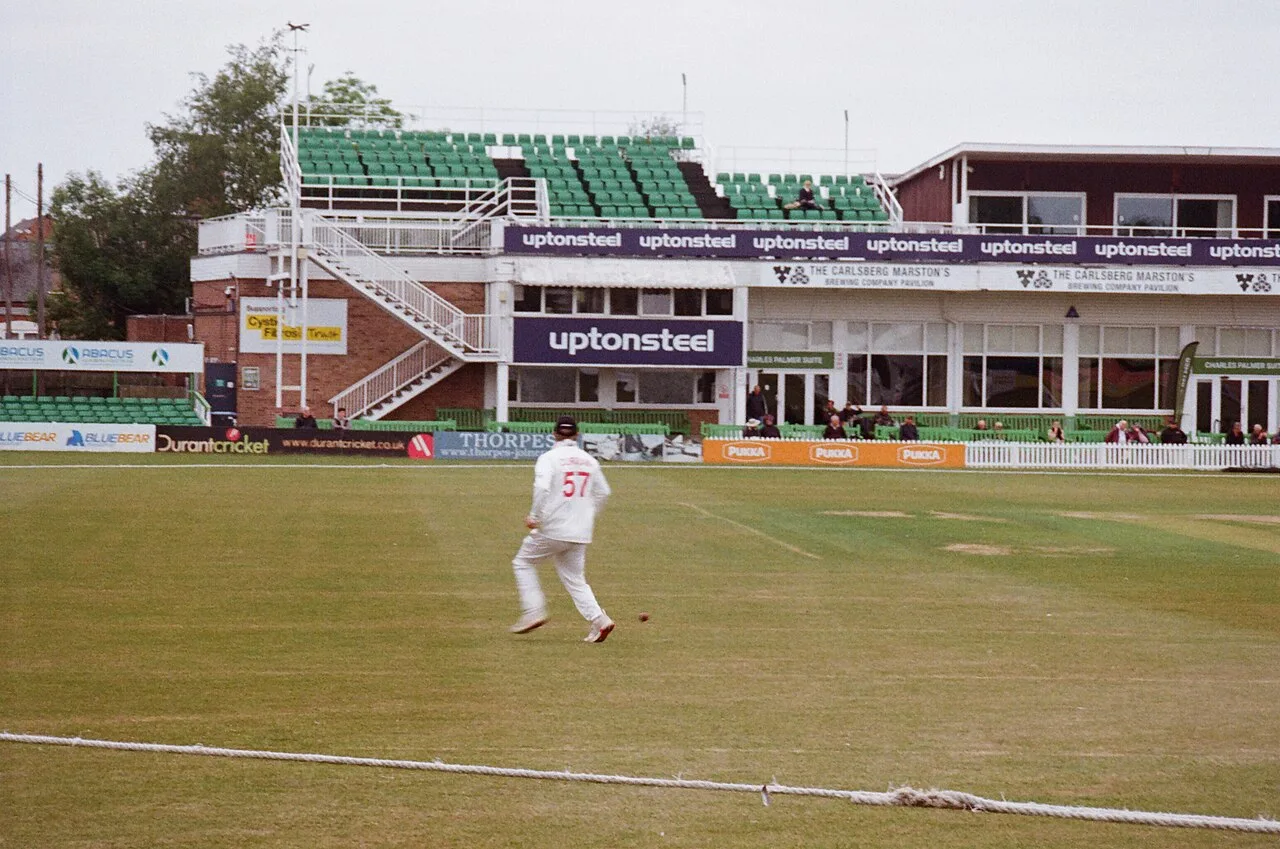
Ben Curran fielding in May 2025; a team-context example for the fielding observation exercise, not a photograph of Raza.
Include fielding through specific observed actions such as a catch, run-out involvement, boundary stop or misfield. Describe the moment and its apparent consequence without assigning an unsupported run value. Broadcast coverage is selective, so the absence of a highlight does not establish that a player contributed nothing in the field.
A completed catch appears in the scorecard, but its difficulty requires viewing context. A straightforward chance and a long running effort can receive the same statistical entry. Explain the observable movement, positioning and control if the footage permits. Avoid turning one spectacular moment into a claim about season-long fielding quality.
Ground fielding often requires even more care. A diving stop may prevent the ball reaching the boundary, but the exact runs saved can depend on where the batters were and what would otherwise have happened. It is reasonable to describe the stop and its immediate effect while leaving the counterfactual total unquantified.
If a chance is missed, distinguish the observable error from an assumption about effort or concentration. The camera may not show the approach, visibility or communication. A balanced assessment can note that the chance was not taken without inventing a personal explanation. This keeps technical criticism connected to evidence rather than speculation about character.
How can you assess leadership without using hindsight?
Assess a leadership decision using the information available when it was made, and establish that the player held the relevant responsibility in that fixture. Current captaincy should come from dated team information. A successful outcome alone does not prove a decision was sound, and a failure does not automatically prove poor judgment.
For an invented example, a captain introduces spin against an aggressive pair. Record the score, available overs, alternative bowlers and observed field. Then ask what the choice was trying to achieve. If the first ball goes for six, that event matters, but it does not by itself settle whether the broader plan was reasonable.
Separate the plan from its execution. A sensible field can be undermined by an inaccurate delivery, while a weak plan can escape punishment through a batter's mistake. A useful review explains both levels. Otherwise, every wicket becomes evidence of tactical brilliance and every boundary becomes proof that the captain chose incorrectly.
Use conditional language when the intention is unknown. “The field appears designed to restrict this scoring area” is different from claiming direct knowledge of the team's discussion. If a post-match explanation is available, compare it with the observed sequence. The explanation adds context but does not remove the need to examine what actually happened.
What can a dated ranking announcement establish?
A dated ranking announcement can establish a position or movement at that release, not a permanent status. The ICC's September 2025 release reported Raza reaching the top ODI all-rounder position at that time. That historical achievement should not be silently rewritten as his current rank in a later article.
Rankings also differ by format and skill category. An ODI all-rounder ranking is not a T20I batting ranking or a franchise performance table. Preserve the category and release date in the sentence. When a search snippet omits either, open the original document before using it to support a headline.
The ICC rankings explainer develops the distinction between ranking position and other statistical measures. For Raza, a current-ranking claim needs the relevant current table. A historical profile can discuss a verified past milestone without pretending that subsequent results and ranking updates have not occurred.
Be alert to inconsistencies within a release as well. If a paragraph gives confusing movement or career-best wording, do not repair it by guessing a different number. Retain only the clearly established claim needed for the article or seek a corrected official record. Accuracy sometimes means choosing a narrower historical statement instead of repeating every detail.
How can you write a balanced overall assessment?
Write separate judgments for batting, bowling and fielding, then explain how they interacted with the match task. Use specific evidence and acknowledge the contribution of teammates. An all-round assessment should show the different routes through which value was created, rather than compressing every skill into an unsupported single score.
A four-line template is useful: the batting task and response, the bowling task and response, an observed fielding moment and the overall team effect. For each line, attach a scorecard entry or timestamp. If footage is missing, state the limit and avoid filling the fielding line with imagined contributions simply to complete the template.
For a series review, compare the same fields across a defined group of games. Note changes in batting position, overs bowled and available opportunities. A rise in total runs may partly reflect more innings, while fewer wickets may reflect a smaller bowling allocation. These are not excuses; they are necessary denominators for a meaningful comparison.
Finish with a conclusion proportionate to the sample. One match can support a detailed account of that match. Several comparable fixtures can suggest a pattern worth testing. A career judgment needs a much broader record. This hierarchy allows appreciation of a strong Raza performance without turning a memorable highlight into evidence for every possible claim.
A practical all-rounder worksheet
Choose one completed fixture and record the team situation when the player first bats and first bowls. Add the available resources at each point, then describe the immediate task in one sentence. After reviewing the contribution, write whether the task was met and identify the evidence that supports that judgment.
Next, ask what the scorecard misses. It may not capture pressure created for a teammate, a difficult fielding effort or the constraints imposed by the other end of a partnership. Add only what the footage actually supports. This gives the final assessment depth while preserving a clear boundary between numerical records and observed context.
For a final check, remove the player's name from your paragraph and ask whether the reasoning still makes sense. If the argument relies mainly on reputation, replace praise or criticism with a specific action and consequence. Then restore the name and match details. The exercise produces a fairer analysis of Sikandar Raza and a method that can be applied consistently to other multi-skilled cricketers.
A useful extension is to compare two apparently similar score lines with different match settings. Give students the same runs and wickets but change the entry position, required rate and overs available. Ask them to explain which additional fact changes their assessment most. There need not be one universal answer. The exercise teaches that cricket statistics become informative through a stated question and that two readers can reasonably weight contributions differently while agreeing on the underlying record. A good disagreement identifies that difference in weighting rather than inventing a new factual claim to defend a favourite player.
Sources
Source 1 Source 2 Source 3 Source 4
Image credits: Cover: Storm machine, source, CC BY-SA 4.0. Resized and converted to WebP. Article image: Castor722, source, CC BY-SA 4.0. Resized and converted to WebP.
Found an error or an outdated detail? Report a correction with the article URL and original source.