
Sohail Afridi: Provincial Roles and Public Records
Use Khyber Pakhtunkhwa Assembly records to identify Sohail Afridi’s public role and distinguish government announcements from proposals and commentary.
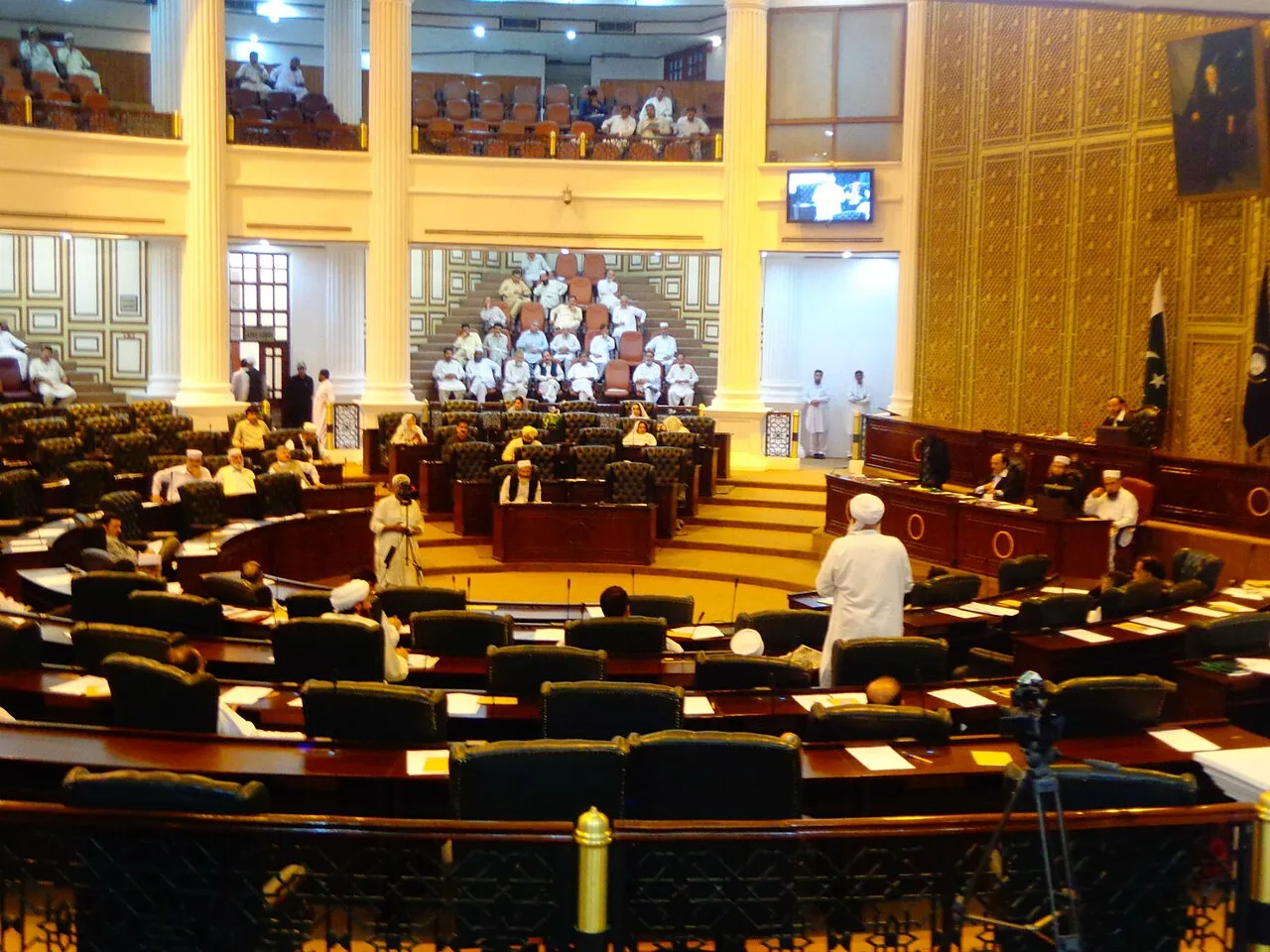
Muhammad Sohail Afridi's public role can be checked through Khyber Pakhtunkhwa's official assembly and government records. At this revision's check on 30 October 2026, the assembly identifies him with PK-70 Khyber-II and as Leader of the House, while the Chief Minister's official site identifies him as Chief Minister. Those institutional records provide a firmer starting point than an isolated political clip.
Understanding the role still requires separating an assembly seat, executive responsibility, party association and a particular government action. This guide explains how to follow those distinctions through documents. It does not predict an election, endorse a party or assume that every announced project has already been implemented.
Which records establish Sohail Afridi's public role?
Use the official member profile for assembly identity, the current portfolios listing for the role described there and the relevant government page for executive office. Keep the access date and institutional context attached. An archived profile can remain online after circumstances change, so one old page should not establish every current claim about authority or responsibility.
The member profile identifies Muhammad Sohail Afridi with PK-70 Khyber-II. The Chief Minister's official history lists his tenure beginning on 14 October 2025. These are specific record-based statements. There is no need to add an unsupported popularity ranking, biographical anecdote or claim about motives to explain what office the documents identify.
Record spelling carefully. A shortened name in a headline may refer to the same person, but the official name and constituency help confirm identity. Do not copy personal contact details or a residential address into a general civics article simply because they appear on a profile. The public role can be explained without spreading information irrelevant to the reader's question.
Where records use different political labels, preserve their context instead of silently resolving them through assumption. A membership table and a narrative biography may describe different aspects of affiliation or history. Explain which field supports your statement and avoid converting a label from one setting into a sweeping conclusion about every institutional or political relationship.
How do an MPA, the Chief Minister and the assembly differ?
An MPA is a member of the provincial assembly, while the Chief Minister holds an executive office and the assembly is the legislative institution. These are related roles, not interchangeable names for one body. For a specific policy claim, identify whether the evidence records representation, legislation, executive approval or departmental implementation before describing who acted.
The provincial assembly's official materials describe legislative business, budgets, committees and questions. Those functions help readers understand where to look for records of debate or scrutiny. A departmental notification, however, can answer a different question about administration. The fact that a matter was discussed in the assembly does not by itself establish that a service has begun operating.
Imagine a hypothetical proposal to improve school laboratories. An MPA might raise the issue, the government might include funding and a department might manage procurement. Each stage involves a different action. Naming one prominent politician in every sentence can obscure the responsibilities that determine how the proposal is approved, funded and delivered.
The country and state guide provides a broader institutional vocabulary, while this article keeps the focus on provincial records. Avoid assuming that a provincial office controls every federal service or every local decision. Follow the responsible institution named in the actual document, especially when a headline compresses several levels of government into the word “government.”
What is the difference between a speech, approval and implementation?
A speech can announce an intention, approval can authorise a step and implementation can involve later administrative work. Keep those stages separate. A photograph from an event or a policy promise does not prove that facilities are complete, money has been spent or eligible people have received a service. Look for the document relevant to the specific stage claimed.
For an invented scholarship proposal, the initial announcement may explain the ambition without setting eligibility. A later notice may define applicants and dates. Funding and actual awards would require further evidence. A responsible summary says which stage is documented rather than blending the sequence into a claim that every student can already apply or has already benefited.
Read the verbs in official statements. Proposed, approved, allocated, released and completed describe different kinds of progress. They should not be used as stylistic alternatives. If a source says funds were allocated, preserve that wording until a later record establishes release or expenditure. This small editorial choice prevents a headline from overstating delivery while remaining concise.
The public-record news guide applies a similar distinction between statements and institutional action. In provincial reporting, add the implementing department and document date to the method. Those details help a reader ask the next useful question instead of assuming that a repeated announcement creates evidence of a later stage.
How should provincial budget and development figures be read?
Identify the financial year, currency unit, programme and accounting label before comparing budget figures. An allocation is not automatically expenditure, and a whole-project estimate differs from funding for one year. Keep the scope visible so a large announced amount does not become an unsupported claim about money already spent or benefits already delivered.
Suppose a fictional programme has a planned total cost of one hundred units and an annual allocation of twenty. Those figures answer different questions. If ten units are later reported as spent, the expenditure should not be replaced by the total project cost in a success claim. The example explains the labels; it is not a claim about a real KP programme.
Comparisons across years also need the same programme boundary. A revised scheme may combine earlier activities or cover more locations. A larger allocation could reflect expansion, changed costs or a different reporting category. Read the accompanying description before assigning a cause. A ratio can be calculated correctly and still compare unlike items if the labels are ignored.
The Pakistan economy indicators guide helps distinguish measures and periods. For provincial projects, extend that habit to administrative stages. Record allocation, release, expenditure and physical progress separately where available. A road's construction status and a budget line are related evidence, but neither should be used as a complete substitute for the other.
How do a bill, an act and a notification differ?
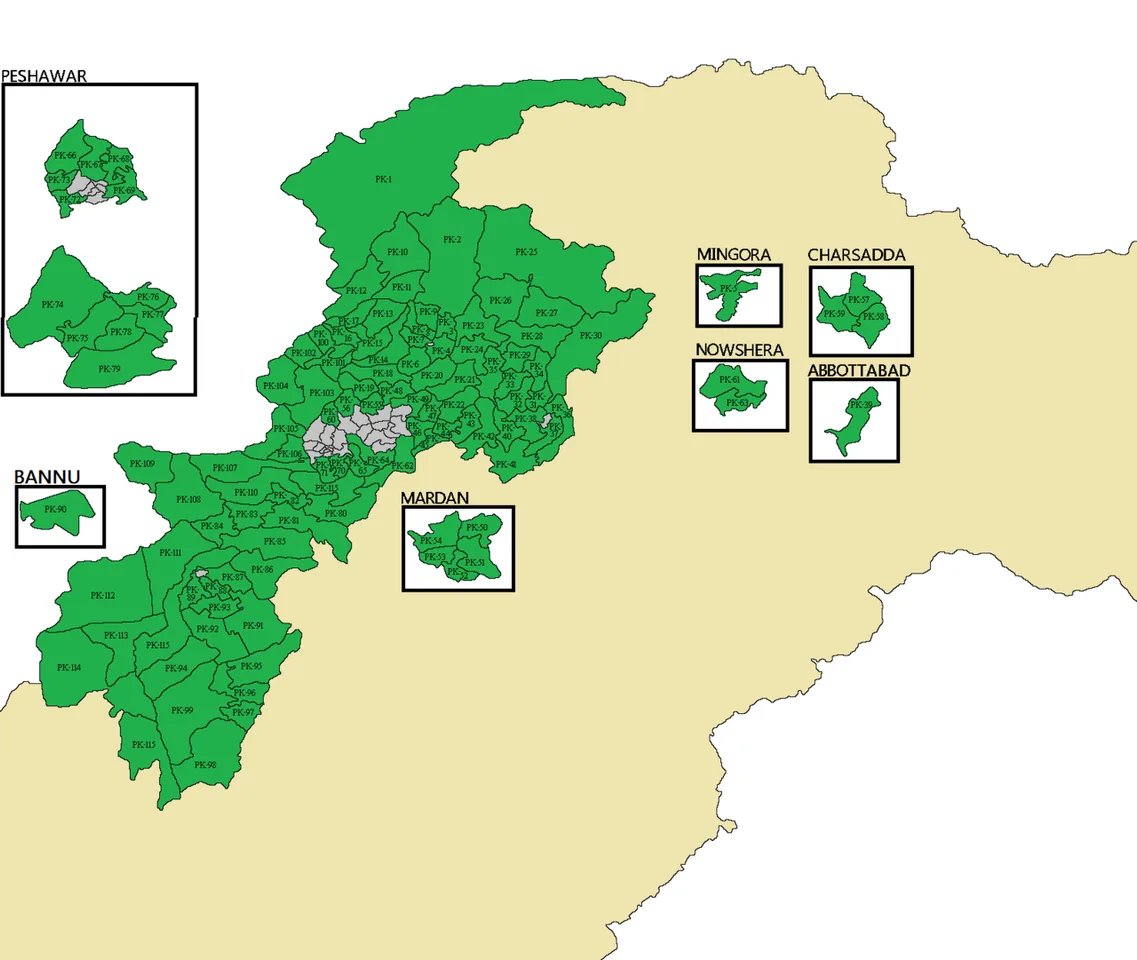
A map based on the 2018 delimitation illustrates why constituency records need dates; it must not be presented as today’s boundaries.
A bill is a legislative proposal, an act is an enacted law and a notification records an official administrative or legal communication under its stated authority. Their effects depend on the actual text and applicable process. Do not describe a proposed bill as an operational service or assume that a news summary establishes when every provision takes effect.
The assembly publishes legislative materials and an acts listing, which can help identify the document category. Read the title, date and status before summarising a measure. Similar titles can refer to an original law and later amendments. A search result containing the familiar subject is not enough to establish that you have the currently relevant version.
For a classroom exercise, label an invented sequence containing a proposal, debate record, enacted text and departmental notice. Ask which question each answers. The proposal may show intended change, while the later notice may provide an application procedure. Do not infer the procedure from the bill simply because both concern the same policy area.
Avoid calculating a real legal deadline or advising eligibility from a general article. People affected by a measure should use the current official text and appropriate qualified guidance. The court-document reading guide supports the same principle: a document's exact wording, date and scope matter more than a dramatic label attached by a commentator.
How can political clips and quotations be checked fairly?
Find the full statement where possible, identify its date and distinguish the speaker's words from the uploader's interpretation. A short clip can omit a question, condition or earlier qualification. Verify quotations before using them, and do not treat a politician's assertion about an outcome as independent evidence that the outcome occurred exactly as described.
Begin by writing down the claim you intend to repeat. If it concerns an announcement, locate the relevant full statement. If it concerns delivery, seek the implementation record. A longer video can resolve quotation context while still leaving the factual claim unverified. These are separate checks, and both may be necessary for a useful summary.
Translation adds another layer. An English caption may simplify an Urdu or Pashto statement, especially where administrative terms are involved. If the exact wording matters, compare a reliable transcript or translation and retain attribution. Avoid inventing a sharper promise because it makes a better headline. The original qualification may be the most important part of the statement.
Fairness does not require treating every claim as equally supported. It requires explaining the evidence consistently. Use the same standard for statements you welcome and statements you doubt. A neutral note identifies what was said, which institution can verify the claimed action and what the available documents establish, without speculating about private motives or making unsupported allegations.
How can citizens build a practical public-record evidence table?
Use columns for claim, responsible institution, dated document, stage and unresolved question. Keep one claim per row so different types of evidence do not become blurred. A table helps distinguish a verified role from a policy promise and a funding decision from delivery, while making later updates easier to add transparently.
For a hypothetical school initiative, one row could record the announcement and another the eligibility notice. A third could record a budget entry, if relevant. Do not mark the whole project complete because one row has a source. Each stage needs its own evidence, and some stages may not be publicly documented in the material you locate.
When a record is missing, describe the search limitation precisely. “I have not located an implementation notice” is different from “no implementation notice exists.” Public websites can be incomplete or difficult to search. The narrower wording makes your account honest without assuming either success or failure. It also tells another researcher exactly what evidence could resolve the question.
Preserve document copies and access dates privately where lawful and appropriate. A later webpage change can make your earlier note difficult to reproduce. Clear file naming and a brief summary help keep the research manageable. Avoid collecting irrelevant personal data simply because a directory contains it; the aim is a reviewable civic claim, not a dossier on individuals.
How should students summarise Sohail Afridi's role without partisanship?
Lead with the institutional role established by dated official records, then explain the particular action being examined. Separate verified facts, attributed statements and your analysis. Keep the conclusion limited to the documents reviewed. A useful civics summary neither endorses a party nor assumes misconduct simply because a political claim remains unverified.
Start with the member identity and office relevant to your question. Then choose one policy example rather than listing every public appearance. Identify the responsible department, current stage and source date. This makes the reader understand the machinery behind the headline instead of relying on personal praise or criticism as a substitute for institutional explanation.
Add a sentence explaining what would count as the next stage of evidence. For a proposed service, that might be an official implementation notice; for a completed facility, an appropriate completion or operational record. Keep the example conditional unless you have checked the actual documents. A clear evidence threshold is more useful than predicting whether a promise will succeed.
Finally, revise for equal standards. Remove adjectives that imply admiration or contempt without adding information. Check that allegations remain attributed and that uncertain outcomes remain uncertain. The resulting paragraph should help a reader understand a public role and follow a policy process regardless of their political preferences. That is a practical contribution to civic literacy in a fast-moving news environment.
A policy-stage comparison
| Record | What it establishes | Separate evidence needed |
|---|---|---|
| Member profile | Listed identity and seat | Every current portfolio |
| Speech | Stated intention | Formal approval |
| Budget allocation | Planned funding category | Expenditure |
| Procurement notice | A stated procurement step | Completed delivery |
| Completion record | The recorded completion scope | Long-term service quality |
Use this table when editing a headline or school presentation. Replace broad verbs such as delivered with the stage actually documented. Add the financial year where money is discussed and the effective date where a role changes. These small details make a public-record explanation more accurate without requiring a long political biography or a prediction about future events.
Audit a hypothetical delivery claim
Suppose a post says that every school in a district has received new computers. An event photograph showing a few devices establishes neither the district-wide quantity nor the completion of distribution. Ask for the programme scope, delivery record and date. Keep the claim at the scale the evidence supports while those questions remain unresolved.
If a later record confirms delivery to selected schools, update the wording to match that group. Do not preserve the universal claim merely because the initiative is real. This approach works equally for a favourable or critical account: a documented partial delivery should not become either total completion or proof that nothing was delivered anywhere.
Sources
Source 1, Source 2, Source 3, Source 4, Source 5
Image credits: Cover: Voice of America, source, Public domain. Resized and converted to WebP. Article image: Saad Ali Khan Pakistan, source, CC BY-SA 4.0. Resized and converted to WebP.
Found an error or an outdated detail? Report a correction with the article URL and original source.