
Sri: Meaning, Respectful Usage and Search Context
Understand Sri as a respectful title, distinguish it from a shortened country search or an acronym, and use context to interpret unfamiliar words.
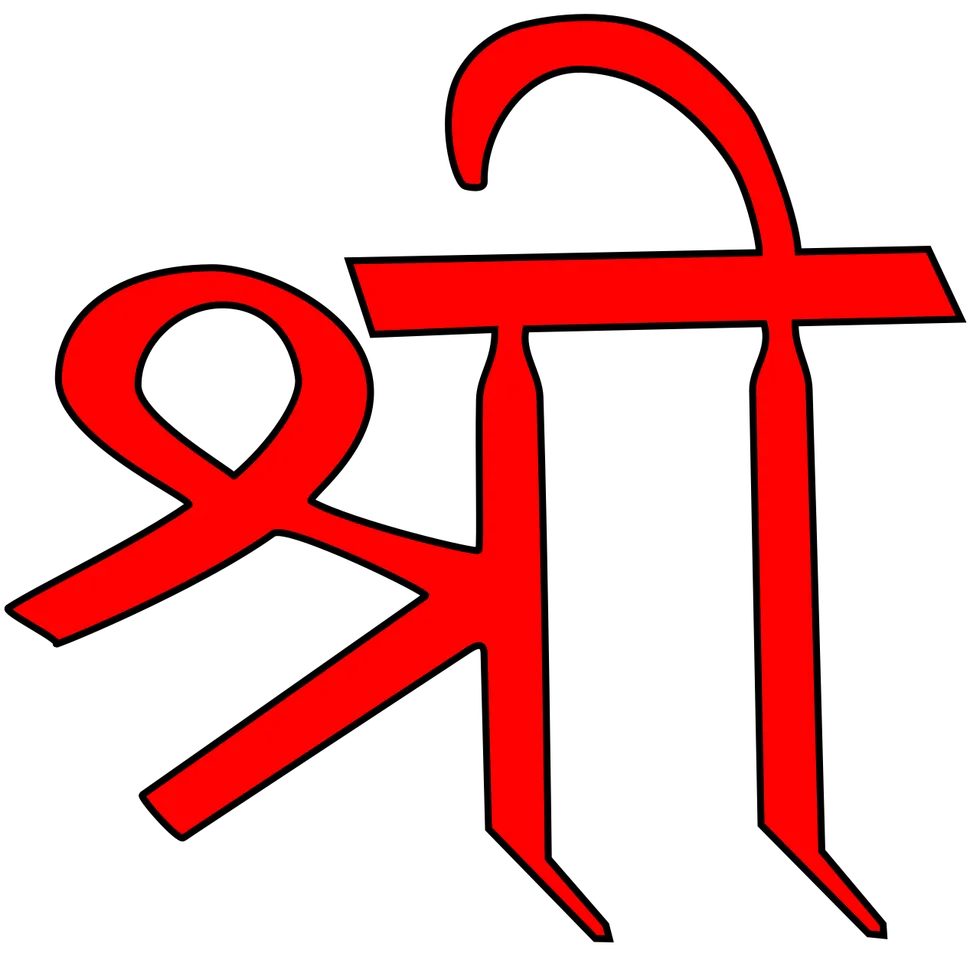
Sri can be a respectful title, an element in a personal or place name, or part of an abbreviation. Its meaning depends on the surrounding words and the kind of document you are reading. The three letters alone do not justify one fixed interpretation for every search result.
A dictionary gives a useful starting point for the honorific use. A country reference establishes the full name Sri Lanka. A technical document may define uppercase SRI as something entirely different, such as the System of Rice Intensification. These are separate uses, not competing answers to one universal question.
For students, the practical skill is contextual reading: identify the role of the expression, preserve the published name where appropriate and look for the document's own definition. This guide develops that skill through naming, transliteration, catalogue work and a technical abbreviation example rather than treating a short search as verified news.
When is Sri a respectful title rather than part of a name?
Sri can function as a respectful title before a name in South Asian usage. Identify that grammatical role from the source and community context rather than assuming the first visible word is a given name. When describing a person, retain their preferred published form unless a specific task requires a different treatment.
A dictionary entry can establish that an honorific use exists. It does not tell you how every individual, organisation or language community prefers to format a name. The actual document and the person's established presentation remain important evidence.
Imagine an invented invitation with a title before a speaker's name. A catalogue that automatically places the title in the given-name field could create a misleading record. The error arises from confusing a term of address with an identity component.
The reverse mistake is also possible. An expression resembling a title may form part of a person's chosen name. Removing it automatically can be as inaccurate as always treating it as a first name. Ask what the specific source establishes.
Use neutral notes such as “published with the title Sri” when the distinction matters. Avoid claiming a family relationship, social status or religious identity solely from that word. Those are additional facts requiring their own evidence.
For ordinary prose, accuracy often means doing less transformation. Reproduce the verified name clearly, explain a title if readers need help and resist rearranging unfamiliar names to fit an assumed English pattern. Respectful usage depends on careful reading more than confident guessing.
How is Sri in Sri Lanka different from a title before a person?
In Sri Lanka, Sri forms part of the country's full name. Treat the expression as a place name rather than analysing it as a salutation addressed to a person. The same written element can perform different roles in different phrases, and the larger expression determines which interpretation is relevant.
A geographical assignment should introduce the full country name and location. A vocabulary exercise can then discuss the name's structure separately. Removing one element from the formal name merely because it resembles an honorific changes what you are recording.
A sports headline may abbreviate the country's name, but that convention does not define every standalone use of Sri. Check whether the surrounding text concerns a team, destination, person or technical topic before deciding what the short form identifies.
Place names also need consistent spelling. A map label, address and official document should be matched carefully rather than replaced with an improvised translation. If you mention a variant, explain why it appears and which place it denotes.
For a classroom comparison, write three invented contexts: a country profile, an invitation and an agricultural paper. Ask which neighbouring words identify the subject. “Island,” “speaker” and “seedlings” provide different clues even when the short expression appears in all three.
This teaches a wider language principle. Words and written forms gain functions within expressions. A dictionary meaning is useful background, but reading comprehension requires attention to the complete phrase and the purpose of the document.
What is the difference between transliteration and translation?
Transliteration represents writing from one script using another writing system, while translation conveys meaning in another language. The two tasks can overlap in practice, but they solve different problems. A spelling in Roman letters may help readers recognise a name without being a translation of that name.
Sri, Shri and Sree are spellings a reader may encounter in English-language contexts. Do not assume they always refer to the same person or that one is automatically an error. Preserve the preferred form attached to a verified identity.
A pronunciation guide adds another layer. Roman spelling alone does not fully specify how every speaker pronounces a word. Use a reliable language-specific audio or dictionary resource when pronunciation matters, rather than deriving a universal sound rule from one English spelling.
A diacritic can preserve distinctions in a formal transliteration system. If a source uses such marks, copying them carefully may matter in scholarly work. In a simple school note, explain the form being used instead of switching unpredictably between simplified and specialist notation.
Devanagari is one script a learner may encounter when researching related forms, but a Roman expression does not prove the original document used that script. Identify the actual writing system before describing a manuscript, inscription or scanned page.
For an exercise, label each task: copy the original script, transliterate the name and translate an explanatory sentence. Comparing the outputs reveals why a personal name can remain recognisable while the surrounding explanation changes language. It also prevents a learner from calling every spelling change a translation.
How do you decode uppercase SRI in a technical document?
Look for an expansion at first mention, in the glossary or in a relevant section heading. Uppercase SRI can be an acronym or abbreviation with a domain-specific meaning. The document's own definition is stronger evidence than the first expansion returned by a general web search.
Cornell's material uses SRI for the System of Rice Intensification. It describes an agricultural approach involving changes to the management of plants, soil, water and nutrients. In that setting, rice and seedlings provide clear contextual clues that the letters are not a personal title.
The example does not make SRI an agricultural term in every document. An institution or another technical field may use the same letters differently. Record the expansion together with the domain so your notes do not create a new ambiguity.
Capitalisation is a clue, not a guarantee. Search engines and informal messages may change letter case. A sentence beginning with Sri can also capitalise the first letter for ordinary grammatical reasons. Check the surrounding content rather than relying on appearance alone.
When writing your own report, expand an unfamiliar abbreviation on first mention and use it consistently thereafter. If two sources use the same letters differently, avoid merging their claims. State the full expressions wherever the risk of confusion is substantial.
A useful test asks whether replacing the abbreviation with the proposed full phrase makes sense in the sentence. If it produces nonsense, return to the document. Context can reject an attractive but incorrect search result before it enters your assignment.
How should a student search for an ambiguous short expression?
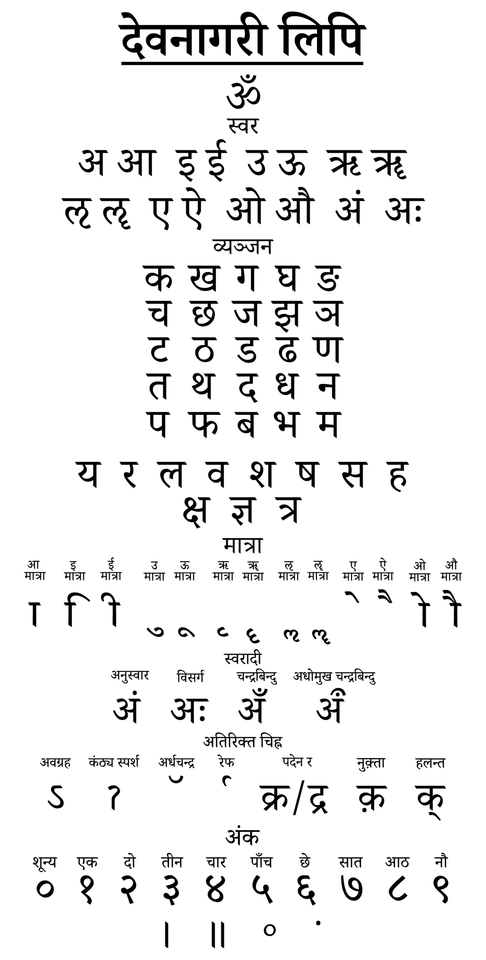
An alphabet chart supports the distinction between script, transliteration and translation; it is not a pronunciation guide for every language.
Add a domain or nearby phrase to the search query, then inspect the result's actual context. A short expression can return mixed subjects because the search system is matching several uses. Search refinement should identify the intended meaning rather than merely select the most prominent-looking answer.
For a title question, add words such as honorific or personal name. For the country, search the complete place name. For an acronym in an agriculture document, include rice or the paper's title. These additions make the research intention visible.
A quoted phrase can help find an exact expression, but it can also exclude a relevant spelling variant. Use exact matching when you know the wording and broader matching when the spelling itself is uncertain. Neither strategy is always best.
Inspect the source before relying on its snippet. A search result can lift words from separate parts of a page, and a page title may use an abbreviation differently from the sentence you are investigating. Open the relevant context when the distinction matters.
Keep a small search log with query, source date and what the result established. This is especially useful when you move between language, geography and technical material. Without the log, it is easy to forget why a result was relevant.
Stop when the evidence answers the question at the required level. You do not need a complete history of every possible acronym to explain one document. Focused research produces a clearer answer and reduces the chance of introducing unrelated, weakly checked material.
What mistakes arise in forms, catalogues and name indexing?
Errors arise when a system forces an unfamiliar name into assumptions about titles, first names and surnames. A form field is a data category, not proof of how a person's name is structured. Use the identity holder's instructions or the institution's relevant guidance when the record has practical consequences.
A title placed in a surname field can make sorting unreliable. A family name mistaken for a given name can create duplicate records. Automatic capitalisation can also alter a preferred spelling. These are data-handling problems that deserve careful checking rather than casual correction.
In a library catalogue, metadata describes the work and its creator. The displayed author name and the indexing form may have different functions. If you are copying a citation, follow the relevant style and the reliable record instead of inventing a surname by position.
An address and salutation create another distinction. The wording used to greet someone need not be copied into every database field. Conversely, a name component should not be removed simply because it resembles a title in another language.
For high-consequence documents, confirm the required format through the responsible process. A general vocabulary article cannot determine how a specific passport, admission record or bank form should be completed. Keep the official identity record and local instructions together.
In school projects, a safer approach is to retain the published full name and avoid unnecessary subdivision. If an exercise explicitly asks you to identify components, explain what evidence supports the classification and leave uncertain fields unresolved.
How can a classroom activity teach the distinctions clearly?
Use a small set of invented examples representing a title, a place name and a defined abbreviation. Ask learners to identify the role, cite the contextual clue and explain what remains uncertain. The activity succeeds when the reasoning is visible rather than when students memorise one translation for every occurrence.
A useful comparison table is:
| Example context | Likely role | Evidence to inspect |
|---|---|---|
| Invitation naming a speaker | Respectful title or name component | Published preferred form |
| Map labelled Sri Lanka | Place-name element | Full geographic label |
| Paper defining SRI before discussing rice | Technical abbreviation | Expansion at first mention |
| Catalogue entry for an unfamiliar author | Identity and indexing question | Reliable author record |
| Roman spelling beside another script | Transliteration question | Original writing and stated system |
Let learners work in pairs. One explains the classification and the other challenges the evidence. A good challenge asks whether another interpretation remains possible, not whether the first learner sounds confident.
Then provide one example with too little context, such as a card showing only SRI. The appropriate answer is that the meaning remains undetermined. This demonstrates that withholding a specific expansion can be the accurate result of a reading task.
For a writing extension, ask students to create a short document that defines an abbreviation clearly at first mention. Another pair should be able to identify the meaning without searching. This connects careful reading with responsible writing.
The learning activity can be completed with neutral examples and short paraphrases. It does not require copying lengthy dictionary entries or using real people's private documents. The focus stays on vocabulary, document structure and evidence.
What should a final explanation of Sri include?
Begin with the intended use, support it with surrounding context and identify any limits that affect the answer. A strong explanation can be short when the context is clear. It becomes longer only when the task genuinely involves contrasting names, scripts, titles or technical definitions.
For a title question, explain that a respectful use exists and preserve the person's verified name. For a country question, give the complete place name and relevant geography. For a technical question, state the source's expansion and the field in which it applies.
Do not add an elaborate etymology unless it has been properly researched. A modern dictionary gloss does not independently establish every stage of a word's history. Historical development, religious usage and present naming preferences require their own appropriate evidence.
Keep attribution proportionate. Paraphrase a definition in your own words and retain the source for checking. A long copied entry adds little if the reader's actual problem is deciding whether a label belongs in a title field.
A final proofreading pass should inspect spelling variant, capitalisation and identity consistency. Check that you have not quietly changed Shri to Sri in one person's name while leaving another source's preferred form intact. Consistency follows evidence, not a desire to make all names visually uniform.
The broader habit is to read the neighbourhood of a word before declaring its meaning. Sri is a useful example precisely because several legitimate uses coexist. Context, source purpose and careful naming allow a reader to choose the relevant explanation without turning a three-letter search into a claim that the evidence cannot support.
Sources
Image credits: Cover: RicHard-59, source, CC BY-SA 4.0. Resized and converted to WebP. Article image: Symphonicallyu, source, CC0. Resized and converted to WebP.
Result dates, fees and eligibility must be checked against the issuing authority's current notice. Report a correction with the article URL and original source.