
Dams Explained: Storage, Floods and Hydropower
Understand how dams, reservoirs and hydropower differ, why storage figures need context, and how to read Pakistan water-infrastructure information.
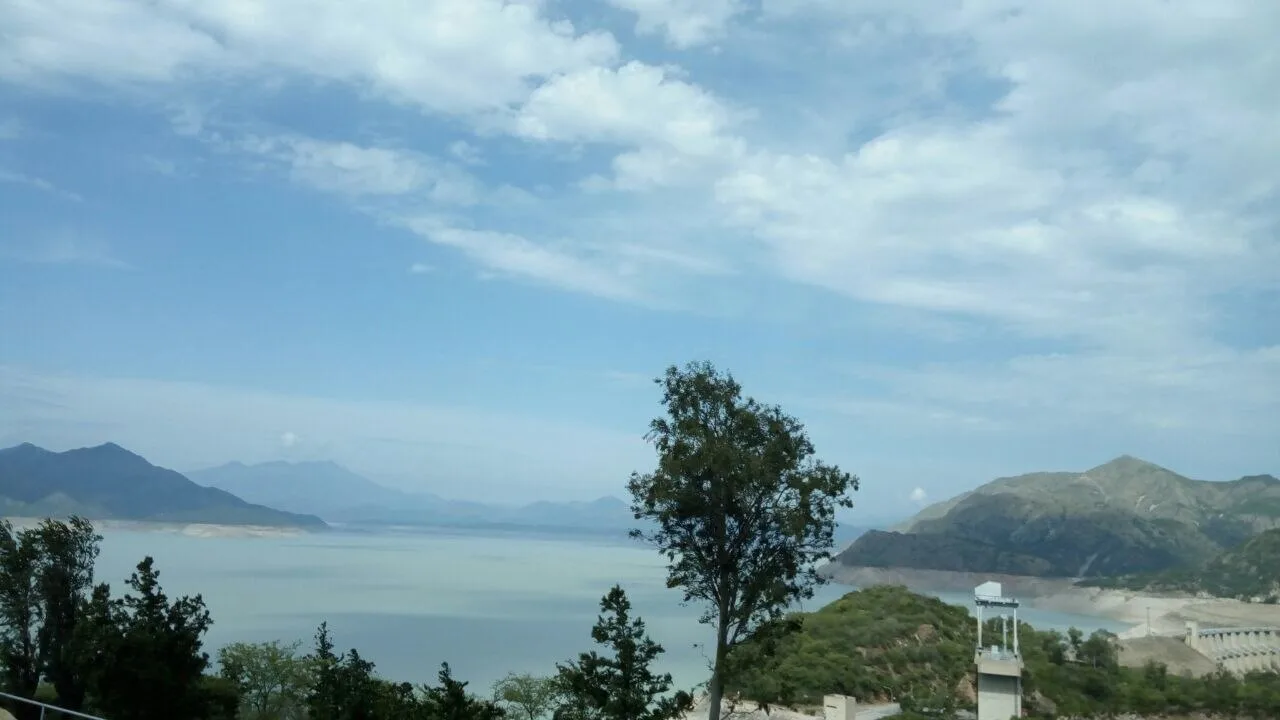
A dam is a structure that controls water; a reservoir is the stored water body associated with it. Hydropower is one possible use of water infrastructure, alongside irrigation, water supply and flood management. Understanding those distinctions is the first step toward reading Pakistan dam news without confusing a structure, a quantity of water and electricity production.
For a practical example, WAPDA identifies Tarbela as an earth-filled dam on the Indus River in Khyber Pakhtunkhwa. Its published environmental assessment also describes the interaction between irrigation releases, power development and sedimentation. This article explains the concepts behind such documents. It does not provide a current reservoir reading, an emergency forecast or a live release schedule.
How do a dam, reservoir, barrage and powerhouse differ?
A dam holds back or regulates water, while its reservoir stores water upstream. A barrage primarily helps regulate and divert river flow through a gated structure. A powerhouse contains generating equipment. Identify which component a report describes before assuming that every water project includes large storage or produces electricity in the same way.
Imagine a labelled river diagram rather than starting with a construction photograph. Place the catchment upstream, the retaining structure across the river and the downstream channel below it. Add a spillway for passing water and a separate route through a turbine where the project has hydropower equipment. The labels explain functions that a dramatic aerial image may conceal.
For Pakistan water projects, use the project's own description to determine its purpose and design. A diversion scheme and a large storage reservoir need different explanations. A canal headworks photograph cannot establish the storage capacity of a distant dam. Geography matters too: identify the river and province so similarly named projects do not become interchangeable in your notes.
Ask which services are being discussed. Water can be stored for later irrigation, released to meet downstream requirements or routed through generating equipment where available. These uses can overlap without being identical. A useful school diagram therefore includes arrows showing water movement and labels describing each service, instead of presenting electricity as the only reason the structure exists.
What do gross storage, live storage and water level mean?
Gross storage is a defined total reservoir volume, while live storage refers to the portion available between specified operating levels. Water level is an elevation, not a volume. Dead storage and operating limits also matter. Read the report's definitions and units before comparing figures or concluding that a reservoir is full or empty.
A reservoir shaped like a valley does not gain equal volumes for every metre of rising water. Its surface area can change with elevation. Therefore, a water level cannot be converted into stored volume using guesswork from a photograph. Engineers use the relevant elevation-storage relationship, based on the reservoir geometry and surveys, to interpret the level appropriately.
Distinguish original design capacity from a later surveyed capacity. A project can retain the same name while its storage characteristics change over time. If a historical report states an initial capacity and a newer assessment states a revised one, preserve their dates. The difference may reflect sedimentation or a different definition rather than a contradiction or a measurement error.
In a reading exercise, create a record containing project, observation date, water level, volume, units and stated capacity definition. Leave a field blank if the source does not provide it. This prevents a headline containing a single number from becoming an unsupported claim about water availability, structural safety or how long supplies will last under unknown demand.
Why do sedimentation and catchment conditions affect storage?
Rivers transport sediment as well as water. Material deposited in a reservoir can change its storage geometry and operational conditions over time. Catchment characteristics influence the incoming water and sediment. A meaningful storage comparison therefore needs survey dates and definitions, not simply the original construction figure repeated as though it describes today's reservoir.
WAPDA's Tarbela assessment describes sediment entering the reservoir and the resulting need to consider changing storage. Use that project document for the specific case rather than transferring its figures to another river. The general lesson is that infrastructure capacity can require updated measurement even when the retaining structure remains in place and continues to operate.
For a classroom model, compare a bowl before and after adding clean sand, then mark the same water level in both versions. The sand occupies space, so the water volume below the mark changes. This is an illustration of displacement, not a prediction of a real reservoir's sediment pattern. Real deposition and reservoir management are more complex.
Do not infer structural damage from a photograph of exposed banks or muddy water. Water levels respond to inflow, releases and operating rules, while sediment behaviour requires measurements. Separate the question “how much water is stored?” from “what is the structure's condition?” Each requires different evidence and, for real decisions, the relevant technical authority rather than visual speculation.
How does hydropower turn moving water into electricity?
Hydropower uses water movement and a difference in elevation to drive a turbine connected to a generator. Head, flow and equipment efficiency influence power output. A reservoir can help regulate water availability, but hydropower also includes diversion and run-of-river arrangements. The size of a dam alone does not establish its electricity production.
Follow the energy path in a simple diagram. Water enters through an intake, travels along the designed water passage and transfers energy to the turbine. The generator converts mechanical rotation into electrical energy. Water then returns through the downstream route. Transformers and the grid connection are additional parts of delivering that electricity to users.
The relationship is useful conceptually: more available flow or greater usable head can support more power within equipment and operating limits. It does not mean operators can choose unlimited output. Irrigation requirements, reservoir levels, machinery availability and downstream conditions can constrain operation. A turbine nameplate cannot explain all of those factors by itself.
For a student explanation, compare two imaginary installations with the same flow but different head. Ask why their potential output differs, then identify the information needed for a calculation. Keep the example hypothetical. Avoid presenting a classroom formula as a current dispatch estimate or suggesting that a photograph provides enough measurements to calculate real-time generation accurately.
Why are megawatts and megawatt-hours different?
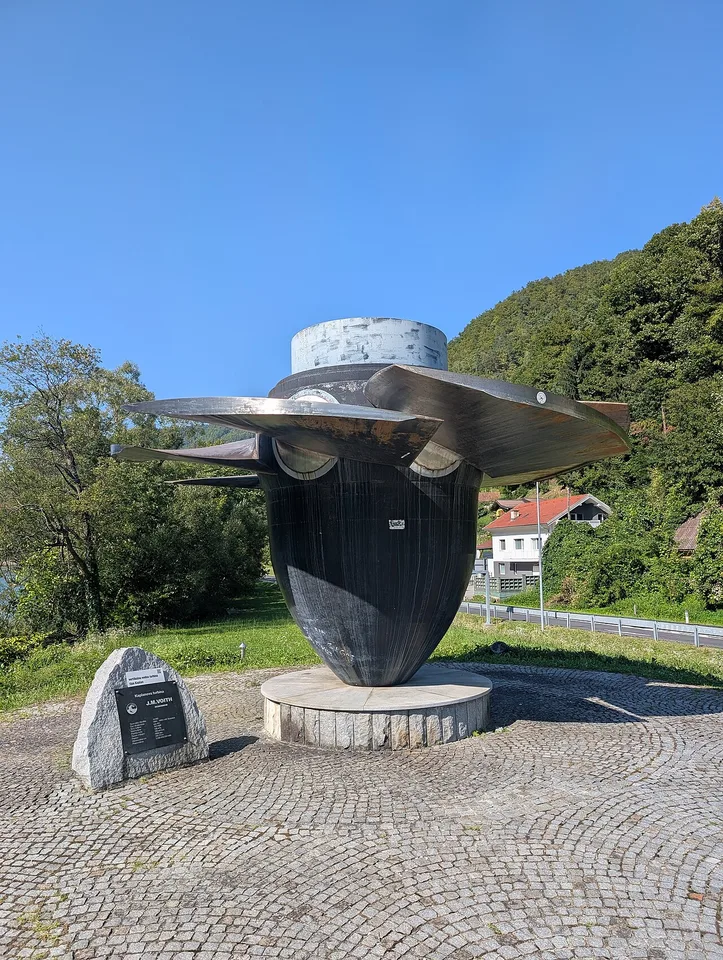
A turbine displayed at Fala in Slovenia in 2025 illustrates hydropower machinery; it is not equipment photographed at Tarbela.
Megawatts measure power, the rate of energy transfer. Megawatt-hours measure energy over time. Installed capacity describes a rated power capability under specified conditions; annual generation describes energy actually produced over a year. Comparing those numbers as though they use the same units creates misleading claims about electricity supply and project performance.
Suppose a fictional generator operates at a steady ten megawatts for three hours. It produces thirty megawatt-hours in that simplified example. If it runs at five megawatts for the same period, the energy is fifteen megawatt-hours. The arithmetic shows why operating time and output matter alongside the installed rating when interpreting generation figures.
Capacity factor relates actual energy over a period to energy from continuous operation at the rated capacity during that period. Calculating it requires consistent units and the correct period length. A lower value does not identify its cause by itself. Water availability, maintenance, operating priorities and other constraints must be investigated separately rather than inferred from one ratio.
When reading a project announcement, mark whether a number concerns added generating capacity, expected annual energy or recorded production. An expansion may add turbines without creating an entirely new reservoir. Expected generation also differs from observed generation. Keeping these categories separate makes an electricity discussion more useful than simply repeating whichever number appears largest in a headline.
Can reservoirs prevent every flood downstream?
Reservoir storage can contribute to flood management when available space and operating arrangements allow it. It cannot guarantee protection from every event. Incoming volume, the catchment, tributaries and downstream conditions all matter. Emergency decisions require current authority guidance and measured conditions, not an educational calculation based on a project's original capacity.
Think of storage as a changing balance. Water enters, water leaves and the amount stored changes. If incoming water exceeds releases, storage rises until operational limits become relevant. A reservoir already holding substantial water has different flexibility from one with more available space. The timing and duration of inflow matter as well as a peak flow reading.
Downstream flooding can also involve water entering below the dam. A tributary or local rainfall may affect a community even when the main reservoir is being managed carefully. Therefore, a map of the whole catchment is more informative than a single photograph of the spillway. Do not assume that every downstream event has one upstream explanation.
For a hypothetical exercise, compare the same incoming flood volume against two different starting storage levels. Explain why the available buffer differs, then identify what the exercise leaves out, such as routing and operating rules. In real weather emergencies, follow dated warnings from the responsible authorities and local emergency services. An old screenshot should never override a current instruction.
What trade-offs should a water-project comparison include?
A useful comparison considers services, costs, operational constraints and effects on people and ecosystems. Irrigation benefits, electricity production, storage and flood management are different objectives. A project assessment should identify whose needs are served, which impacts require management and how assumptions affect expected outcomes, rather than treating one engineering number as a complete evaluation.
Start with the purpose. A project intended mainly for diversion should not be judged solely against a large seasonal reservoir. Then consider time: a construction milestone, commissioning of one generating unit and full operation are distinct stages. A planned completion date does not establish that every component is finished or delivering the originally projected benefits.
Read environmental and social assessment material for issues such as land requirements, community impacts and downstream conditions. The purpose is to understand the documented questions and mitigation commitments, not to assume either perfect outcomes or inevitable failure. Separate the assessment's predictions from later monitoring evidence that can show what happened during construction and operation.
Compare alternatives using consistent boundaries. One estimate may include transmission infrastructure while another excludes it. One may describe a whole project and another only an extension. Record the price basis, date and scope if costs are relevant. This article avoids project cost claims because a number without those labels would add apparent precision while weakening the comparison.
How can students read a Pakistan dam update accurately?
Identify the project, date, measure, unit and status before summarising an update. Then decide whether the source describes design, observation, forecast or policy. Those categories should remain visible in your writing. A dated water-level reading cannot establish annual generation, and a construction announcement cannot serve as evidence of current reservoir operation.
Use a two-column notebook containing the exact reported fact and your interpretation. For example, a document might describe an extension to an existing water passage. Your interpretation might concern increased generating capability, but it should not silently become a claim about newly created storage. Keeping the columns separate exposes where assumptions enter the explanation.
A good classroom task combines a diagram with a short calculation. Label the dam, reservoir, spillway, intake and powerhouse, then use invented output and time values to calculate energy. Add a paragraph explaining why the result does not describe actual generation. That combination demonstrates vocabulary and reasoning while preserving the distinction between model and measurement.
Finish with one question for further research. It could concern updated storage surveys, the project's operating purpose or the meaning of a reported unit. Make the question specific enough that an official project document could answer it. Useful water literacy develops through these precise checks, rather than through confident claims that every low level means failure or every high level means safety.
A reading checklist
| Reported item | Check first | Avoid confusing it with |
|---|---|---|
| Reservoir elevation | Date and reference level | Stored volume |
| Storage capacity | Definition and survey year | Today's water quantity |
| Installed megawatts | Equipment and stage | Annual energy |
| Release figure | Time and units | Structural condition |
| Construction milestone | Component completed | Full operation |
Before sharing a dam update, read your summary once without its headline. It should still identify the project and explain what the number measures. If it merely says that a reservoir is critically low or a project is enormous, add the missing basis or remove the judgement. Clear units and dates are more useful to a learner than dramatic but untestable language.
Check a reservoir-balance example
Imagine a small model reservoir receiving twelve units of water while releasing eight during the same interval. Ignoring other losses in this simplified exercise, stored water increases by four units. Now change the interval or starting storage and ask what can still be concluded. The calculation establishes a change in the model, not the remaining safe storage of a real project.
The water-sharing treaty guide adds a useful distinction between physical water movement and institutional arrangements governing it. The energy-products guide provides another context for separating energy supply from a single installed-capacity headline.
For environmental reading, the air-pollution guide reinforces the need to retain units, dates and measurement definitions. These comparisons do not make the subjects identical. They show why a number becomes useful only after its quantity, location and time basis are clear.
Sources
Source 1, Source 2, Source 3, Source 4, Source 5
Image credits: Cover: Shahzeb Cheema, source, CC BY-SA 4.0. Resized and converted to WebP. Article image: Андрей Романенко, source, CC BY-SA 4.0. Resized and converted to WebP.
Found an error or an outdated detail? Report a correction with the article URL and original source.