
England vs Sri Lanka: Follow the Correct Fixture
Find the right England vs Sri Lanka fixture, distinguish formats and team categories, and read scorecards and series results without confusion.
To follow England vs Sri Lanka correctly, identify the match date, format, team category, competition and venue before opening a score. The country names alone are not enough. A previous tour, a women's fixture and an age-group tournament can all appear in the same search results, sometimes beside a current score from a different event.
This guide explains how to establish a reliable match identity and keep it attached to every update you read. The boards' material includes a dated announcement for Sri Lanka's September 2026 white-ball visit to England. That is useful historical scheduling context; it does not establish a new meeting on the day someone finds this page.
Which England vs Sri Lanka fixture are you looking for?
Use a complete fixture label containing the two teams, category, format, date and match number. Match those details across the schedule and scorecard. If one field differs, investigate before treating the pages as coverage of the same game. Short search phrases often omit the detail that matters most.
Start by deciding whether you mean men's cricket, women's cricket or under-19 cricket. Team names can be abbreviated similarly in all three. A title that says only England and Sri Lanka may therefore need another click into the match header before it can be interpreted confidently.
Then identify ODI, T20I or Test match status. A bilateral series can contain separate formats, each with its own match sequence. The first ODI and first T20I are different fixtures even when they belong to the same tour. A tournament encounter adds another competition label to check.
Write the identity on one line in your notes. For example, an invented teaching label might be “senior men's ODI, second match, venue and date to be confirmed.” Leaving missing information visible is better than copying an unrelated venue to make the note appear complete.
How can you tell a current fixture from an old search result?
Look at the event date inside the page rather than relying on the date or position of a search result. Publication date, update time and match date can differ. A newly edited archive can still describe an old game, while a schedule published months earlier may concern a future fixture.
Check the page's status label. Scheduled means the match has not reached a recorded result; completed indicates an outcome is available. Postponed and rescheduled refer to changes in arrangements. Abandoned describes a match outcome or termination, not a promise that the same event will resume at another time.
A live score should show an advancing match state or an explicit update timestamp. If the score remains unchanged, that can reflect a break, interruption or delayed feed. It does not by itself prove that play has ended. Compare the commentary status with the innings summary.
Save the exact fixture page rather than only the competition homepage. A homepage may switch its featured match overnight. Returning to a saved search result also risks reopening an archive that looked current because a browser retained an earlier title.
Use dates with the month written out
A label such as 10/11 can mean different dates under different conventions. Writing 10 November or 11 October removes the ambiguity. Include the year when comparing archives or preparing a classroom timeline.
How do you convert the start time for Pakistan?
Convert the fixture's stated time zone to Pakistan time using the offset that applies on the match date. Pakistan Standard Time is UTC plus five hours. England's civil offset changes seasonally, while Sri Lanka time is UTC plus five hours and thirty minutes. Record the original zone alongside the converted time.
If a hypothetical England fixture starts at 14:00 during British Summer Time, that corresponds to 18:00 in Pakistan. If the same local start is expressed in GMT, it corresponds to 19:00 in Pakistan. These examples explain the offsets; they are not advertised start times for a particular match.
A start listed as 19:00 in Sri Lanka corresponds to 18:30 in Pakistan. The half-hour difference is easy to miss when a graphic displays only flags. Some fixture services automatically show the viewer's local time, so converting an already localised time produces a second error.
For an event near midnight, check whether the date changes. A calendar entry should show both the local viewing date and its time zone. This matters especially when an international schedule is copied into a family group or a student sports-club notice.
If the listing says “your time,” inspect the site's settings before adjusting anything. A laptop using a foreign time zone can display a different value from a phone in Pakistan. The reliable method is to compare both displays with the explicitly labelled original time.
What is the difference between a squad announcement and a playing eleven?
A squad announcement identifies a selected group for a tour, series or match window. The playing eleven identifies the participants named for the specific fixture, subject to the applicable rules and any authorised changes. A player's inclusion in the larger group does not prove an appearance in every game.
Use the toss update and official team information to establish the actual eleven. Before that, label a predicted team as a prediction. Avoid converting a likely selection from a preview into a confirmed lineup simply because several accounts repeat it.
Selection can change between formats or matches. A squad might cover ODIs while another covers T20Is, and a tour announcement may contain both. Check which heading applies to the list you are reading before drawing conclusions about a missing player.
Distinguish absence from explanation. If a player is not listed, the document establishes that fact for its scope. It does not automatically explain injury, retirement, rest or disciplinary action. Those explanations need their own dated evidence, particularly when they affect someone's reputation.
The toss establishes another set of facts: who won it and what decision was made. Until an official update is available, weather conditions or a commentator's preference cannot establish that decision. A forecast is part of a preview, not a substitute for the match record.
How do you interpret the score once the match starts?

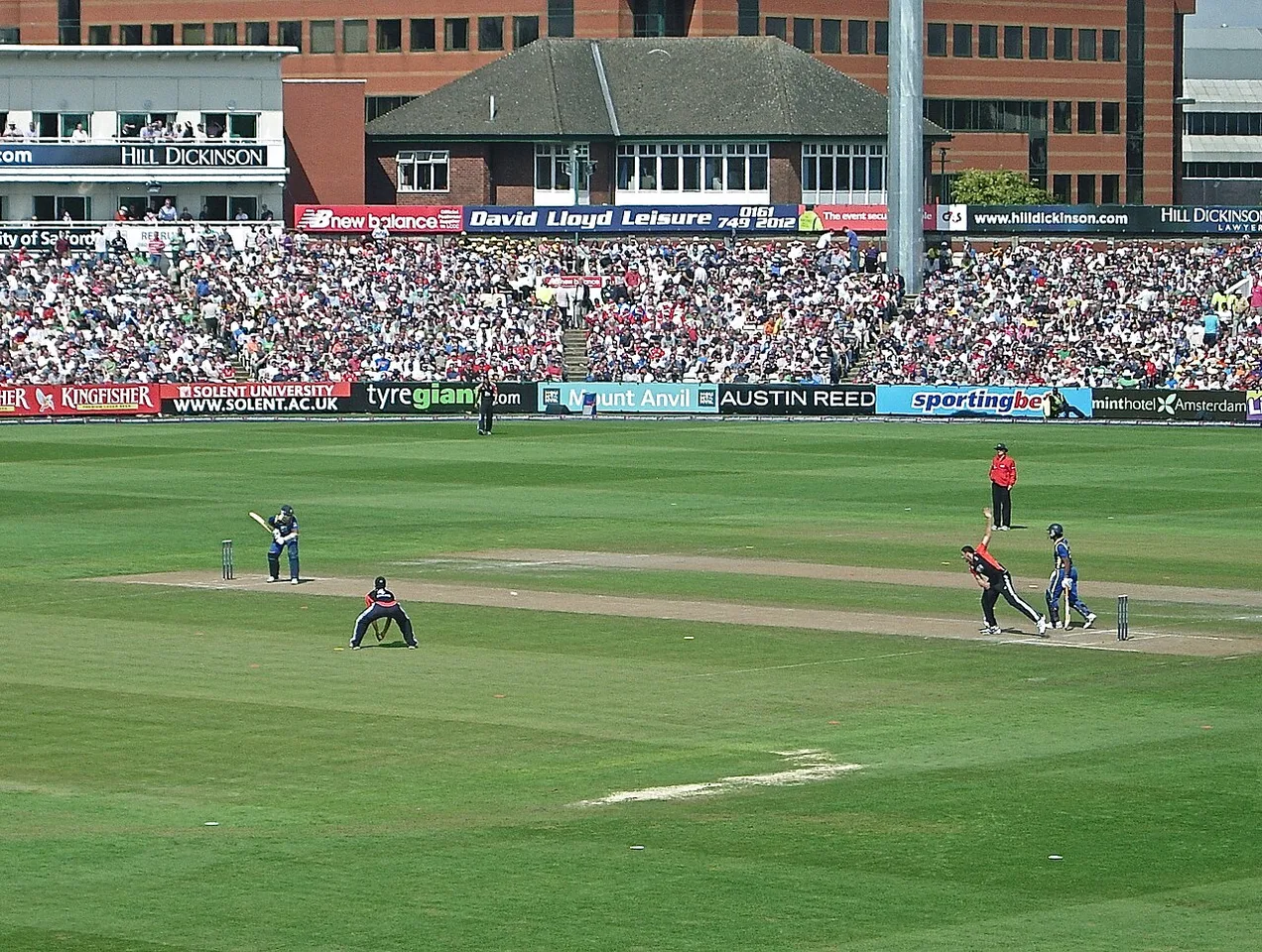
Lord’s during the June 2011 England–Sri Lanka Test; an archive venue example for comparing fixture and format labels.
Read the innings total, wickets and overs before focusing on individual players. In a chase, add the target, required rate and balls remaining. Together these details describe the match problem. A batter's score or a bowler's wicket total becomes more meaningful when placed inside that wider picture.
In limited-overs cricket, partial overs use ball notation. A hypothetical 18.4 represents eighteen overs and four legal deliveries, or 112 legal balls in six-ball overs. It is not 18.4 decimal overs. Use the ball count when checking rates or remaining resources.
A partnership explains how the total developed between wickets. Extras contribute to the team total even when no batter receives those runs. Bowling figures describe the bowler's allocation, conceded runs and credited wickets, but may require commentary to explain the phase or difficulty of the spell.
Keep Test match reading separate. A Test can involve two innings per side and additional concepts such as a lead, deficit or declaration. A limited-overs target calculation should not be pasted onto a Test innings without understanding the game's state.
| Match item | What to confirm | Frequent confusion |
|---|---|---|
| Fixture header | Category, date and format | Another game with the same countries |
| Team list | Specific match selection | Tour squad treated as final eleven |
| Innings panel | Which side is batting | First-innings total treated as a result |
| Result line | Final official wording | A live advantage treated as victory |
| Series panel | Separate results by format | One win treated as the whole tour |
What should you do during a rain delay or revised chase?
Use the official match status and any announced revised target. A rain delay can change available playing time, but viewers should not calculate an official outcome from a screenshot. The applicable playing conditions determine what happens after interruption, including how a shortened match can produce a result.
DLS is the Duckworth-Lewis-Stern method used in relevant interrupted limited-overs situations. Its target adjustment accounts for resources rather than simply applying the first innings' average scoring rate to the second. A home-made proportional calculation can therefore produce the wrong requirement.
When a revised target appears, note the overs allocation and the time of the revision. An earlier graphic may remain on social media even after further rain changes the equation. Comparing that old graphic with a later innings total can create an apparent contradiction.
Distinguish a par score from the target required to win. The labels address different thresholds in the method's operation. If you cannot see the label clearly, do not attach a winner to the number. Read the final match report for the recorded outcome.
Keep an interruption log
A simple note of pause, announced restart and revised allocation can explain a confusing match better than dozens of screenshots. Include only confirmed changes. A television discussion about what might happen should remain separate from an official decision.
How do the match result and series score differ?
A match result describes one fixture; a series score summarises a defined group of fixtures. A team can win a game without winning the series, and different formats on the same tour may have separate series results. Always identify the relevant set before stating that a team is ahead or has won.
Imagine a hypothetical three-match ODI series with one win each and the third game still scheduled. The teams are level, not both series winners. If the final fixture is abandoned, the series description depends on the completed outcomes and competition arrangements, rather than an assumed tiebreaker.
Read the official result's margin accurately. A win by runs and a win by wickets describe different situations. A tie, no result and abandonment also require precise wording. Do not turn an unfinished chase into a defeat merely because the batting side was behind a projected line.
For a tournament, the points table adds another layer. A result can affect points, qualification and net run rate according to that competition's rules. The bilateral series score does not explain those consequences. Check the tournament regulations before claiming that a single game confirms elimination.
Keep a separate row for every fixture in a personal results table. Include the date, format, result and status. That structure helps detect duplicated entries and makes it clear when a rain-affected game has been counted incorrectly.
How can you plan viewing or attendance without relying on rumours?
Use the identified fixture as the basis for checking viewing arrangements, admission and transport. Broadcast rights vary by territory and event, while ticket conditions depend on the organiser. A familiar logo, old poster or another country's viewing guide does not establish access for a viewer in Pakistan.
For television or streaming, confirm the competition, territory and platform's own event listing. A highlights package is edited coverage, not proof of a live stream. Clips can omit long passages, failed chances and the sequence that explains an important dismissal.
For attendance, verify the venue before arranging a route. A city name and stadium name should agree across the booking details and fixture information. Check the ticket category, entry instructions and any published policy covering schedule changes. Keep the purchase record accessible on the day.
A practical planning note has four parts: the exact fixture, local start time, confirmed access method and a last-check reminder. The reminder should be close enough to the event to catch a revised start, but it should not become an excuse to follow unverified updates all day.
Before sharing a message with friends, remove unsupported statements about the lineup, weather result or final score. A useful message can simply identify the game and state what remains unconfirmed. Precision is more helpful than a dramatic headline.
For a student exercise, compare an original schedule announcement with the completed match page. Identify which details stayed fixed and which were added later: toss, actual participants, innings and result. This makes the difference between a plan and an event record visible. It also teaches why an accurate old announcement can still be insufficient evidence for a current claim.
A useful verification drill begins with two screenshots that appear to disagree. First compare their headers, then their timestamps, then the innings number. One may show a scheduled start and the other the actual first ball after a delay. Another pair may show an original target and a revised requirement after rain. Explain the difference before deciding that either source is wrong. This method encourages readers to investigate context rather than spread a correction that creates a new error.
Keep the final record once the game ends. Replace temporary notes with the completed outcome, preserve any interruption details needed to understand it, and mark uncertain observations as unresolved. If you write a short match summary, make the opening sentence identify the fixture and result, then use the remaining space for the decisive passages. Do not let a memorable clip replace the chronology. The strongest summary gives a reader enough information to understand what happened without mistaking a separate match, format or stage of the series for the event being described.
Once you have identified the fixture, the Ireland–Namibia scorecard lesson supplies worked arithmetic for totals and rates. The middle-order innings guide helps interpret the batting task, and the spin and captaincy guide explains how tactical choices change the available scoring options. These perspectives become useful after the match identity is secure.
Sources
Image credits: Cover: Anthony O'Neil, source, CC BY-SA 2.0. Resized and converted to WebP. Article image: Gareth Williams from Redhill, England, source, CC BY 2.0. Resized and converted to WebP.
Found an error or an outdated detail? Report a correction with the article URL and original source.