
Halloween Explained: History, Customs and Sources
Explore Halloween through historical sources, changing customs and a simple comparison exercise, while respecting different family and cultural choices.
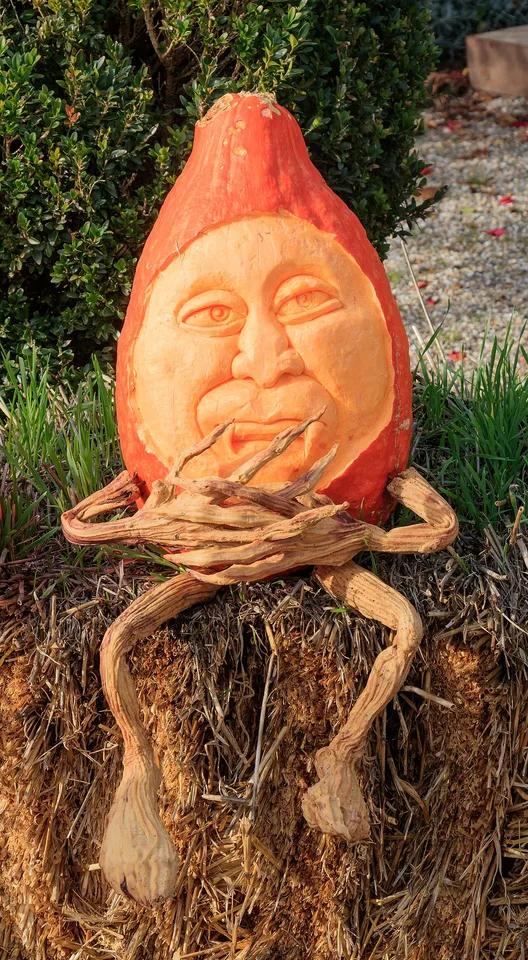
Halloween is associated with 31 October and, in communities that observe it, activities such as costumes, seasonal stories and visiting for treats. Its history includes changing traditions rather than one unchanged practice shared by everyone. For students in Pakistan, the topic can be studied as history, language and cultural interpretation without assuming that a family or school celebrates it.
The most useful starting question is not whether a modern photograph looks traditional, but what a dated source establishes about a particular place and activity. This guide combines a brief historical framework with a practical reading workshop. It keeps personal participation separate from learning about customs and avoids treating ghost stories as factual evidence about supernatural events.
What does the name Halloween tell us about its history?
The name connects with All Hallows' Eve, the evening before All Saints' Day. Historical explanations also discuss Samhain and seasonal traditions in parts of Europe. These connections provide context, but the history of a name does not prove that every modern costume, party activity or commercial decoration has the same origin or age.
Use a layered timeline instead of a single arrow from ancient festival to modern shopping display. Put religious calendars, seasonal customs, migration and later social practices on separate lines. Some connections may be well documented while others need more evidence. This arrangement helps students see that cultural change can involve several overlapping processes rather than one continuous, uniform tradition.
Vocabulary needs care too. Hallows refers to saints in the name's historical context; eve refers to the preceding evening. Understanding those words is useful language study, but it does not determine how a present-day household interprets the occasion. Modern meanings can differ among individuals even when they use the same calendar name or recognise similar decorations.
When writing an introduction, avoid claims that all ancient people believed the same thing or that every modern participant knowingly follows an ancient ritual. Such sentences collapse time and variation. A more accurate paragraph identifies the broad historical connection, then explains that particular customs require their own evidence. This makes room for both continuity and change.
How can historic newspapers show changing Halloween customs?
Historic newspapers document what writers, editors and advertisers described for specific audiences. They can reveal parties, pranks, games, costumes and disagreement over those activities. They do not automatically represent an entire country. Read the date, place, page type and purpose before using one article as evidence for a general historical claim.
The National Endowment for the Humanities' archive-based overview illustrates how newspapers discussed Halloween differently across periods and communities. That is the key lesson to carry into research: a source can record both a practice and an attitude toward it. A writer mocking a custom is not the same kind of evidence as a participant describing an event.
For a classroom task, choose one short newspaper item and label it news, commentary, advertisement or entertainment. Then identify who appears to be speaking. An advertisement records what someone wanted to sell; it does not prove that every reader purchased it. A party report establishes a reported event more directly than it establishes universal popularity.
Digitised text also has limits. Optical character recognition can misread old type, especially punctuation and unusual spelling. Compare search text with the page image where available. If a word looks strange, do not build a historical theory around it before checking. The source's physical layout, nearby heading and publication details often resolve confusion that a search snippet creates.
Why should costumes, trick-or-treating and decorations be studied separately?
Modern Halloween customs can appear together while having different histories, functions and local meanings. Costumes concern dress and performance, trick-or-treating concerns a social visiting practice, and decorations concern spaces and visual symbols. Study a particular activity in a defined setting rather than assuming that evidence about one establishes the history of all the others.
Imagine a historical newspaper describing a fancy-dress party. That supports a claim about a party and clothing in that setting. It does not automatically establish door-to-door visiting by children. Similarly, a modern pumpkin display shows a visual custom at a location, but it cannot prove what an earlier community carved, displayed or understood by a similar object.
Build a comparison sheet with activity, participants, place, date and evidence. If the source does not name participants, leave that field unresolved. This simple discipline stops a contemporary image from carrying more historical weight than it can support. It also encourages focused questions, such as how an activity was described, rather than a vague search for “the real origin of everything.”
The geography and country guide offers a useful reminder that countries contain varied communities. A custom appearing in one city cannot stand for every region or household. Use place names precisely and avoid making one overseas school event into a statement about what all Europeans or all Americans do.
What is the difference between folklore and factual evidence?
Folklore includes stories, beliefs and expressive practices shared and adapted within communities. A ghost story can be evidence that a story was told, printed or performed. It is not, by itself, proof that its supernatural events happened. Distinguish the content of a narrative from the historical fact of its circulation.
For example, an invented account might describe someone seeing an apparition near a bridge. A historian could ask when that account appeared and how it changed between versions. A literature student could analyse suspense and setting. Neither task requires accepting the apparition as verified. The same material can support different questions when the evidentiary boundary remains clear.
Watch for words such as legend, tradition and superstition. They can be descriptive labels, but their meaning depends on the writer and context. A historical author may use them approvingly, playfully or dismissively. Explain that tone rather than adopting it automatically. Quoting a period source does not require endorsing its assumptions about another community.
The fiction and evidence guide supports a similar distinction between narrative and documentation. Stories can be culturally meaningful without serving as literal records of everything they depict. A strong student paragraph explains what the source reveals about storytelling, language or social attitudes instead of forcing it to answer a question it cannot settle.
How can students compare Halloween with other observances respectfully?
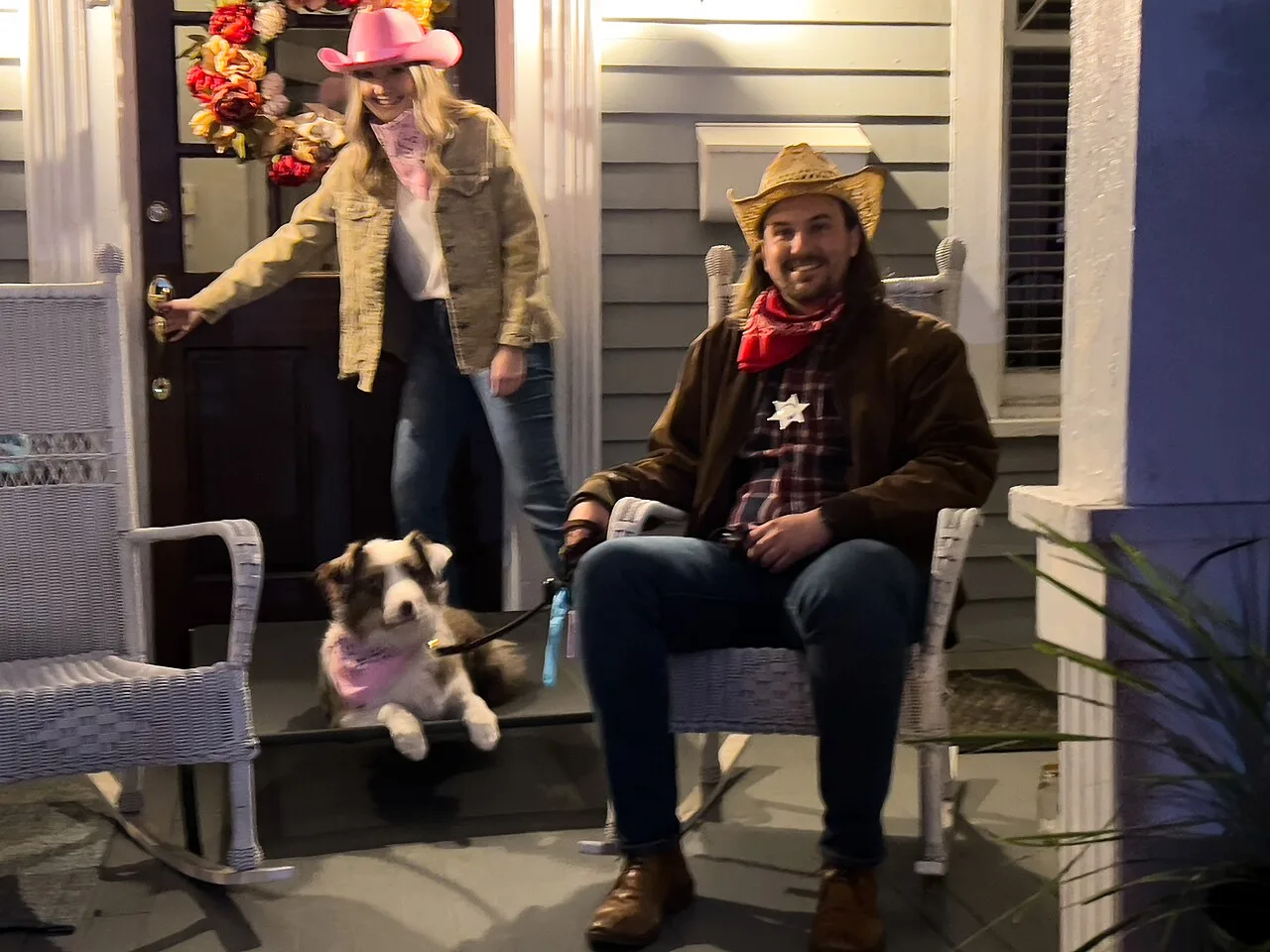
A Halloween festival in Macon, Georgia, photographed in 2023 provides a dated local example rather than evidence of universal participation.
Compare clearly defined features such as calendar timing, public activities, family practices or forms of remembrance. Do not treat different observances as interchangeable because they share a visual motif. Respect the names and explanations used by the communities involved, and keep your comparison limited to the evidence available for each case.
A useful comparison asks who participates and what the source says the activity means. Similar-looking candles, flowers or costumes can serve very different purposes. Visual resemblance alone cannot establish a shared religious meaning or historical origin. If you cannot verify the meaning in a particular context, describe the appearance and leave the interpretation open.
Avoid ranking traditions as advanced, strange or authentic based on personal familiarity. Instead, compare how each source presents its activity and audience. A museum caption, a family interview and a commercial event advertisement have different purposes. Reading their differences helps students understand why one short description rarely captures a whole community's practice.
In Pakistan classrooms, respect school rules and family preferences about participation. A research assignment can involve reading and writing without asking students to dress up, perform a ritual or disclose private beliefs. The home learning routine can be adapted for a short discussion in which a caregiver helps distinguish historical curiosity from a decision about celebration.
How can photographs and advertisements mislead a history assignment?
A photograph establishes a visible scene only when its date, location and context are reliable. An advertisement shows a message intended to influence an audience. Neither proves the age or universal popularity of a custom. Check captions and original publication details before using visual material to support a historical argument.
Suppose a social post labels a recent staged photograph as an old village tradition. Clothing and colour filters may make it look convincing, but appearance cannot authenticate the claim. Search for the original caption or institutional catalogue entry. If those cannot be found, use the image only as an unverified example of online presentation, not as evidence for historical practice.
Advertising often uses words such as ancient, magical and timeless loosely. Those words can create atmosphere without making a precise historical claim supported by records. In a media-literacy exercise, underline the descriptive language and separate it from verifiable details such as the advertised date, venue and product. The distinction helps students read persuasive material without simply repeating its mood.
Source selection also shapes impressions. A page of costume advertisements can make commerce seem central because that is what the page was designed to display. A local report of a quiet gathering may show another aspect. Use more than one type of source where the question requires breadth, and explain which part of the history each source can actually illuminate.
What is a good source-based Halloween essay question?
A good question specifies an activity, place, period and type of evidence. “How did two newspaper accounts describe Halloween parties?” is more manageable than “What is the complete history of Halloween?” A focused question lets students make a defensible argument without filling gaps with stereotypes or copying an institutional overview paragraph by paragraph.
Start with a short source set: one period newspaper item, one archive catalogue record and one institutional explanation. Record full publication details in your notes. Then decide whether you are studying practice, language or attitudes. Each question directs attention differently. A report of a game might be useful for all three, but it will support different claims in each essay.
An outline could contain a paragraph introducing the sources, two paragraphs comparing specific details and one explaining the limits. Use brief quotations only when wording matters, such as a period author's tone. Otherwise paraphrase and retain the attribution. The aim is to show your reasoning from the material, rather than display how much text you can collect.
The study calendar guide can help divide the task into reading, note-taking and revision sessions. Keep the research question visible at each stage. If a fascinating detail does not answer it, save it elsewhere. This prevents an essay from becoming a disconnected collection of pumpkins, ghost stories and historical names without a clear argument.
How should a student discuss beliefs and participation in class?
Use respectful descriptive language, distinguish personal views from sourced statements and avoid pressuring classmates to represent an entire community. A student can explain a historical custom without endorsing it or taking part. The classroom goal is accurate understanding and careful communication, with room for families and individuals to make their own choices.
Set a discussion rule that claims about history need evidence while personal preferences do not require a public defence. Someone may say that their family does not observe the occasion without being asked to speak for all families. Another may describe an experience without implying that everyone elsewhere shares it. These boundaries make comparative learning more precise and less personal.
If disagreement arises over a historical statement, return to the source and narrow the claim. Instead of debating whether a whole holiday means one thing, ask what a specific document says about a specific activity. A narrower question can often be answered while broader interpretations remain different. Recognising that difference is a strength in historical reading rather than a failure to reach agreement.
Finish with a short reflection identifying one fact learned, one assumption corrected and one unresolved question. Those three sentences reveal whether the lesson changed the student's understanding. A useful outcome might be learning that a familiar modern custom has several historical layers or that an old newspaper's confident tone does not make its statement universally representative.
A source comparison for revision
| Source | What it can show | What it cannot establish alone |
|---|---|---|
| Newspaper report | A described event | Universal participation |
| Advertisement | A sales message | What everyone purchased |
| Photograph | A documented scene | An ancient origin |
| Folktale | A circulating narrative | Supernatural proof |
| Institutional overview | A researched framework | Every local variation |
Before submitting the essay, replace sweeping words such as everyone, always and originally wherever the sources do not support them. Add a place and period to broad claims. Check that each quotation serves a point and that the conclusion answers the chosen question. These edits turn a seasonal topic into a useful exercise in historical judgement and clear English writing.
Use a two-source paragraph
Choose two dated items that describe the same type of activity, such as a party. Begin by identifying the shared feature, then describe one difference in tone or participants. Finish by explaining that the sources document those settings rather than the whole history of the activity. This produces a comparison with a clear boundary.
If the items disagree, inspect their dates and purposes before deciding that one must be false. A newspaper report and an advertisement may describe different aspects of the same social world. The disagreement can become the subject of the paragraph, provided the student explains what each source can establish and leaves unsupported generalisations out.
Sources
Image credits: Cover: Llez, source, CC BY-SA 3.0. Resized and converted to WebP. Article image: Danielleinga, source, CC BY-SA 4.0. Resized and converted to WebP.
Found an error or an outdated detail? Report a correction with the article URL and original source.