
Novak Djokovic: Learn to Read a Tennis Match
Study Novak Djokovic through tennis scoring, return games and rally patterns, and check official records before sharing rankings or title totals.
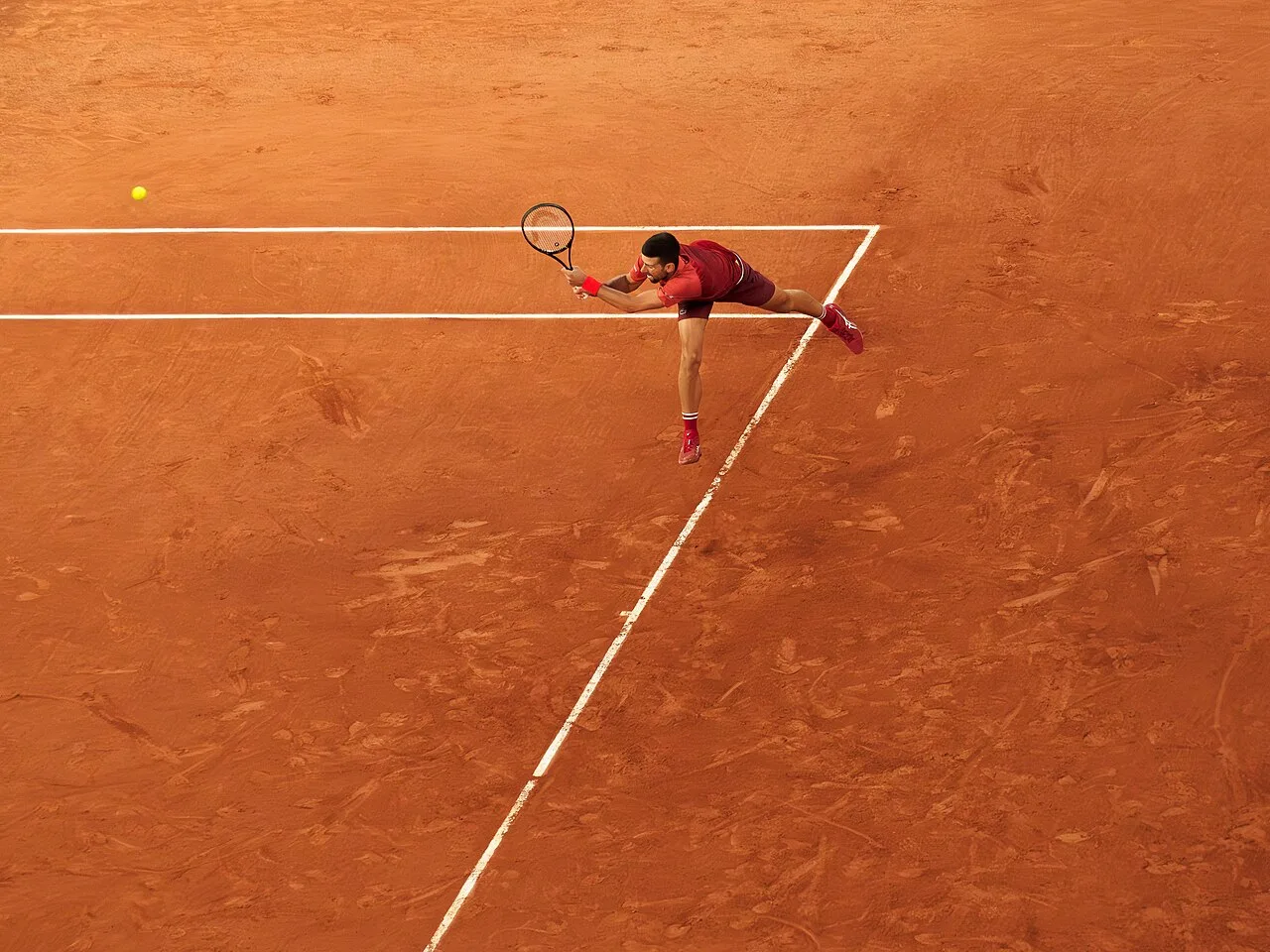
To understand a Novak Djokovic match, follow how points build games, how games build sets and how patterns of serve and return change the contest. A memorable rally is only one part of that structure. The ITF player profile establishes player identity, while the event's score record and regulations establish what happened under the applicable match format.
This tennis analysis guide concentrates on reading the game rather than claiming a current ranking, title total or upcoming appearance. Its numerical examples are hypothetical. The aim is to help a student explain a service game, return pattern or tactical adjustment using observable evidence, with enough scoring knowledge to understand why the moment mattered.
How do points, games and sets fit together?
In standard tennis scoring, points build a game and games build a set; the required number of sets depends on the match format. A break of serve means the receiver wins a service game. It changes the set situation, but does not by itself decide the set or match. Always check the event's stated format.
A conventional game moves through love, fifteen, thirty and forty. At deuce, the usual advantage format requires two consecutive points to win the game. Alternative scoring formats exist, so do not assume that a rule from one competition applies everywhere. The ITF rules and the particular tournament regulations provide the relevant framework.
Read the scoreboard in layers. The larger set score, the current game count and the point score answer different questions. A broadcast can also show previous tiebreak points in a smaller notation. If the graphic is unclear, locate the official result rather than guessing whether a displayed number refers to games or points.
For practice, take an invented score of one set each, five games all and thirty-all. Explain what the next point changes and what it does not change. A point at that stage can create game point or break point depending on who wins it, but it is not automatically match point. This exercise builds the vocabulary needed for later tactical analysis.
Why is a break point important without telling the whole story?
A break point is an opportunity for the receiver to win the current service game on the next point. Its importance depends on the set and match situation. Break-point conversion records an outcome, but the opportunities created and the quality of play around them are separate questions. Do not reduce an entire return performance to one percentage.
A player might create several chances in one long game and lose them all, then break immediately in the next return game. Another might convert one chance from a single opportunity. The conversion rates differ, but neither alone explains the pressure applied across the set. Look at the sequence and the opponent's responses.
Distinguish break point from set point and match point. Sometimes one point can meet more than one description; at other times the stakes are narrower. State the actual score before explaining the moment. This prevents dramatic commentary from turning an ordinary game situation into an apparent match-deciding event.
When analysing Djokovic, compare how the point begins on different break-point opportunities. Does the server choose a different location? Does the returner change position? Is the rally pattern similar to earlier points? Those observations explain the tactical problem more precisely than declaring that a player simply wanted the point more.
What should you watch in Djokovic's return game?
Watch starting position, movement at the serve, contact and the return's depth and direction. A return can reduce the server's advantage without becoming an immediate winner. Follow what shot the server has next, because the return's value often appears in the second or third stroke rather than in a spectacular first contact.
Record whether the serve is a first or second serve and which side of the court is used. A wide serve creates different movement from one directed toward the body or centre line. Comparing returns without the serve's placement and pace can make a controlled response look less effective than a fortunate aggressive one.
A deep return may limit the server's attacking space, while a shorter reply can allow an approach. That is a tactical relationship to test in the footage, not a universal verdict on every ball. Angle, height and the opponent's position also matter. Describe the next available shot before deciding whether the return gained an advantage.
The Carlos Alcaraz tennis tactics guide provides a useful comparison framework. Keep the evidence match-specific: watching another player's approach can sharpen your questions, but it does not establish what Djokovic did in the selected game. Apply the same observation categories to both if you compare them.
How should serve statistics be interpreted?
First-serve percentage, points won on first serve and points won on second serve measure different parts of serving. The first describes how often the first serve lands in; the others describe point outcomes after each serve category. Combine them with placement, double faults and rally context rather than treating the largest percentage as a complete serve assessment.
In a hypothetical set, a player could land many first serves but win relatively few points behind them. Another could land fewer while gaining more advantage when they do. Neither percentage alone shows the entire pattern. Write the numerator and denominator for each calculation so you know what the figure actually measures.
Aces are valuable recorded outcomes, but a serve can also create a weak reply that leads to a routine winning shot. Conversely, an apparently powerful serve may be returned effectively. Observe how often the server begins the rally in control. This adds a tactical explanation to the numerical record without inventing untracked statistics.
Compare like periods
Do not compare a whole-match statistic with one selected game and call the difference a trend. Use matched sets, games or another clearly defined interval. If a broadcast graphic updates during play, record when it was displayed. A live number can change after the next point, so a screenshot is a dated observation rather than a permanent match summary.
How can rally patterns be described without counting only winners?
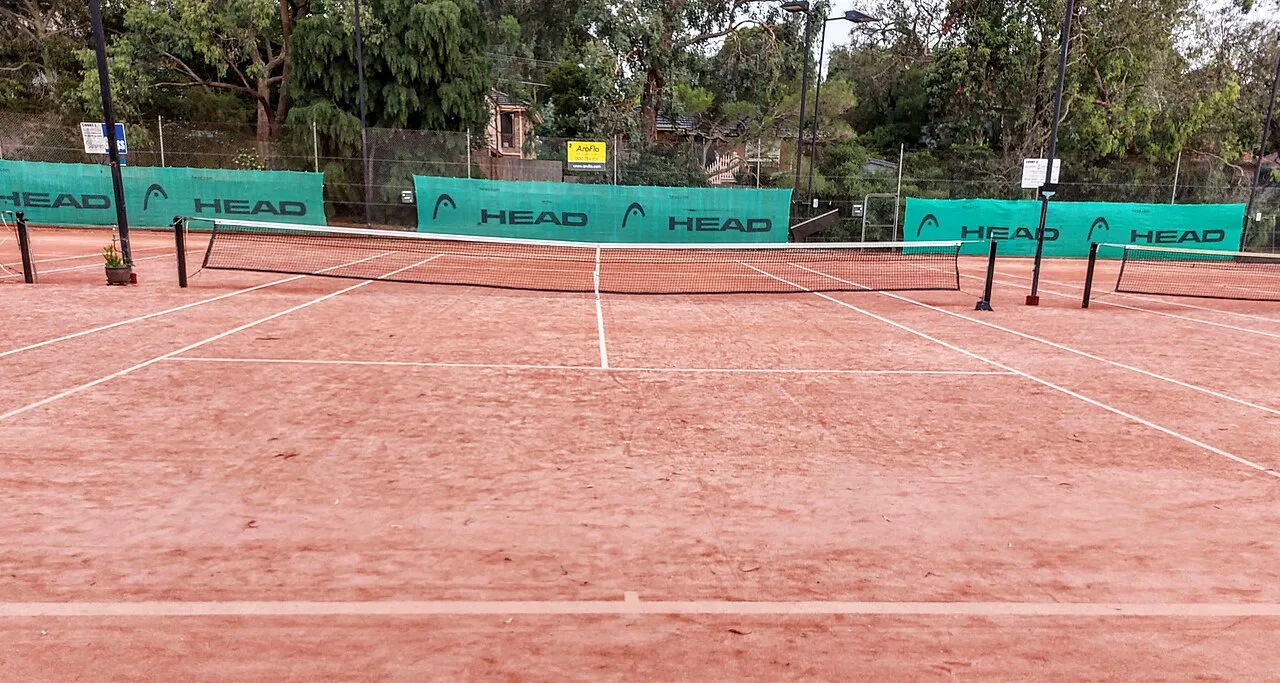
An empty court makes the net and playing area easier to inspect when discussing court position and surface. It does not depict a Djokovic match.
Describe direction, depth, court position and the transition between defence, neutral exchange and attack. A rally can be shaped by a shot that does not end the point. Watch how one stroke changes the opponent's options, then follow the response. Winner totals alone cannot show the full process through which an advantage was created.
Begin with a repeated crosscourt exchange. Note whether one player gradually moves the other wider or shorter before changing direction. A down-the-line shot may be an attempt to exploit space, but the risk depends on position and the incoming ball. Avoid praising a direction change solely because the final stroke landed inside the line.
Defensive movement can also alter a rally. A high, deep reply may give the player time to recover, while a short reply may invite an attack. Describe the opponent's next opportunity rather than calling every retrieved ball a successful defensive choice. Survival for another stroke and recovery to a neutral position are different outcomes.
For a Djokovic analysis, choose several complete points from a defined game rather than a montage of exceptional retrievals. Record the initial serve or return, the first change in advantage and the point's ending. This makes it possible to explain a repeatable pattern while recognising that a small sample cannot establish every aspect of a player's style.
How do surface and conditions affect a tactical explanation?
Surface and conditions influence the problem players face, but their effect should be connected to observed play rather than assumed from a label. Check whether the match is on hard court, clay or grass, and whether it is indoors or outdoors. Then describe bounce, movement and point construction using the available evidence.
Do not describe every court of one type as identical. Tournament preparation, weather and other conditions can vary. If your source does not provide a measured court-speed assessment, avoid inventing one. You can still say that a particular ball bounced high in the observed rally or that a player adjusted position between return games.
Wind can complicate ball placement, while lighting and temperature may form part of the match context. Those factors do not automatically explain a missed stroke. A report should connect the condition to a visible adjustment or a verified statement rather than using it as an all-purpose explanation after a result.
The NFL scoring and clock guide offers a useful contrast in how different sports structure opportunities. In tennis, keep attention on the event's surface and scoring rules rather than importing a general idea of momentum from another game. Sporting comparisons are helpful when they clarify a distinction, not when they erase it.
| Observation | Record to use | Cautious interpretation |
|---|---|---|
| Break-point opportunity | Point score and server | Receiver can win the game on this point |
| Deep return | Full serve-and-return sequence | Server's immediate options may be reduced |
| First-serve percentage | Defined statistical interval | Frequency of successful first serves |
| Direction change | Court position and incoming ball | A tactical choice within that rally |
| Long recovery run | Complete footage | Visible movement, not a medical diagnosis |
What do tiebreaks require a viewer to check?
Check when the tiebreak occurs, its target score and the required winning margin under the event's rules. Tiebreak points are counted differently from ordinary game points. Final-set arrangements and match tiebreaks can differ across competitions, so never infer the entire scoring rule from a previous tournament or an old highlights package.
In a conventional seven-point tiebreak, a two-point margin is required, meaning play can continue beyond seven. Some formats use a different target. The event regulations determine which version applies. A displayed tiebreak score is therefore meaningful only when attached to the correct match format and stage.
The serving sequence also differs from an ordinary game. Follow the scoreboard and rules rather than assuming the same player serves every point until the tiebreak ends. For analysis, identify who serves each selected point and what the receiver must handle. A lost point on serve and a lost point on return create different situations.
Avoid interpreting a short tiebreak as a full summary of the match. A handful of points can decide a set after a long period of closely matched games. Explain the decisive points while preserving the wider pattern that brought the players there. A narrow result can reflect a close contest without proving that every element of the performance was equal.
How can students write a clear Djokovic match analysis?
Begin with the verified match identity and a specific tactical question. Explain the scoring situation, describe selected complete points and connect them to a conclusion about the observed match. Keep current rankings and career totals out unless verified and necessary. A useful report shows how the evidence supports the argument, not just who won.
Use a worksheet with columns for point score, server, first or second serve, initial direction, change in advantage and outcome. Add a note for camera limitations. This is enough detail to support a short analysis without pretending to generate a professional tracking dataset. Consistency matters more than the number of columns.
The student planning guide can help schedule separate viewing and writing sessions. Watch once for the contest, once for the chosen question and once to verify disputed observations. Splitting those tasks makes it easier to avoid writing conclusions while still trying to understand the score.
Keep health claims outside visual guesswork
Visible fatigue, stretching or a slow walk does not establish an injury diagnosis. Use an official statement when reporting a withdrawal or medical issue, and distinguish that statement from your observations of movement. A player can have a difficult passage for several reasons. Tactical analysis should not invent a physical explanation to complete its story.
Before finishing, check every scoring term and calculation. Ask whether the reader could locate the same game and understand the described pattern. Replace sweeping claims with a defined sample where needed. If the next match shows a different approach, that is new evidence to compare, not a reason to erase the limits of the first report.
Finally, keep result and explanation separate during revision. The score establishes the winner; your analysis explains selected mechanisms that contributed to the contest. A winning player can make an ineffective choice, and a losing player can execute a sound pattern successfully for part of the match. Recognising both makes the report more informative than a celebration or a complaint.
Check the ending against the whole set
Rewatch the final two games alongside an earlier service game. Ask whether the decisive passage introduced a new pattern or merely resolved a contest that had already been developing. This prevents the last memorable rally from replacing the full explanation. Keep the point score beside each observation, because the same stroke can carry different tactical demands at different stages.
If the available video begins late, narrow the report to that passage. A short, accurately bounded analysis is more credible than a complete-match story reconstructed from selected highlights. The reader should know exactly how much of the contest you observed.
Sources
Source 1 · Source 2 · Source 3
Image credits: Cover: Kuberzog, source, CC BY 4.0. Resized and converted to WebP. Article image: KeepActive Australia from Melbourne, VIC, Australia, source, CC BY-SA 4.0. Resized and converted to WebP.
Found an error or an outdated detail? Report a correction with the article URL and original source.