
Pavan Rathnayake: Learn to Analyse a Batting Innings
Study Pavan Rathnayake through batting phases, shot selection and match context, using official cricket coverage rather than isolated highlights.
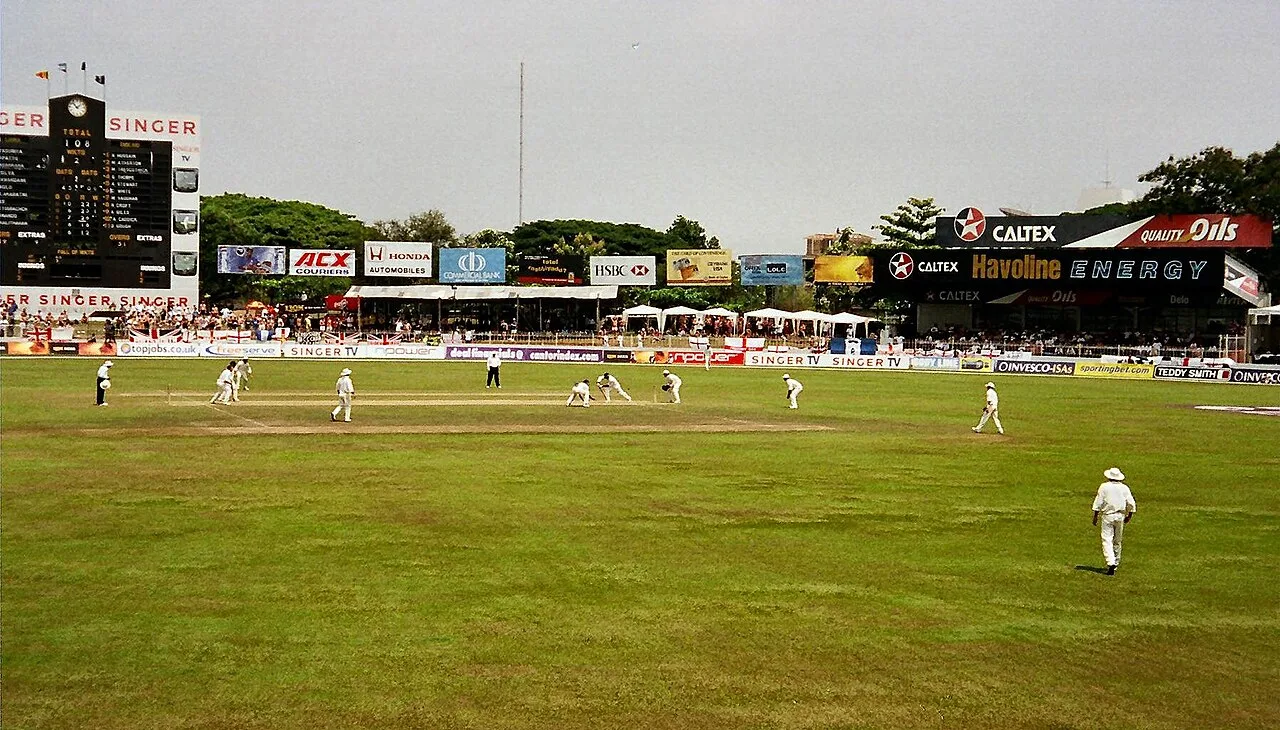
Pavan Rathnayake offers a useful starting point for learning how to analyse a batting innings: identify the match, reconstruct the situation and examine decisions delivery by delivery. Sri Lanka Cricket's authorised batting footage establishes a source for observation. A highlights package, however, selects moments rather than showing every ball that shaped the innings.
This guide focuses on batting development and evidence, not a prediction about selection or a claim about a new record. Its numerical examples are invented teaching scenarios, clearly separated from Rathnayake's results. By the end, a student should be able to explain scoring tempo, strike rotation and shot selection with a scorecard and an observation sheet, rather than simply describing attractive boundaries.
How do you identify the Pavan Rathnayake innings in a clip?
Match the player, opposition, competition, venue and match date before interpreting the performance. Check the authorised upload description against a completed scorecard. An upload date identifies publication of the video, not necessarily the day of play, and a national board's channel can contain domestic, development and international cricket.
Write a match identity line at the top of your notes. Include the team category and format, because a domestic one-day innings should not become an international record through an ambiguous caption. When information is missing, keep the gap visible. Do not attach a convenient scorecard merely because it contains a similar player name or total.
Watch the beginning and end of the available clip before selecting examples. A montage may combine more than one spell, camera angle or stage of play. Score graphics can help locate a shot in the innings, but a cropped or absent graphic limits that inference. A replay may show the same delivery twice, so avoid counting every appearance as another scoring event.
Record the video's length and whether it shows the dismissal, the finish or only selected scoring shots. That defines the evidence available for analysis. If the clip leaves out dot balls, you cannot calculate an accurate dot-ball percentage from it. The scorecard establishes numerical output; the footage can help explain observable choices within its coverage.
What should you record when the batter arrives?
Record the team score, wickets lost, over, target if applicable and available batting partners. The entry situation defines the immediate task. A batter arriving after quick wickets may face a different balance of survival and scoring from one entering behind a strong opening partnership, even if both eventually make the same number of runs.
Describe the bowling conditions using what you can observe. Note whether the ball appears to move after pitching, whether the bowler uses a new ball and whether the field encourages a particular scoring area. Avoid turning a single visible bounce into a full pitch report. Camera perspective and the quality of the delivery can affect what you see.
For a chase, record runs required and legal balls remaining. Required run rate expresses the pace needed from that point; it does not guarantee that a constant pace is the best tactical route. A team may plan around particular bowlers or the availability of wickets. Those plans need evidence rather than a commentator's confident tone.
For an innings setting a target, consider the remaining overs and the resources available. A partnership that stabilises a collapse may make later acceleration possible. Ask what the team needed at entry, then use that task as a reference throughout the analysis. This keeps an early defensive choice from being judged solely by the final total.
How do strike rate and scoring tempo differ?
Batting strike rate is runs divided by balls faced, multiplied by one hundred. Scoring tempo describes how that rate develops across the innings. The final strike rate summarises output, but phase-by-phase analysis shows whether a batter settled, rebuilt, accelerated or lost momentum in response to changing circumstances.
In an invented example, a batter makes 48 from 40 balls, giving a strike rate of 120. If the first 20 balls produce 16 runs and the next 20 produce 32, the two phases have very different scoring rates. That pattern raises a useful question about what changed. It does not establish a Rathnayake innings or prove why acceleration happened.
Check arithmetic against the scorecard. Boundaries contribute four or six runs, but the remaining total can include singles, twos and threes. Extras belong to the team total under their scoring rules, not automatically to the batter. Keep batter runs separate from partnership runs when explaining how quickly two players advanced the innings.
Build a phase chart
Use equal blocks of balls faced when you want to compare scoring pace, or use match events when the tactical story matters. A bowling change or the fall of a partner may create a meaningful boundary between phases. State the method you choose. Changing block sizes to make one passage look impressive weakens the comparison.
What can strike rotation reveal that boundaries cannot?
Strike rotation shows how a batter finds runs between major attacking shots and shares the next delivery with a partner. Singles and twos can keep a partnership moving even without boundaries. Analyse scoring opportunities, dot balls and running decisions together instead of assuming a highlights reel captures the entire scoring method.
Watch the placement rather than only the force of a shot. A controlled push into a gap may produce a safe single, while a harder stroke directly to a fielder produces nothing. Note whether the field is inside the circle, protecting the boundary or changing after a particular shot. The available gap is part of the decision.
Dot-ball analysis needs an accurate denominator. A sequence of three dots could reflect good bowling, deliberate defence or missed scoring chances. Describe the deliveries before assigning a cause. If the footage cuts straight from a boundary to another boundary, it cannot show how much pressure accumulated between them. Use ball-by-ball data where available.
Running between wickets is a shared responsibility. Observe the first call, the partner's response, the turn and the fielder's position. Avoid blaming one player from a close-up that excludes the partner. A declined second run might be sensible because of the throw or the partner's position, even when an isolated shot appears to offer more.
How should shot selection be judged without hindsight?
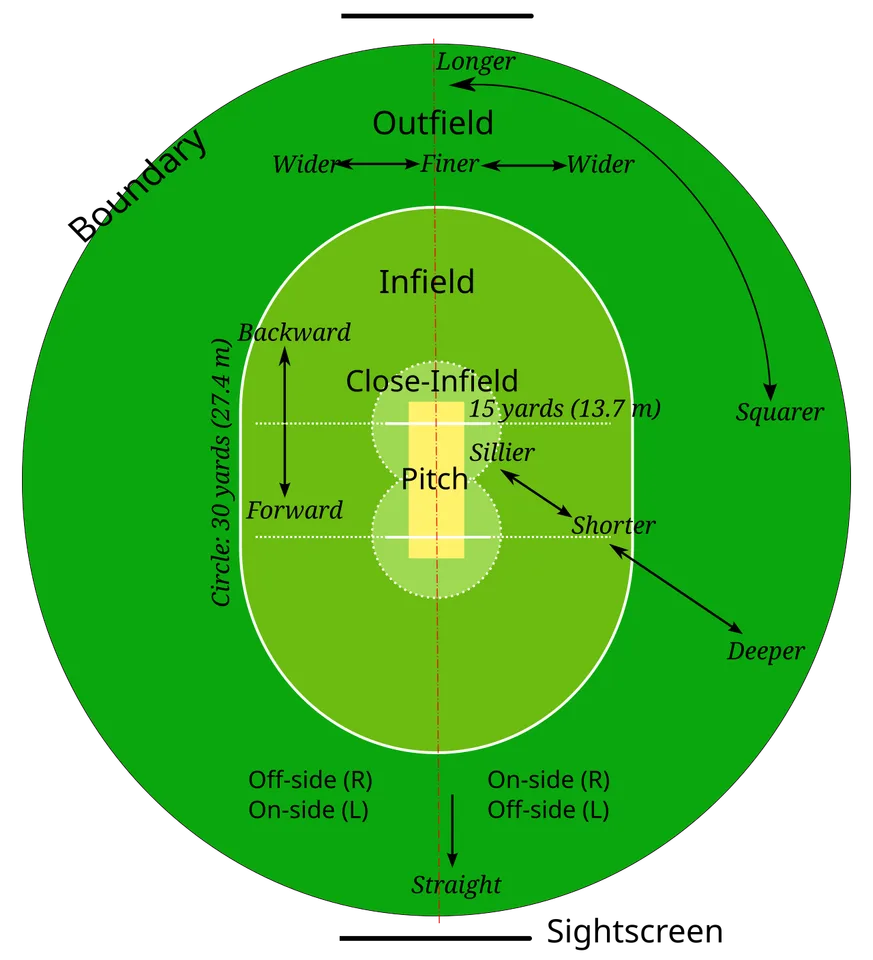
A general field-area diagram supports discussion of scoring gaps and field placement. It does not show a specific Rathnayake match.
Judge the option using the delivery, field and match situation available before the outcome. A boundary can come from a risky decision, while a well-chosen stroke can fail through execution or exceptional fielding. Separate decision quality, execution and result so that a dismissal does not automatically become proof of poor judgement.
For each selected delivery, write three observations. First describe line and length. Next explain the scoring option the batter appeared to choose. Finally describe contact and outcome. Keep inference visible: “appeared to target the off-side gap” is more defensible than claiming knowledge of the batter's private plan.
Compare an attacking shot with a similar delivery that was defended or left. The different responses may reflect field placement, bowling pace, required rate or confidence. A useful analysis tests these alternatives. One successful pull shot is not enough to establish a permanent strength against short bowling, particularly if the sample includes only favourable deliveries.
Risk changes with resources. A lofted stroke may be more reasonable late in a short chase with wickets available than early in a rebuilding partnership. Explain that relationship concretely. Avoid describing every defensive shot as fear or every aggressive stroke as courage. Those labels replace analysis with a story about personality that the footage may not support.
How can a bowling change alter the batting problem?
A bowling change can alter pace, angle, movement, field placement and the cost of attacking. Track the new bowler's type and the batter's response over several deliveries. A brief scoring burst after the change is a useful observation, but its cause needs closer examination than simply calling the matchup favourable.
Against spin, look at whether the batter plays from the crease, advances or moves back. Note the delivery's length before praising footwork. The same movement can create a scoring opportunity against one ball and difficulty against another. A single camera view may conceal the amount of turn, so use cautious technical language when the evidence is limited.
Against pace, observe whether scoring occurs square, straight or behind the wicket. A wagon wheel can summarise scoring areas if reliable data exists, but it cannot by itself show control or the quality of each delivery. An edge and a deliberate late shot may reach a similar region through very different processes.
Follow adjustments in both directions. If the field changes after a boundary, does the batter continue targeting the same area or take the newly available single? If the bowler changes length, does the response change? This interaction is the tactical story. It is more useful than declaring that one player “dominated” without showing how the contest evolved.
| Observation | Evidence needed | Defensible conclusion |
|---|---|---|
| Quicker scoring in a phase | Runs and balls in that phase | Tempo increased in the recorded interval |
| Frequent singles | Full scoring sequence | Strike rotation contributed to progress |
| A repeated scoring area | Several deliveries and field views | An observable pattern occurred in this sample |
| A successful attacking shot | Delivery and outcome | The chosen stroke succeeded on that ball |
| A permanent technical strength | Wider matched evidence | One clip alone is insufficient |
What makes a dismissal analysis fair and useful?
A fair dismissal analysis reconstructs the delivery and context before drawing a technical conclusion. Identify the recorded mode of dismissal, watch the complete available sequence and distinguish an observable movement from an assumed intention. One wicket can illustrate a problem on that delivery without proving that the same weakness defines the player's career.
For a catch, locate the fielder and assess whether the contact was controlled, mistimed or difficult to judge from the angle. For a bowled or leg-before dismissal, check the available view before making a claim about alignment. A replay may clarify the event, but it still has limits. Use the official dismissal entry for the result.
If the innings ends not out, analyse the finish rather than inventing a missing dismissal. Did the batter meet the chase's immediate requirement, remain with a partner or leave unused scoring opportunities? Those questions require the match context. A not-out symbol changes statistical treatment but does not automatically prove a flawless innings.
Include the partner's contribution and bowling quality. A batter might lose strike during a crucial passage or face several demanding deliveries after a wicket. These circumstances do not erase responsibility, but they explain the problem being solved. A balanced note can recognise a strong innings while identifying an execution error at its end.
How can students write a credible Rathnayake batting report?
Write a report with a match identity, entry task, scoring development and evidence-based conclusion. Support each analytical claim with a scorecard entry or a specific observed delivery. Keep any teaching calculations labelled as hypothetical, and separate match observations from longer-term claims about Rathnayake's technique, role or selection.
Start with a short answer: what was the central batting task and how did the innings respond? Then choose two turning points rather than describing every boundary. One might involve a change in strike rotation; another might involve a response to spin. Explain why each matters to the team's progress, not merely why the shot looked impressive.
A repeatable observation sheet
Use columns for over, delivery description, field, chosen stroke, outcome and confidence in the observation. Add a separate column for the source, especially when moving between footage and scorecard. Mark unavailable information explicitly. This prevents a later paragraph from presenting a guessed field position as something visible in the original video.
Before finalising, check every calculation and read the conclusion against the evidence. Replace permanent labels with a defined sample where necessary. If a future match supplies contradictory evidence, update the assessment rather than defending an earlier impression. Learning to revise a cricket argument is part of learning to analyse: the goal is an explanation that another viewer can test, not a slogan about a favourite player.
Keep a second page for unresolved observations. If the camera never shows a fielder, write that limitation next to the shot rather than reconstructing the field from memory. If commentary supplies an explanation, label it as commentary until another record supports it. This keeps your own watching distinct from the broadcast's interpretation and makes later review much easier.
Test whether your conclusion survives another sample
Choose a second verified innings in the same format and apply the same observation categories. Do not search only for shots that support your first impression. If you initially noticed frequent scoring behind square, check whether that pattern persists when the field or bowling attack differs. Record a changed conclusion as progress in the analysis, rather than treating it as a mistake to conceal.
The middle-order batting guide offers a useful comparison of entry situations. Use the England and Sri Lanka fixture guide when establishing match identity, and the ODI scorecard reading exercise when checking the columns behind your calculations. Together these tasks help distinguish the individual innings, the match record and the longer-term batting argument.
A final report should make its sample easy to reproduce. Give enough detail that another student can locate the same innings and understand why the selected passages mattered. Agreement is less important than a transparent method that lets both viewers test the conclusion against the available record.
Sources
Source 1 · Source 2 · Source 3
Image credits: Cover: Paddy Briggs, source, Public domain. Resized and converted to WebP. Article image: Nichalp, source, CC BY-SA 2.5. Resized and converted to WebP.
Found an error or an outdated detail? Report a correction with the article URL and original source.