
Qatar: A Practical Geography and Travel Primer
Learn Qatar’s basic geography and plan a visit using official entry, transport and tourism information, with a clear checklist for Pakistani readers.
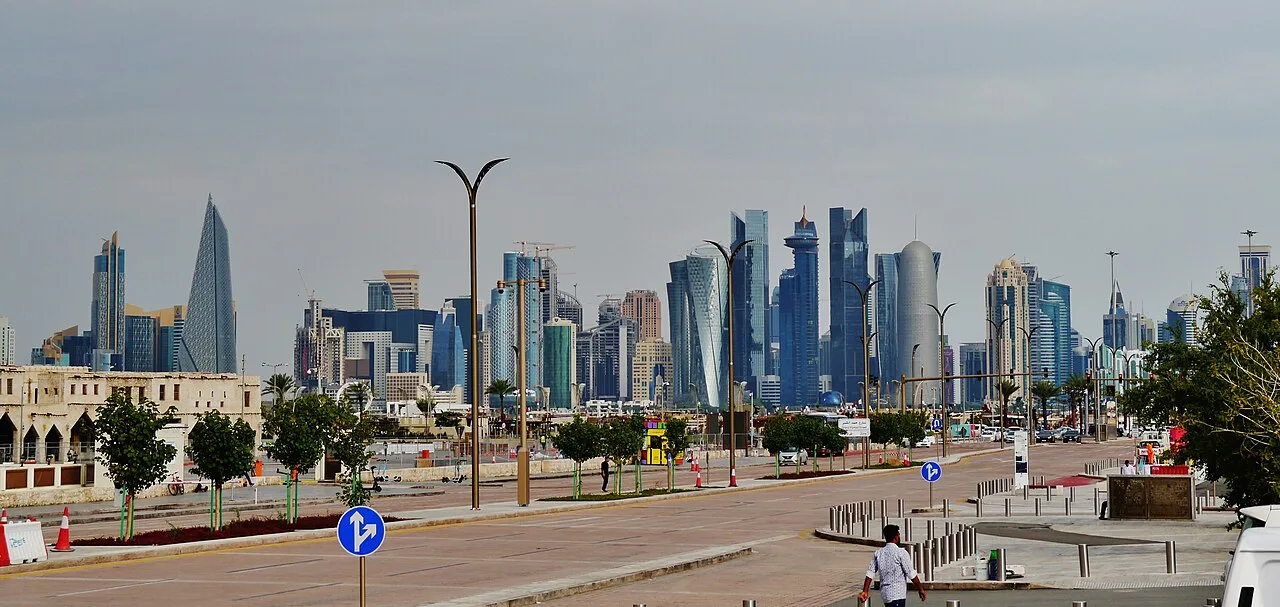
Qatar is a country on a peninsula extending into the Gulf, with Doha as its capital and Saudi Arabia along its land border. For a first visit or a school assignment, the most useful starting point is a map followed by a practical plan: where you need to go, what documents apply to you and how much time each journey requires.
A compact country is not automatically a simple itinerary. Airport procedures, local transport, weather and opening hours can shape a day more than the straight-line distance between attractions. This primer combines stable geographical context with a method for checking changing travel arrangements, without promising entry permission or quoting unverified current fees.
Where is Qatar, and how is it different from Doha?
Qatar is the state; Doha is its capital city. The country lies on the Arabian Peninsula's eastern side and has a Gulf coastline as well as its land connection to Saudi Arabia. Using the two names interchangeably hides the difference between a city visit and travel across the wider country.
Begin a country profile with that distinction. Add the surrounding water and neighbouring areas on a map, then identify the capital. This provides more useful context than memorising a list of attractions without knowing how they are distributed.
Official information identifies Arabic as the official language and the Qatari riyal as the currency, commonly abbreviated QAR. English is also widely used. These facts help with orientation, but they should not become assumptions about every person's language, background or citizenship.
Resident population and citizen population are different statistical categories. If a school project needs a population figure, use a dated official series and keep its definition visible. A visitor should not infer the composition of a neighbourhood from a national average.
Use the map as a planning tool
Mark arrival point, accommodation and proposed activities on the same map. The pattern reveals whether your plan crosses the city repeatedly or combines nearby stops. Geography becomes practical when it helps you reduce unnecessary travel and understand the return journey.
What should you verify before booking travel from Pakistan?
Verify the requirements for your passport, nationality, purpose of travel and intended stay through the responsible authorities. A friend's experience or an old screenshot cannot establish your eligibility. Keep entry documentation, airline requirements and booking conditions separate so you know which organisation controls each decision.
The official visa information provides different routes depending on the traveller's circumstances. Do not assume that every Pakistani passport holder, resident of another country or family member has identical requirements. Passport validity, travel purpose and additional documentation need a current individual check.
Transit and entry are different arrangements. Remaining within the airport during a connection does not necessarily involve the same process as entering Qatar for a city visit. A long connection alone is not proof that leaving the airport is permitted or practical.
Check whether an onward ticket, return booking, accommodation evidence or other documents apply to your route. Save the applicable instructions with their date. Do not rely on a general tourism page to settle a specific immigration question when the authority's requirements are more detailed.
Before paying, inspect cancellation and change conditions. A booking that cannot be altered may be unsuitable while essential documentation remains unresolved. This is a planning decision about uncertainty and cost, not a prediction that an application will succeed or fail.
Keep copies accessible during travel, with sensitive information stored carefully. A simple document folder is more useful than a collection of screenshots scattered across several conversations.
How should climate and weather affect your itinerary?
Use climate to understand seasonal patterns and weather forecasts to make decisions near the travel date. Qatar's hot summer conditions and periods of humidity can affect the comfort and practicality of outdoor plans. A photograph taken in another month does not establish the conditions you will encounter.
Place long outdoor walks at times appropriate to the forecast and the group's needs. Keep a flexible indoor option rather than filling every hour with fixed outdoor commitments. The aim is to make the visit workable for the actual travellers, including children or older relatives.
Distinguish walking distance from walking conditions. A route that appears short on a map may involve exposed pavements, road crossings or indirect entrances. Consider the complete route between station exit and destination rather than only the distance between map pins.
Allow time for rest and refreshments. If someone in the group has particular accessibility or health requirements, use those needs to set the pace. A tightly packed itinerary is not automatically better simply because it includes more stops.
For a student profile, label a climate description as a long-term pattern and a forecast as short-term information. Mixing them can produce sentences that imply the same weather occurs every day. The distinction is useful well beyond travel planning.
How do you plan local transport without underestimating the journey?
Plan the complete door-to-door journey, including arrival procedures, station access, transfers and the final walk. A short train ride is only one part of the total. Compare public transport with other available options using time, luggage, accessibility and the group's size, not just the advertised fare.
Hamad International Airport connects to the Doha Metro network. Official transport information describes Red Line, Green Line and Gold Line services, with interchange arrangements including Msheireb. Use the current network map to identify the route rather than assuming every train serves the same destination.
Read platform directions carefully, especially where services branch. The correct line colour does not always establish the correct train direction. Confirm the destination shown before boarding, and keep the onward route available if the first option changes.
Check service arrangements for the actual day and arrival time. A network map shows routes, not a guarantee that every service operates throughout the night. A late arrival should include an alternative transfer plan and the accommodation's check-in instructions.
If travelling as a group, compare the full cost and convenience of the available options. Luggage, waiting time and the final walk may outweigh a small fare difference. For an accessible journey, inspect lift arrangements and destination access rather than assuming that a nearby station solves every part of the trip.
| Journey stage | What to check | Why it matters |
|---|---|---|
| Arrival | Terminal and onward arrangements | The itinerary starts after airport procedures |
| Main transport | Route and service period | A map does not show every operating condition |
| Transfer | Correct direction and interchange | Line colour alone can be insufficient |
| Final approach | Walking route and entrance | Straight-line distance can mislead |
| Return | Last practical departure and backup | Evening plans need a route home |
What makes a realistic first-day plan in Doha?
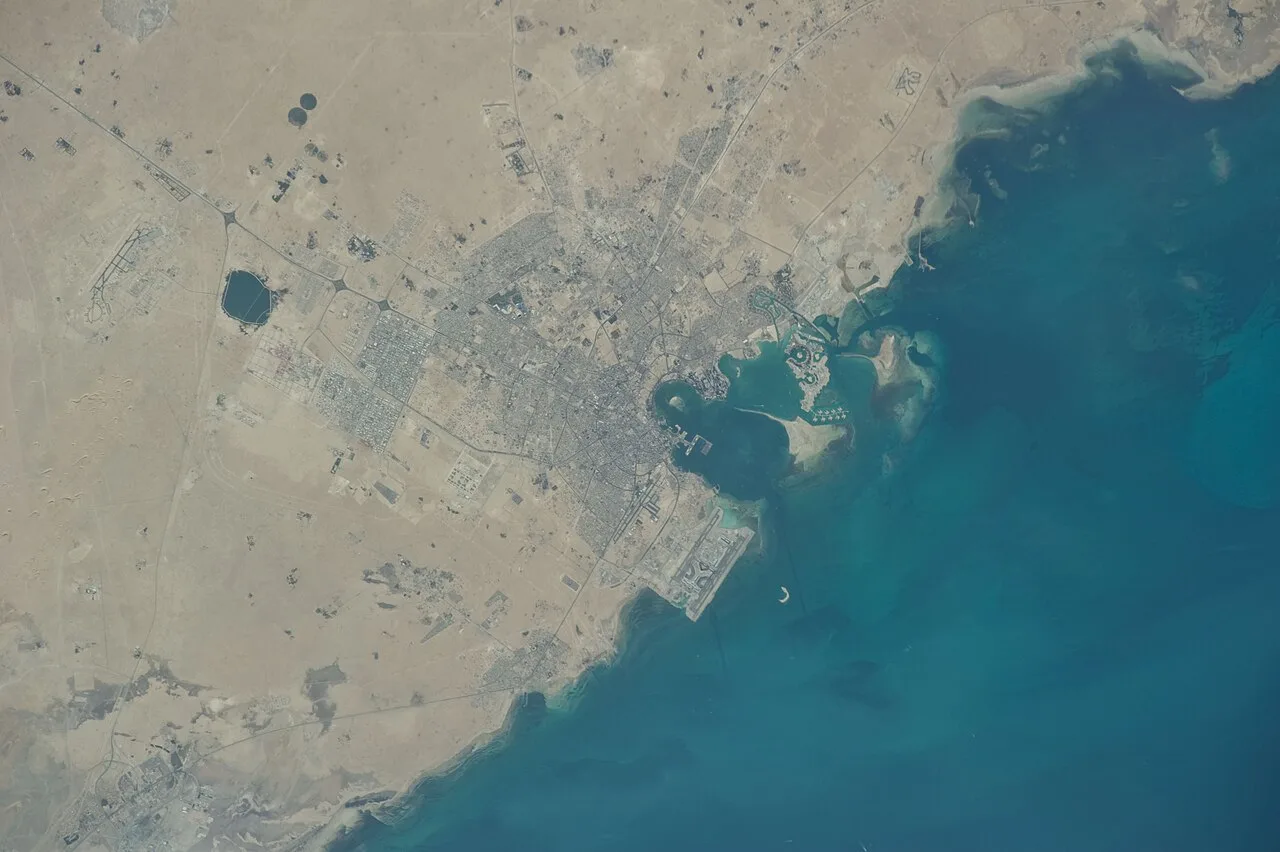
A 6 May 2010 orbital photograph helps locate the coastline and urban footprint; development visible here is historical.
A realistic first day contains a small cluster of activities, adequate transfer time and a flexible ending. Arrival, check-in and recovery take time even on a short trip. Plan around what the group can enjoy comfortably rather than attempting to reproduce every stop from a promotional itinerary.
One possible structure is an indoor cultural visit, a meal break and a later waterfront walk if conditions suit. This is an itinerary pattern, not a promised package or a claim that a specific venue is open on your date.
The Corniche and Souq Waqif can provide different ways to experience central Doha, but their inclusion still requires route and timing checks. A museum visit may involve admission arrangements, bag rules and time inside that a photograph does not convey.
Keep one main activity and one optional activity for each substantial part of the day. If a delay occurs, remove the optional stop rather than rush the entire group. This makes the plan more resilient and reduces the temptation to skip meals or rest.
Do not confuse a first-day city plan with a countrywide tour. A trip beyond Doha may require a different transport arrangement and a larger time allowance. Grouping distant places under one broad destination name does not make them neighbours.
Design the return first
Check how you will get back before deciding how late to stay. The return journey often receives less attention than the outward trip, yet it determines whether the evening plan is practical. Keep the accommodation location saved in a form the group can use offline.
How can you build a budget without inventing current prices?
Separate the budget into categories, obtain dated quotations where needed and label every estimate. Use a consistent currency and distinguish fixed costs from costs that rise with each day or person. A hypothetical example can explain the arithmetic, but it should never be presented as today's guaranteed travel price.
Start with transport to Qatar and accommodation, then add local travel, meals and optional activities. Keep document-related costs separate because they depend on the applicable process. Add a contingency amount based on your own flexibility rather than a universal percentage.
For a teaching example, suppose three daily categories total 150 QAR and an optional activity costs 80 QAR once. Three days would produce 450 QAR in recurring costs plus 80 QAR, before other categories. The point is to avoid multiplying a one-time expense by every day.
An exchange rate needs a date and quote direction. A displayed market rate may differ from the amount a customer actually receives after fees. Compare the total cost of obtaining or spending currency rather than relying on a large headline rate.
Check whether a quoted accommodation amount includes the relevant service charge, taxes and number of guests. A low nightly figure can be misleading if the final total covers a different room or excludes required components.
Keep a spending record during the trip. It allows you to adjust the remaining plan without guessing and gives a more honest account afterwards than a rounded total that omits major categories.
What can a heritage visit teach beyond sightseeing?
A heritage visit can connect geography, trade, settlement and material evidence. Ask what remains visible, how the site is interpreted and which historical claims the evidence supports. This makes the visit more informative than treating a fort or archaeological area simply as a photograph location.
UNESCO lists Al Zubarah Archaeological Site as a World Heritage property. That status provides a clear starting point for a student enquiry, but it is not a substitute for checking access and interpretation arrangements for an actual visit.
Prepare two questions before going: why did people settle here, and what evidence helps explain their activities? Look for the relationship between location and exchange rather than assuming that one building tells the entire history.
Distinguish an archaeological site, a restored structure and a modern interpretive display. All can contribute to learning, but they are different kinds of evidence. Read labels carefully and avoid describing a reconstruction as an untouched original.
A short museum or site worksheet can include one object, one map and one unanswered question. Record what the interpretation actually states, then add your own reasoning separately. This practice improves both travel notes and school assignments.
Treat site rules and photography instructions as part of the visit. Respectful observation usually produces better notes than rushing to collect images without understanding what they show.
How can students turn Qatar research into a useful country profile?
Organise the profile into location, people, environment, transport and heritage, then add a clearly labelled sample itinerary. Use dates for changing figures and distinguish confirmed facts from personal planning choices. The final product should let another reader understand the country and assess the proposed visit.
Begin with a labelled map and three stable facts, each stated clearly. Add one dated statistic only if it contributes to the question. A long list of unconnected numbers can make a profile harder to understand rather than more rigorous.
Include a planning table showing activity, journey, check required and backup. For example, a cultural visit may need an opening-hours check, while an outdoor walk needs a weather decision. This makes uncertainty practical instead of repeating a general warning after every sentence.
Keep time zone information attached to flights and appointments. Booking systems often use local departure and arrival times, so a journey duration cannot always be found by subtracting the displayed clock values. Identify the zones before doing the calculation.
Ask a partner to use your itinerary as if they were travelling independently. Can they identify where to start, how to reach the next stop and what remains to be checked? Any hesitation reveals a missing instruction or an assumption that needs explaining.
For the final edit, remove claims that suggest every resident has the same background or every visitor has the same requirements. Qatar's geography can be described concisely, while people's circumstances require more care. A good primer combines a clear map with practical decisions and well-defined evidence.
Keep the sources in a small reference section and the main explanation readable. The goal is to help someone plan thoughtfully or study accurately, with enough detail to act on the next step and enough honesty to recognise which arrangements still need confirmation.
A final planning exercise is to compare two versions of one day: a tightly scheduled version and a version with fewer stops and a longer transfer allowance. Keep the same main learning goal in both. Ask which plan still works if the first activity finishes late or one member of the group needs a break. The answer often depends on the route rather than the number of attractions. This turns the itinerary into a realistic sequence of decisions and gives the group a shared reason for changing it when necessary.
For the terminology behind your profile, use the country and territory explainer. The currency buying-and-selling guide helps distinguish a displayed rate from a customer transaction, while the calendar-planning guide offers a method for separating fixed commitments from flexible tasks. These are useful supporting skills when turning geographical information into a practical travel plan.
Sources
Source 1, Source 2, Source 3, Source 4, Source 5, Source 6, Source 7
Image credits: Cover: Zairon, source, CC BY 4.0. Resized and converted to WebP. Article image: NASA Astronauts, source, Public domain. Resized and converted to WebP.
Found an error or an outdated detail? Report a correction with the article URL and original source.